
If Jesus resurrected Lazarus, where is he now?
Is Lazarus walking among us… and is he more than 2,000 years old?
If Jesus resurrected Lazarus, the question is simple:
did he die again… or would he be nearly 2,000 years old today?
Hebrews 9:27 clearly says:
‘Men die only once.’
But in John 11:43–44 it is stated:
‘Lazarus, come out! And the man who had died came out.’
So only three options remain:
Option 1: Lazarus did not die again. If so, he would be nearly 2,000 years old. Has anyone seen him?
Option 2: Lazarus did die again. Then man does not die ‘only once.’
Option 3: The story was added centuries later and we were told something that never happened. In short: someone invented it… and millions never questioned it.
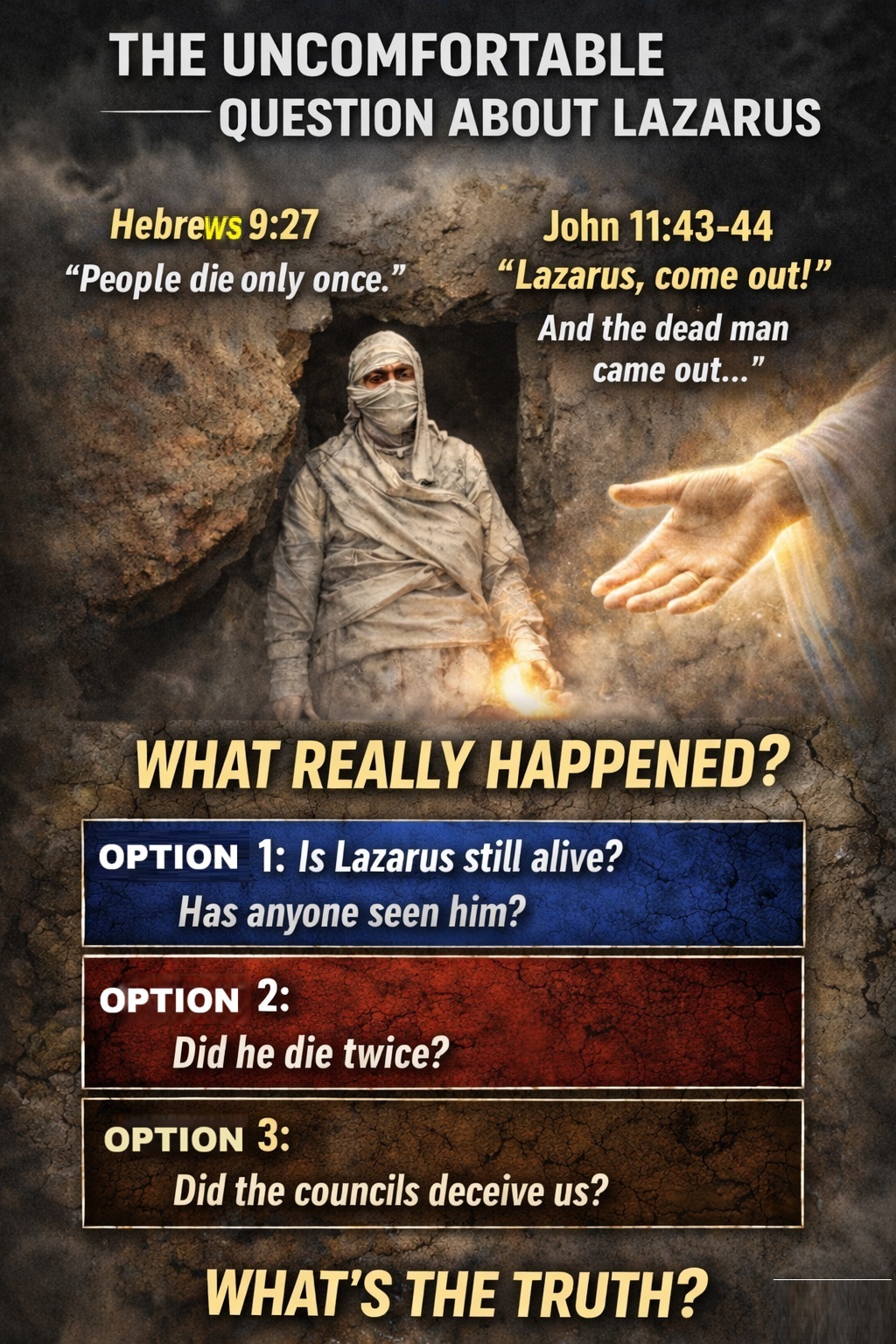
Three options.
Think carefully:
which of them is the most logical?
A Roman emperor might have thought:
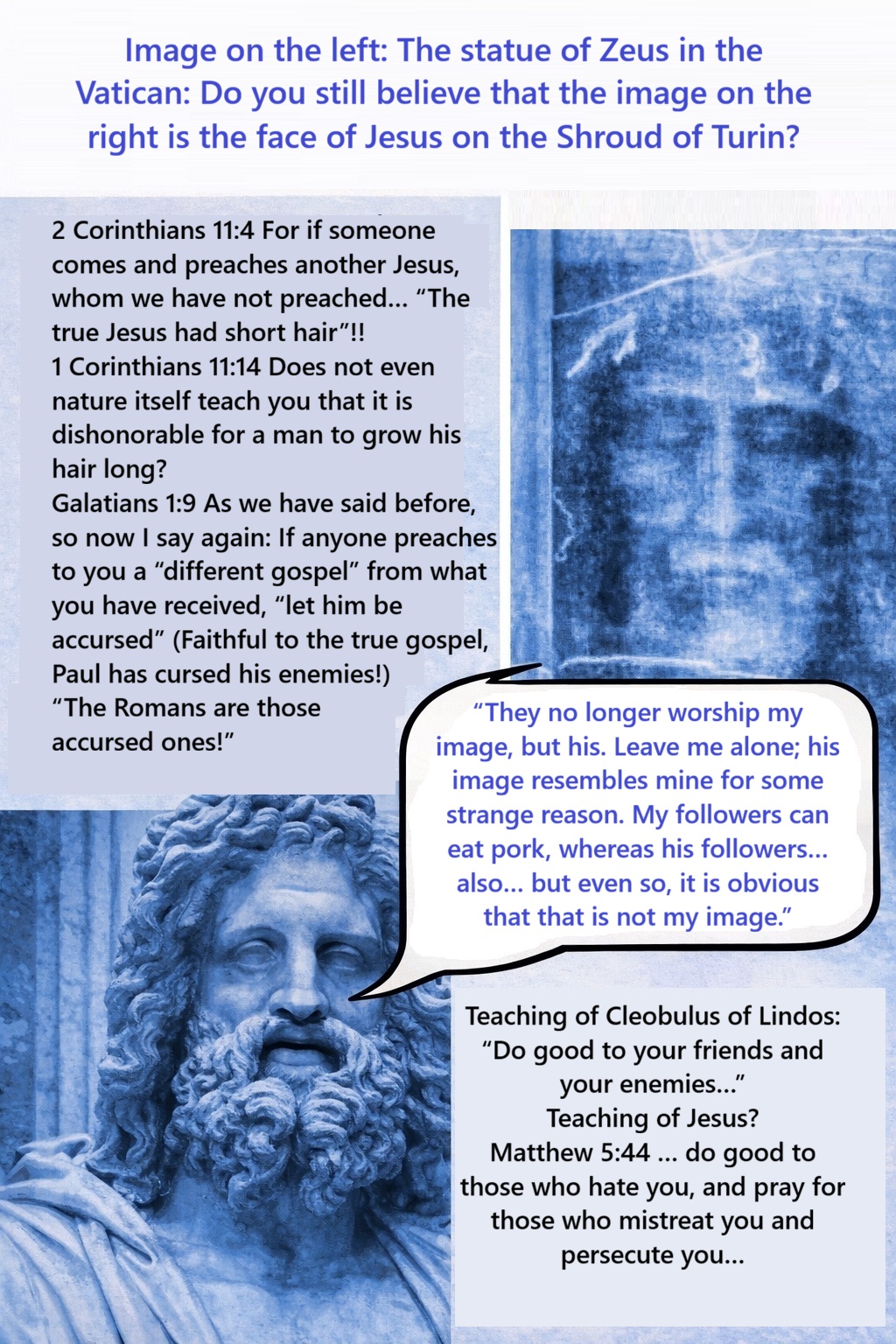
‘I will say that everyone must worship him (Hebrews 1:6), I will associate him with Zeus, I will attribute miracles to him, and in the end everyone will worship Jupiter, our Roman god.’

The Bible also speaks of other resurrections:
“Little girl, arise!” (Mark 5:41) — and Jairus’ daughter came back to life.
“Young man, I say to you, arise.” (Luke 7:14) — and the son of the widow of Nain stood up.
Matthew 27:52–53 states that after the death of Jesus:
“The tombs were opened, and many bodies of the saints who had fallen asleep were raised…”
The Old Testament also recounts resurrections:
the son of the widow of Zarephath (1 Kings 17:17–24), the son of the Shunammite woman (2 Kings 4:32–37), and a dead man who revived upon touching the bones of Elisha (2 Kings 13:20–21).
The only logical option is:
Option 3: The stories were added later and never happened.
Because this situation is absurd:
The press interviews the resurrected Lazarus, and he tells them:
“Hebrews 9:27 says that man dies only once, that is why I am still here.”
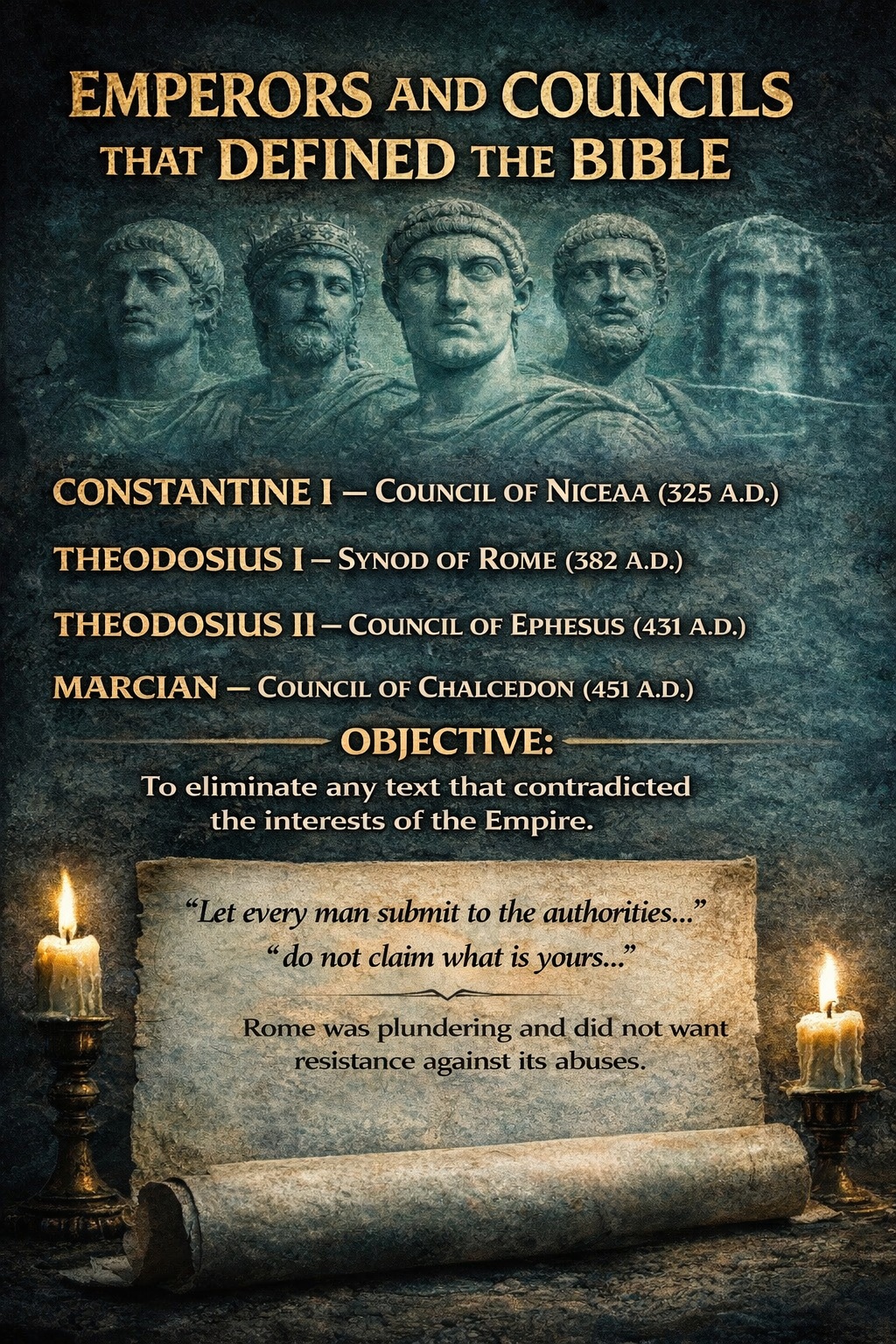
If there was manipulation of the message,
Rome could not limit itself to altering recent texts,
because the religion it persecuted already had writings
centuries before the Roman Empire existed.
Therefore, in order to impose a new message,
it was also necessary to adapt the ancient texts
so that the whole would appear coherent.
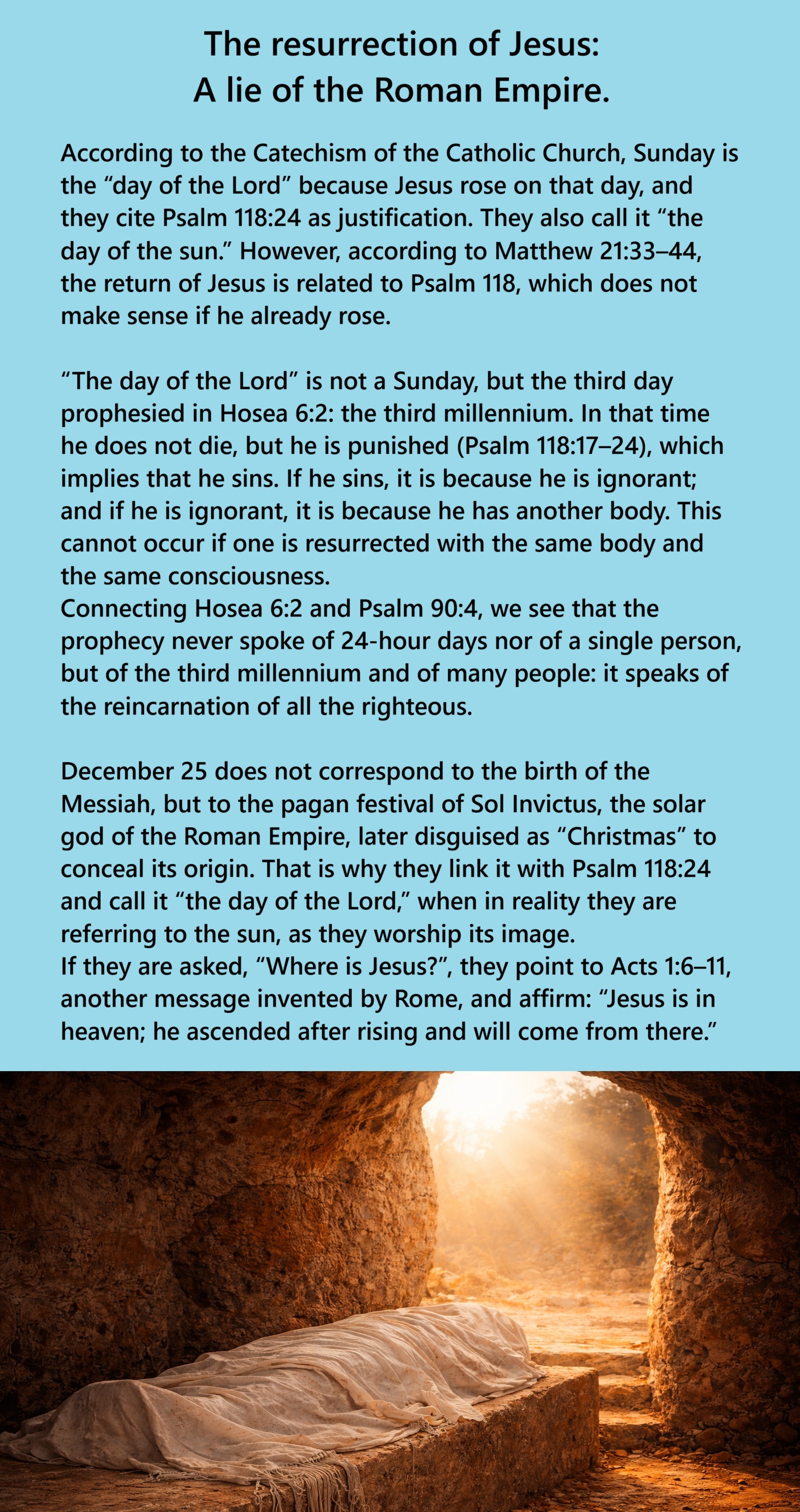
Related message: The resurrection of Jesus: A lie of the Roman Empire.
According to the Catechism of the Catholic Church, Sunday is the “day of the Lord” because Jesus rose on that day, and they cite Psalm 118:24 as justification. They also call it “the day of the sun.” However, according to Matthew 21:33–44, the return of Jesus is related to Psalm 118, which does not make sense if he already rose.
“The day of the Lord” is not a Sunday, but the third day prophesied in Hosea 6:2: the third millennium. In that time he does not die, but he is punished (Psalm 118:17–24), which implies that he sins. If he sins, it is because he is ignorant; and if he is ignorant, it is because he has another body. This cannot occur if one is resurrected with the same body and the same consciousness.
Connecting Hosea 6:2 and Psalm 90:4, we see that the prophecy never spoke of 24-hour days nor of a single person, but of the third millennium and of many people: it speaks of the reincarnation of all the righteous.
December 25 does not correspond to the birth of the Messiah, but to the pagan festival of Sol Invictus, the solar god of the Roman Empire, later disguised as “Christmas” to conceal its origin. That is why they link it with Psalm 118:24 and call it “the day of the Lord,” when in reality they are referring to the sun, as they worship its image.
If they are asked, “Where is Jesus?”, they point to Acts 1:6–11, another message invented by Rome, and affirm: “Jesus is in heaven; he ascended after rising and will come from there.”