

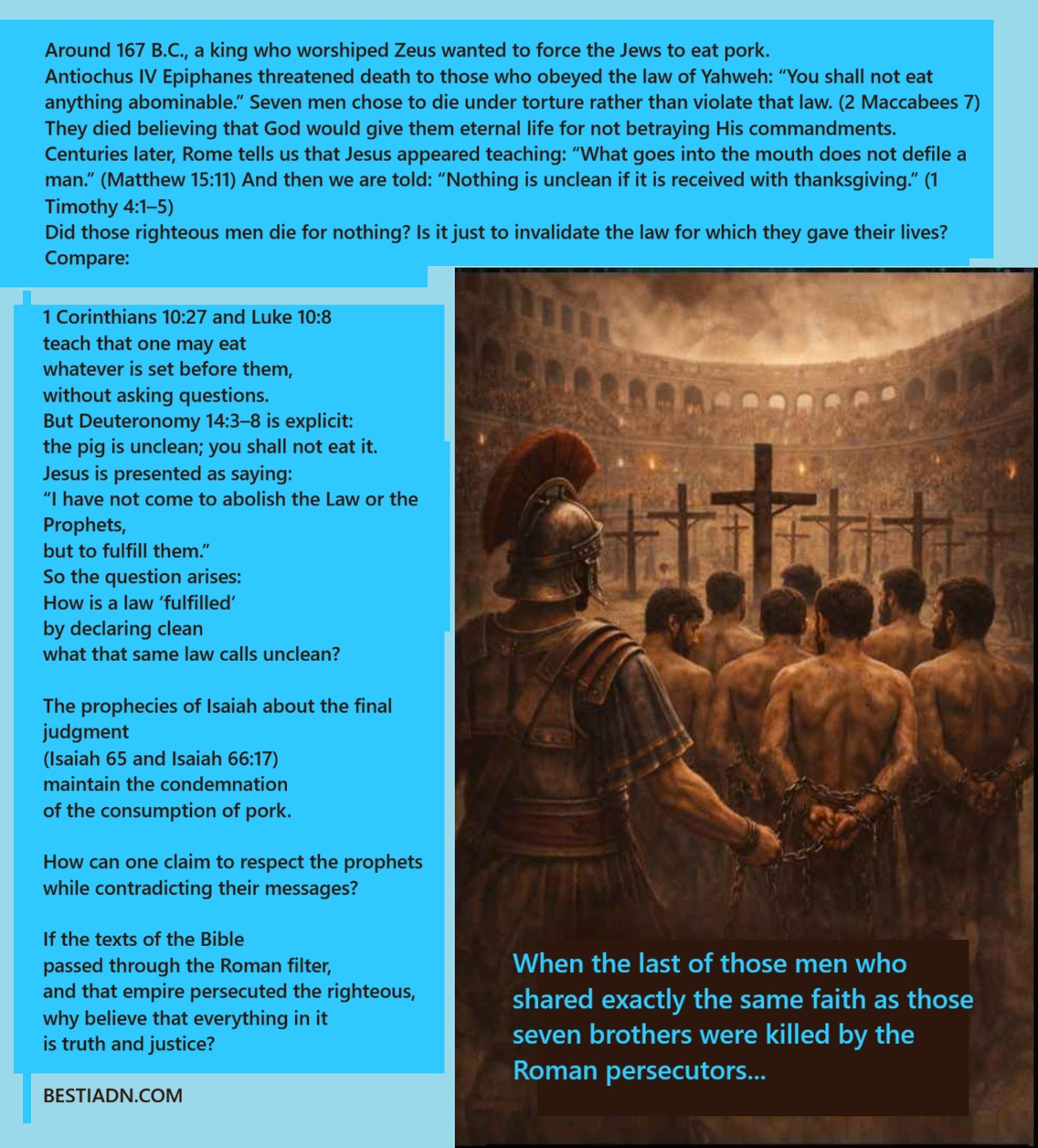
Around 167 B.C., a king who worshiped Zeus wanted to force the Jews to eat pork.
Antiochus IV Epiphanes threatened death to those who obeyed the law of Yahweh: “You shall not eat anything abominable.”
Seven men chose to die under torture rather than violate that law. (2 Maccabees 7)
They died believing that God would give them eternal life for not betraying His commandments.
Centuries later, Rome tells us that Jesus appeared teaching:
“What goes into the mouth does not defile a man.” (Matthew 15:11)
And then we are told: “Nothing is unclean if it is received with thanksgiving.” (1 Timothy 4:1–5)
Did those righteous men die for nothing? Is it just to invalidate the law for which they gave their lives?
Compare:
1 Corinthians 10:27 and Luke 10:8
teach that one may eat
whatever is set before them,
without asking questions.
But Deuteronomy 14:3–8 is explicit:
the pig is unclean; you shall not eat it.
Jesus is presented as saying:
“I have not come to abolish the Law or the Prophets,
but to fulfill them.”
So the question arises:
How is a law ‘fulfilled’
by declaring clean
what that same law calls unclean?
The prophecies of Isaiah about the final judgment
(Isaiah 65 and Isaiah 66:17)
maintain the condemnation
of the consumption of pork.
How can one claim to respect the prophets
while contradicting their messages?
If the texts of the Bible
passed through the Roman filter,
and that empire persecuted the righteous,
why believe that everything in it
is truth and justice?
The friends and the enemies.
If you consider the enemies of innocent children to be your enemies, who would ask us to love them?
Do you believe that teaching truly came from the faithful Son of God just because the Bible attributes that teaching to him?
Have you considered that, in order to contain the texts it does today, these texts had to be filtered through the eyes of Roman emperors? Do you trust that the Roman emperors, notorious for their pedophilic practices, were truthful?
Look at these two images and prepare for the message that follows.
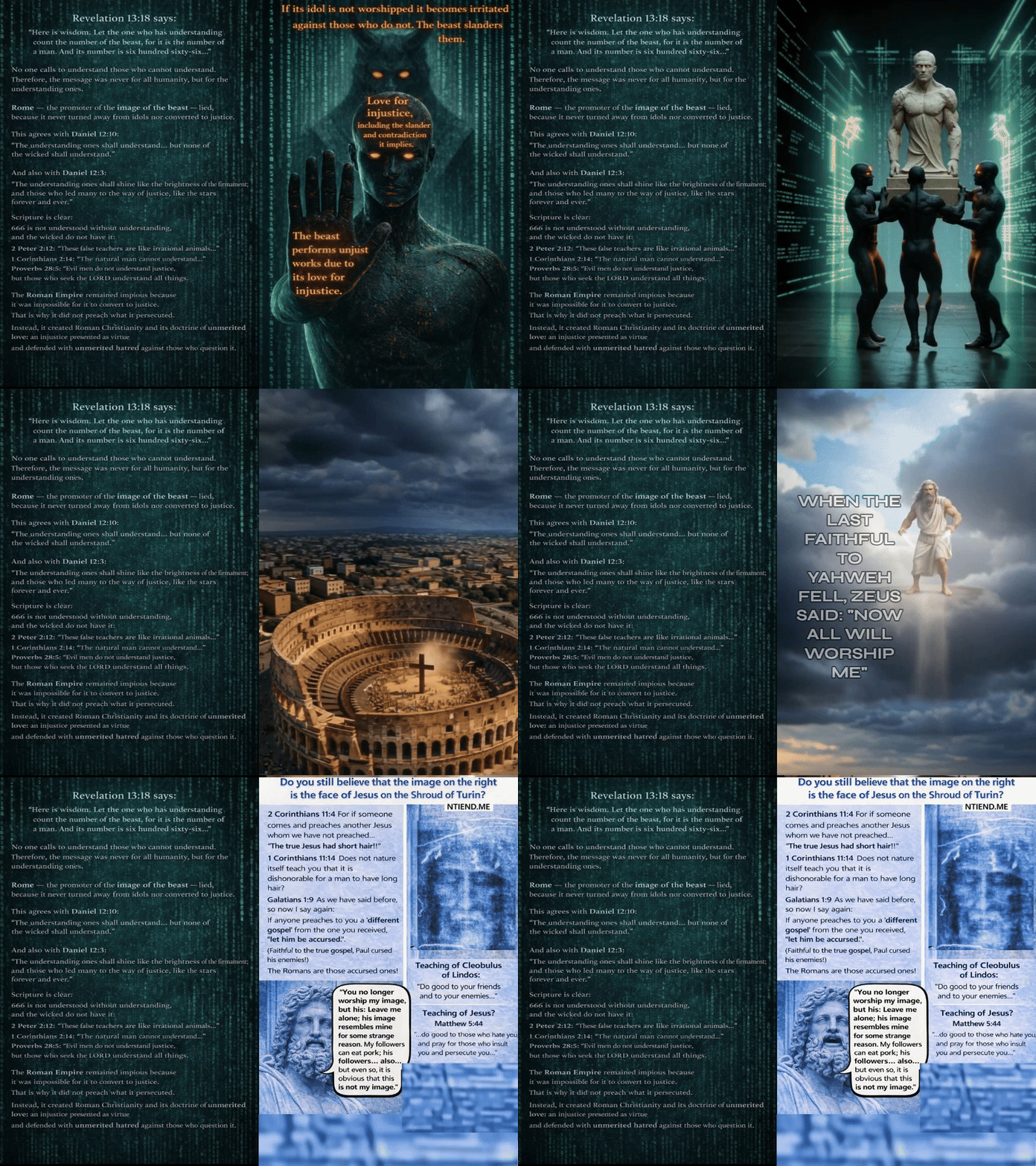
Notice the strange similarity between the face attributed to Jesus and the face of Zeus. But also consider what the myth says about Zeus. How could Jesus physically resemble the one who, according to the myth, sexually abused Ganymede before he reached adulthood?
Note also how in Greece they considered wise someone who preached love for enemies. Considering that the worshippers of Zeus ate pork, and that the religion of Jesus’ people forbade eating pork, how could Jesus have actually resembled the Greek god, preached a teaching that a Greek philosopher had already held centuries earlier, and, to top it all off, be told that eating pork no longer defiles a person and that his followers preached the same thing (Matthew 5:11; 1 Timothy 6:1-5)?
I see syncretism here: an adaptation of the original message pursued by Rome to make it fit with Greco-Roman tastes.
Let us remember that around 120 BC, Jews of the same faith in which Jesus grew up were tortured by Zeus worshippers for refusing to eat pork, as they respected a commandment from God that forbade it (2 Maccabees 7; 2 Maccabees 6; Deuteronomy 14:8). Does it make sense that this happened only for God, through his messenger, to later annul that law?
That makes no sense.
It also wouldn’t make sense to assume that the Roman persecutors respected the integrity of the messages of the Law and the prophets before Jesus. If you see things that don’t add up, I’ve already given you an explanation of why.
If we consider that the Roman emperors were the ones who had the power to decide which texts would circulate and which would not, does it make sense to assume that they left intact the messages that denounced them or that contradicted their interests?
Notice that they worshipped statues of Jupiter (the Roman equivalent of Zeus ). Isn’t it strange that the Bible says in Hebrews 1 about Jesus—whom they associated with the face of Jupiter— «let all the gods worship him» ?
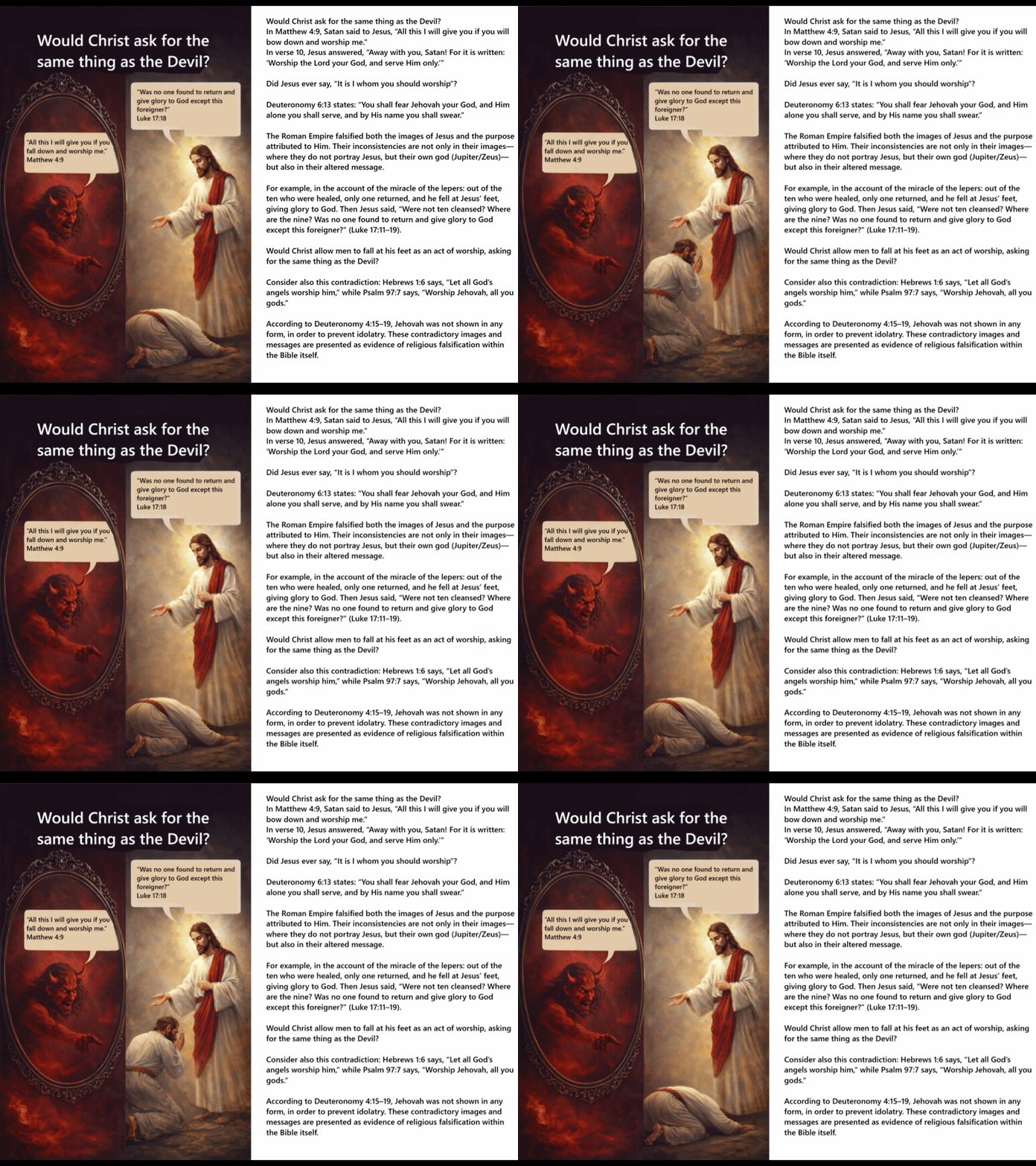
Consider that it is said in Deuteronomy 4 that God did not appear as a human being or in any other form precisely to avoid idolatry. Furthermore, Psalm 97 speaks only of God being worshipped.
Then the question arises: how would God ask that a mortal creature who died on the cross be worshipped?
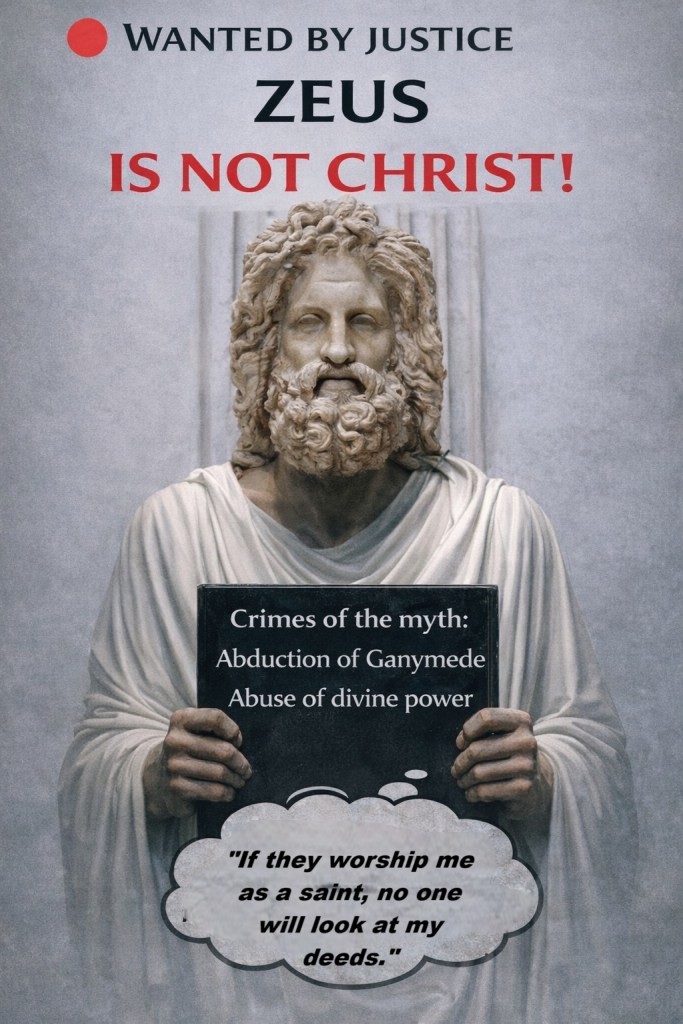
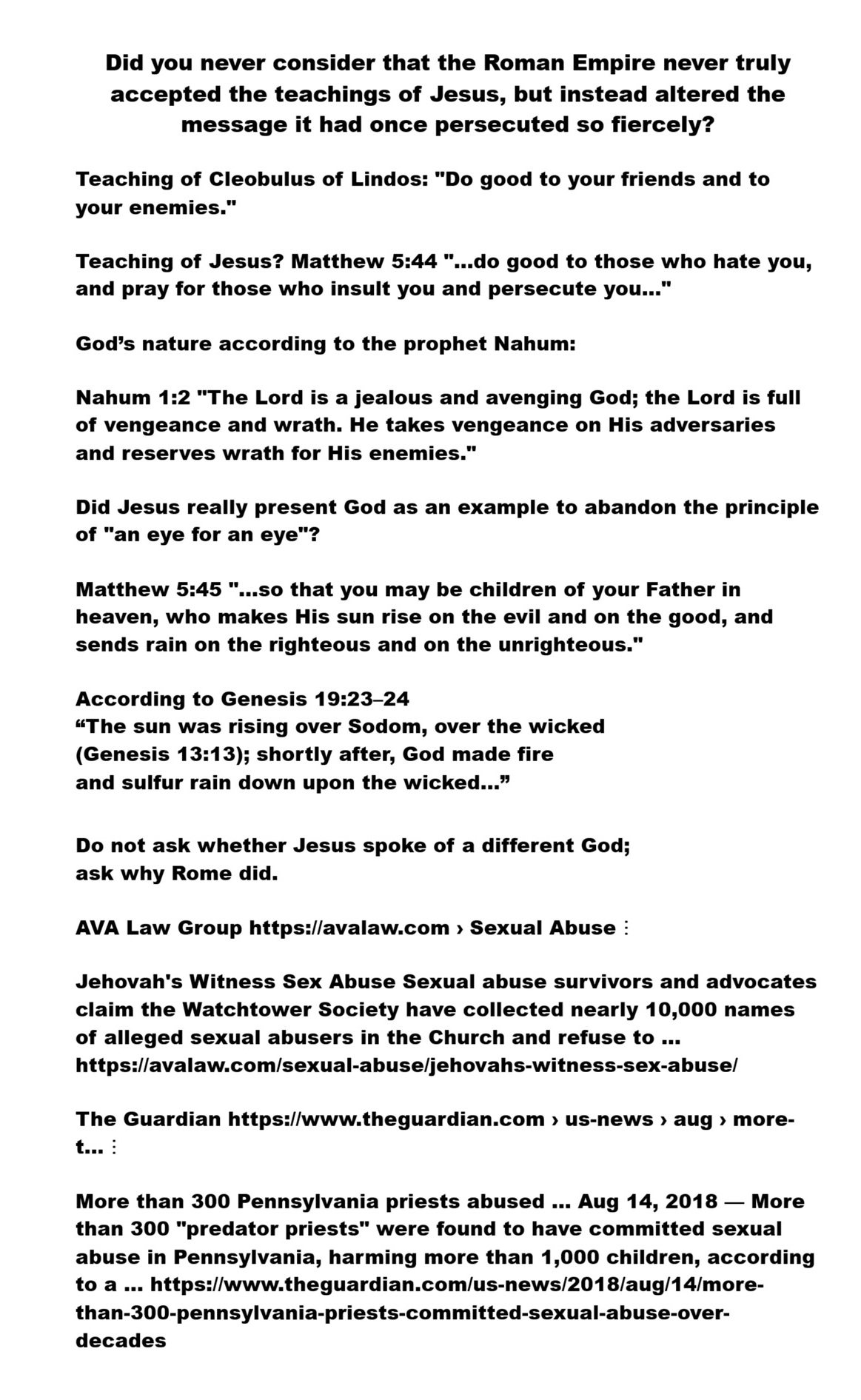
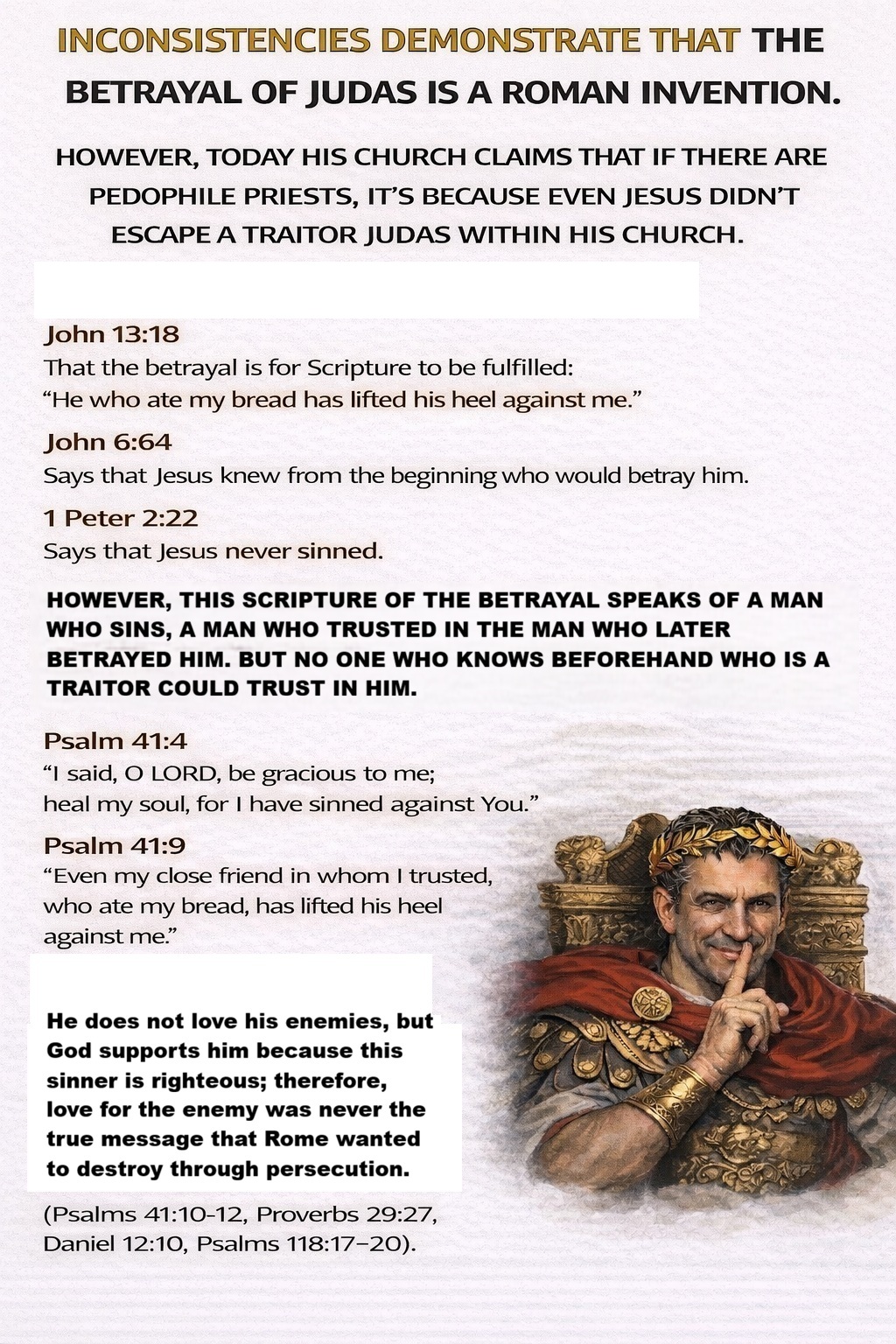
They no longer worship my image but his’, Zeus //11
The Anti-Satanic Force: Reason Destroys Satanism and Its Occultism. //16
The song of Moses and the message of Jesus were compatible, but Rome changed the message of Jesus into one of non-resistance to evil, embodied in the Roman persecutors.

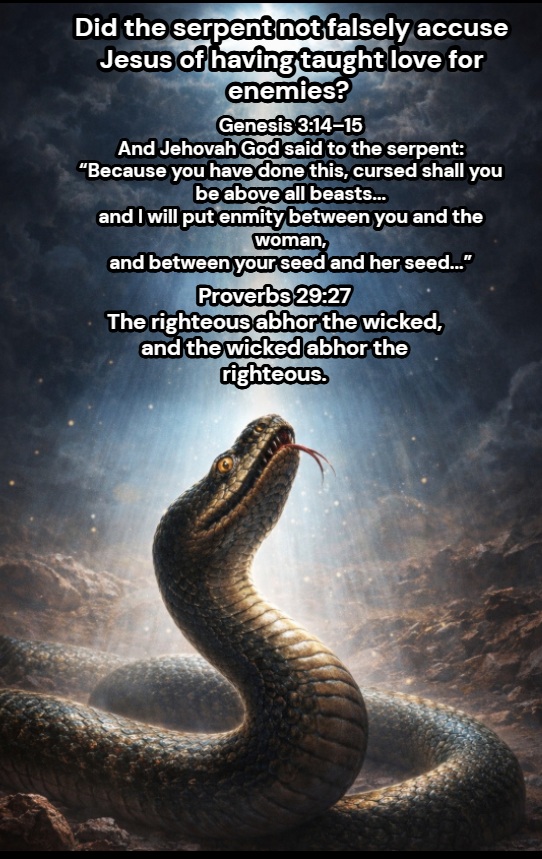
Revelation 14:1–3 says that the 144,000 sing a song that no one can learn except them.
Daniel 12:10 explains why: only the wise will understand the mysteries of the end time.
But there is a key detail.
That song is also called the song of Moses and the song of the Lamb (Revelation 15:3).
And the song of Moses presents Jehovah as an avenger and defender of justice (Deuteronomy 32:35–43).
So the question arises:
If the song is the same… how does it fit with “turn the other cheek”? (Matthew 5:39).
What if the message was altered?
What if the persecuted left clues in Revelation so that the wise would recognize that the true message is in harmony with the song of Moses and with the justice of “eye for eye” (Exodus 21:14)?
Then, which is the word of God… and which is that of Babylon?
Revelation 18:20 says:
“Rejoice over her, O heaven… for God has executed judgment.”
But Proverbs 24:17–18 says:
“Do not rejoice when your enemy falls.”
So, which voice is true?
Revelation 6:16 speaks of the wrath of the Lamb.
But Revelation 5:5 says that the Lion has overcome and opens the seals.
Is it the wrath of the Lamb… or that of the Lion?
What if some words were added?
What if the true song can only be recognized by those who can hear, understand… and sing it? (Daniel 12:3).

