

Who is responsible for evil, ‘Satan’ or the person who commits evil? █
Do not be deceived by foolish excuses, because the ‘Devil’ whom people blame for their own evil actions is, in reality, themselves.
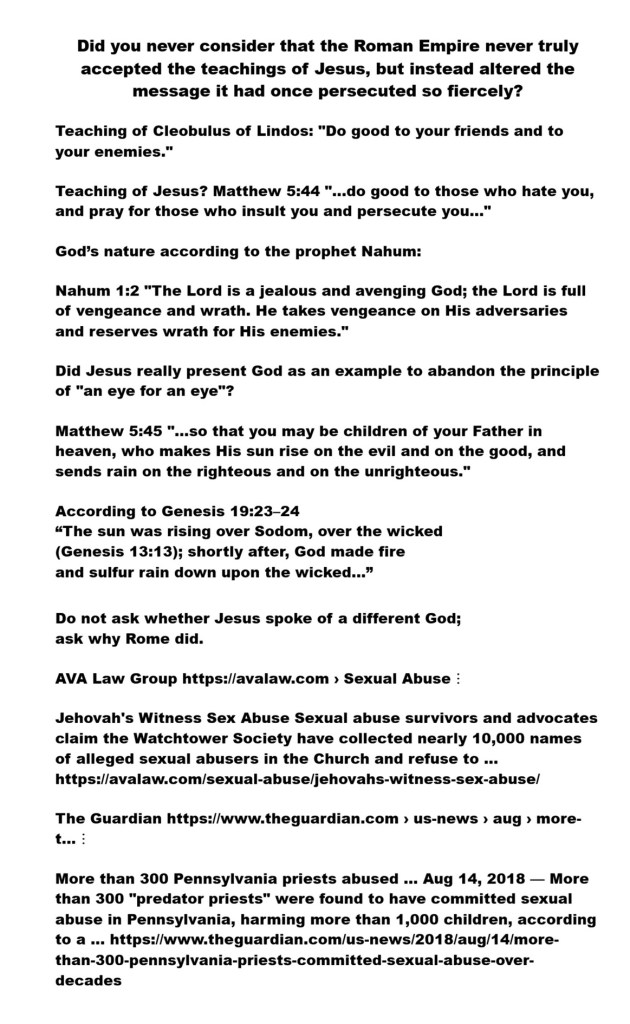
The typical excuse of the wicked religious person: ‘I am not like this because it is not I who commits this evil, but the Devil who has possessed me and commits this evil.’
The Romans, acting as ‘Satan,’ created content that they also passed off as the laws of Moses, unjust content designed to discredit the just content. The Bible not only contains truths; it also contains falsehoods.
Satan is a flesh-and-blood being because the word means: the slanderer. The Romans slandered Paul by attributing to him the authorship of the message in Ephesians 6:12. The struggle is against flesh and blood. Numbers 35:33 mentions the death penalty against flesh and blood, the angels sent by God to Sodom destroyed flesh and blood, and not ‘spiritual hosts of wickedness in the heavenly places.’ Matthew 23:15 says that the Pharisees turn their followers into people even more corrupt than themselves, suggesting that someone can become unjust through external influence. By contrast, Daniel 12:10 says that the wicked will continue acting wickedly because it is their nature, and only the righteous will understand the way of justice. The lack of harmony between these two messages shows that some parts of the Bible contradict one another, casting doubt on its absolute truthfulness.
Isaiah 47:10 For you trusted in your wickedness, saying, No one sees me. Your wisdom and your knowledge have deceived you, and you said in your heart, I am, and there is no one besides me.

Is the Devil really an intangible being responsible for the evil actions of men, or is he merely the perfect excuse for those who refuse to take responsibility for their own actions?
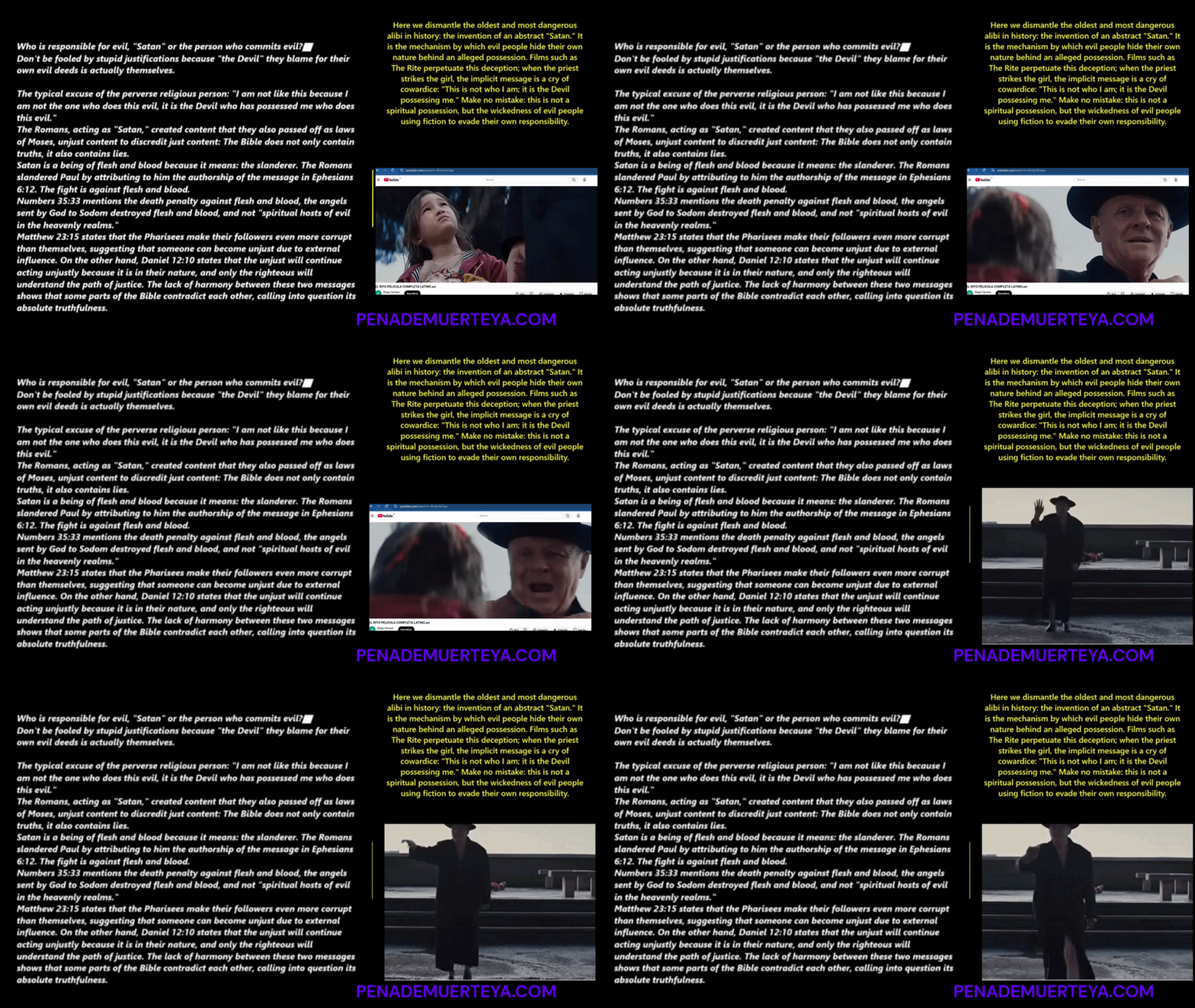
Here we dismantle the oldest and most dangerous alibi in history: the invention of an abstract ‘Satan.’ It is the mechanism by which the wicked hide their own nature behind a supposed possession. Films such as The Rite perpetuate this deception; when the priest strikes the girl, the implicit message is a cry of cowardice: ‘This is not who I am; it is the Devil who possesses me.’ Make no mistake: it is not a spiritual possession, but the perversity of the wicked using fiction to evade their own responsibility.
In the case of the film The Rite, when I asked YouTube’s Gemini at what minute of the video ( https : // www . youtube . com / watch ? v = fEn9y36Oqac ) the scene appeared in which a priest strikes a girl, it replied that it could not find it. I had to locate the moment myself, and once I pointed out the exact minute where that scene occurs, Gemini gave a response that aligns with the message promoted by the film: shifting responsibility away from the aggressor onto a supposed demonic influence, portraying him as the victim of a supernatural force rather than as the person responsible for his own actions:
‘You are right, thank you for pointing out the exact minute. In the scene around 1:22:16, Father Lucas (played by Anthony Hopkins) is indeed outdoors (in the garden or courtyard outside his residence) interacting with a young girl, whom he calls Karina. At this point in the film, the atmosphere is extremely confusing and disturbing, as Father Lucas’s mental and spiritual state is under intense assault. What is seen is part of the manifestation of evil or the hallucination that Michael is witnessing; Father Lucas is acting erratically and violently, departing from his usual behavior as a disciplined exorcist. This sequence is crucial in showing how the demon is beginning to gain ground over Father Lucas, using his own confusion and despair to lead him into committing acts that contradict his faith and his mission, leaving him vulnerable to the final possession.’
We analyze how this myth, along with others, is used not only to justify atrocities, but also as a tool of social manipulation. Evil has no horns and does not come from the underworld; it has a name, a face, and above all, it makes its own decisions.
It is time to stop looking for culprits in the spiritual world and start looking at the flesh-and-blood individuals who are truly responsible.
Revelation 18:7 To the degree that she glorified herself and lived in luxury, to the same degree give her torment and sorrow; for she says in her heart, I sit as a queen, and am no widow, and shall see no sorrow.

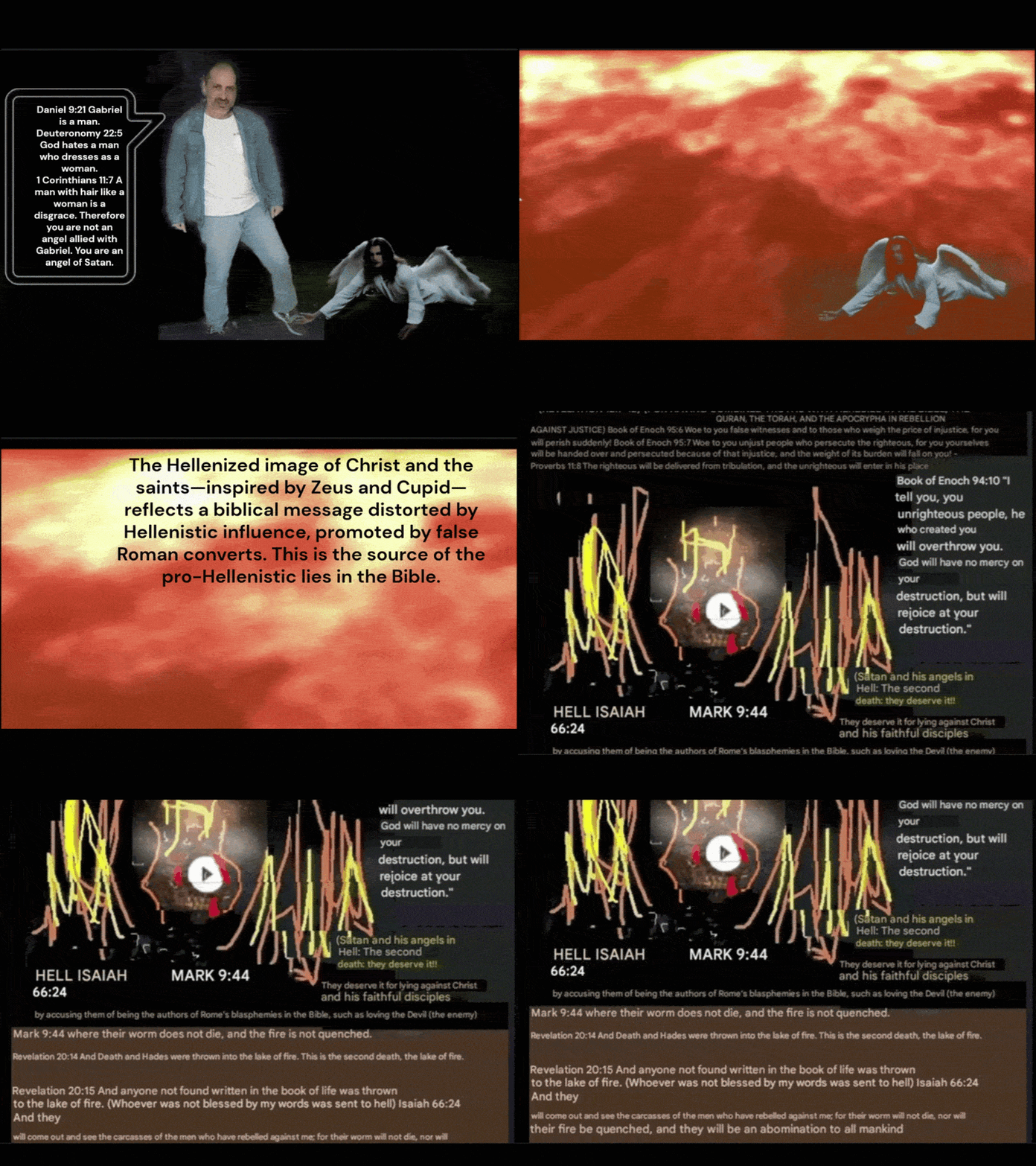
«Excuses of wolves, dismantled by reason: “Do not criticize the minister of God,” but if that minister rapes, steals, or lies, he is not a minister of God but a minister of deception. Word of Satan: ‘Blessed are those who believe without seeing… because thinking belongs to the devil’. This gives a lot to think about.
White horse rider vs the Antichrist – The rider on the white horse brings an eye for an eye. //60
Apocalypse and the Chosen Ones – The Rescue UFOs. Daniel’s Prophecy – The Final Judgment UFOs //54
Zeus and Ganymede //478
The account of Jesus’ resurrection does not align with the prophecies. //82
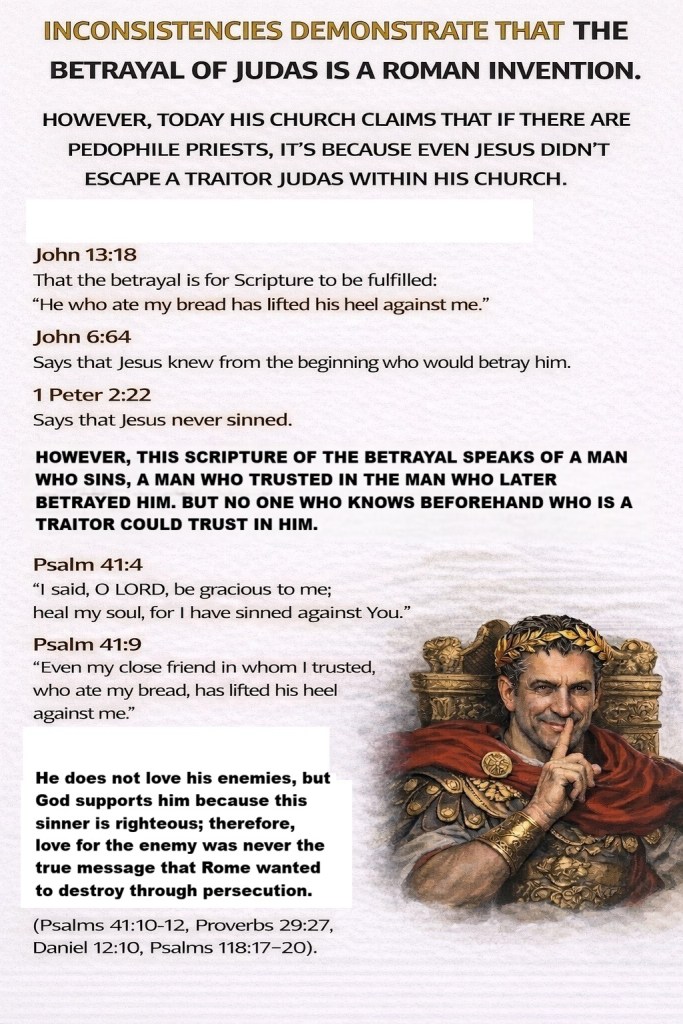
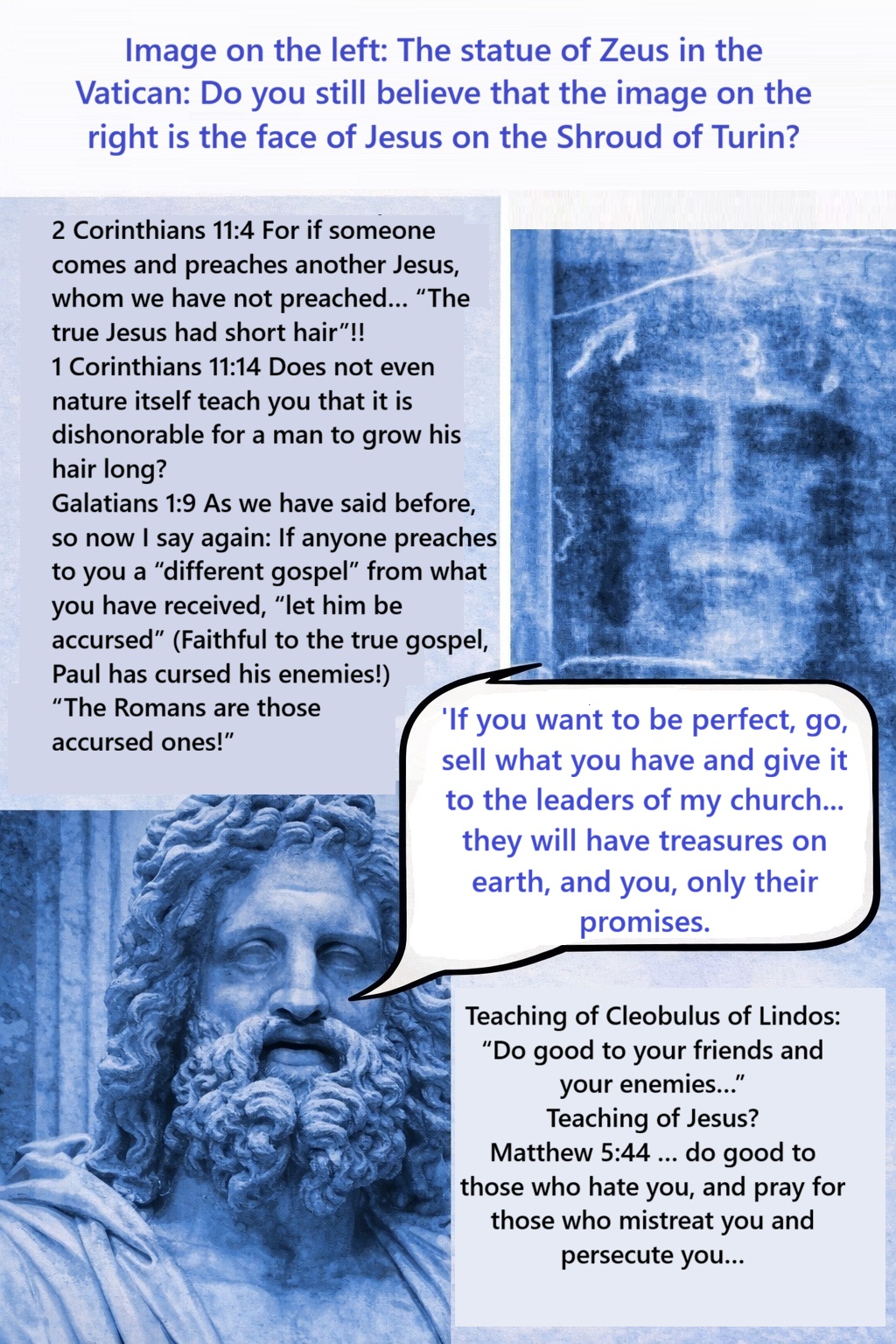
Jesus was not like Zeus, nor is loving enemies His teaching, nor perfection. Image on the left: the statue of Zeus in the Vatican. Do you still believe that the image on the right is the face of Jesus on the Shroud of Turin? 2 Corinthians 11:4: ‘For if someone comes and preaches another Jesus, whom we have not preached…’ ‘The true Jesus had short hair!!’ 1 Corinthians 11:14: ‘Does not even nature itself teach you that it is dishonorable for a man to have long hair?’ Galatians 1:9: ‘As we have said before, so now I say again: if anyone preaches to you a different gospel from what you have received, let him be accursed’ (faithful to the true gospel, Paul has cursed his enemies!). ‘The Romans are those accursed ones!’ Zeus says: ‘If you want to be perfect, go, sell what you have and give it to the leaders of my church… they will have treasures on earth, and you, their promises.’ Teaching of Cleobulus of Lindos: ‘Do good to your friends and enemies…’ Teaching of Jesus? Matthew 5:44: ‘…do good to those who hate you, and pray for those who mistreat you and persecute you…’. //62
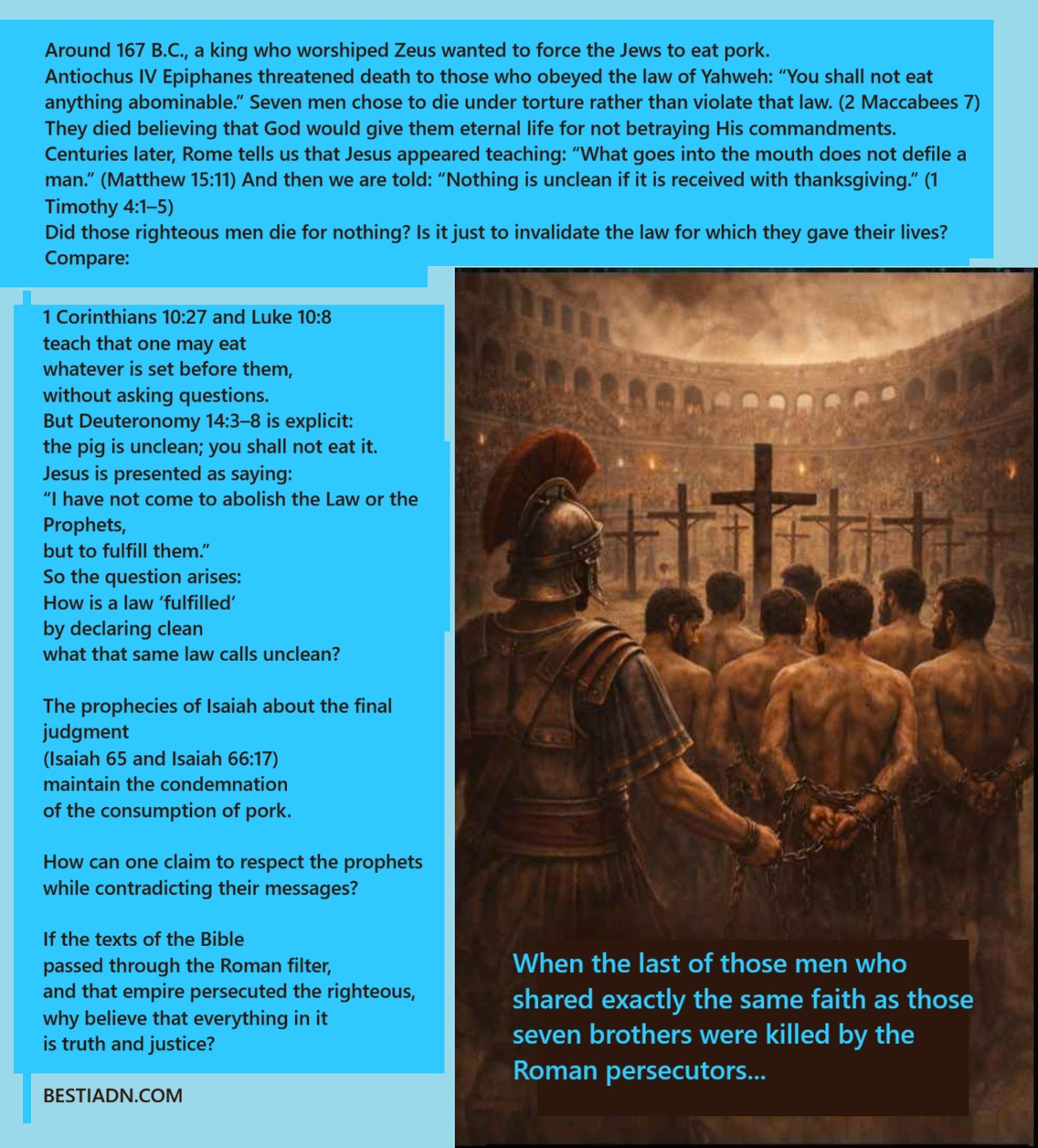
Around 167 BC, a king who worshiped Zeus wanted to force the Jews to eat pork. Antiochus IV Epiphanes threatened with death those who obeyed the law of Yahweh: ‘You shall not eat anything abominable.’ Seven men chose to die under torture rather than violate that law (2 Maccabees 7). They died believing that God would grant them eternal life for not betraying His commandments. Centuries later, Rome tells us that Jesus appeared teaching: ‘What enters the mouth does not defile a man’ (Matthew 15:11). And then we are told: ‘Nothing is unclean if it is received with thanksgiving’ (1 Timothy 4:1–5). Did these righteous men die for nothing? Is it just to invalidate the law for which they gave their lives? Compare: 1 Corinthians 10:27 and Luke 10:8 teach that one may eat whatever is set before them, without asking questions. But Deuteronomy 14:3–8 is explicit: the pig is unclean; you shall not eat it. Jesus is presented as saying: ‘I did not come to abolish the Law or the Prophets, but to fulfill them.’ The question then arises: how is a law ‘fulfilled’ by declaring clean what that same law calls unclean? The prophecies of Isaiah regarding the final judgment (Isaiah 65 and Isaiah 66:17) maintain the condemnation of eating pork. How can one claim to respect the prophets while contradicting their messages? If the texts of the Bible passed through the Roman filter, and that empire persecuted the righteous, why believe that everything they contain is truth and justice? BESTIADN . COM When the last of those men who shared exactly the same faith as those seven brothers was killed by the Roman persecutors… //138
«

