The Unpublished Parable: The Parable of the Infiltrated Messenger█
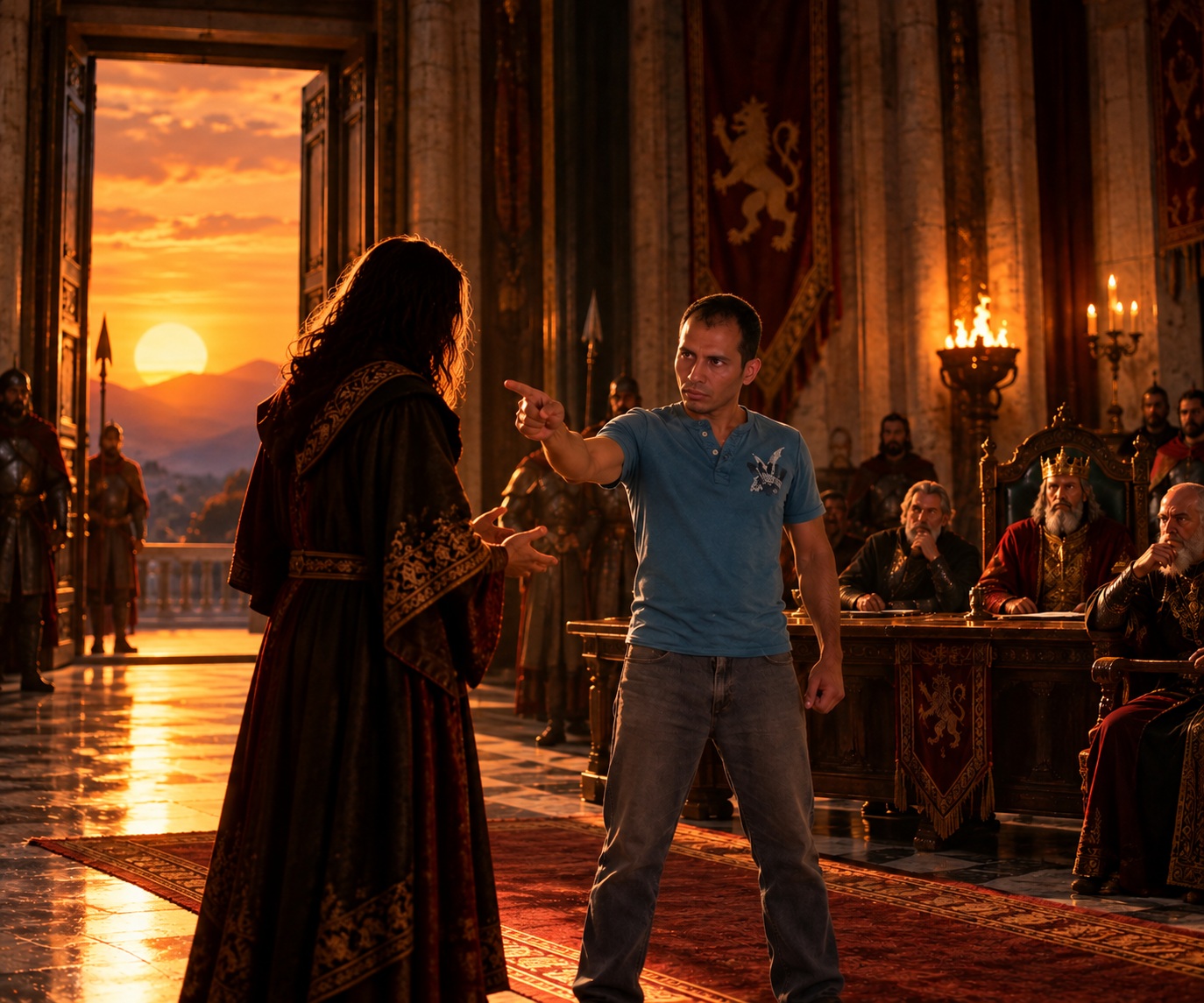
Daniel 12:1 ‘At that time Michael shall stand up, the great prince who stands for the children of your people; and there shall be a time of trouble, such as never was since there was a nation even to that same time; but at that time your people shall be delivered, everyone who shall be found written in the book.’ Do you believe that Michael rises in an abstract and invisible world? Do you believe that from there he and his messengers wage war on behalf of the righteous? Wouldn’t it be more logical to think that they themselves are the righteous, using words as weapons because they are messengers? To believe that the struggle takes place on a plane invisible to our senses is like believing that it does not exist and that we can do nothing for the side of justice; that is precisely what the hosts of the Devil want us to believe, just as they want us to believe that everything in the Bible is worthy of belief. Because, as the text itself says, the Devil deceives the world, and if he deceives the world, he does so through the texts that dominate the world, among them the Bible itself: Revelation 12:7-9 ‘And there was war in heaven: Michael and his angels fought against the dragon; and the dragon and his angels fought back, but they did not prevail, and there was no longer any place for them in heaven. So the great dragon was cast out, that ancient serpent called the Devil and Satan, who deceives the whole world. He was thrown down to the earth, and his angels were thrown down with him.’ Next, through a fictional story, I am going to demonstrate through logic why the Bible contains sacred texts infiltrated with texts from the enemy. The Devil declared war on us and began striking us in the face. We had to defend ourselves, but someone came up with an idea. It happened in a frontier kingdom. The Devil’s men crossed the mountain passes under the fog. They entered the villages, burned the barns, and put to the sword those who tried to resist. The king urgently summoned his council. —What do we do? —he asked. A captain of the garrison replied: —Reinforce the walls. An administrator proposed: —Arm the peasants. An old veteran said: —Hunt down the invaders before they attack again. Then, from the shadows of the hall, a pale-faced man with a meekly persuasive voice stepped forward. —I have a better idea —he said.
Everyone fell silent. The stranger continued: —When the enemy strikes you, do not answer with iron. Offer the other cheek. A murmur swept through the hall. The king, bewildered, asked: —And when they burn the next village? —Offer the other cheek. —And when they kill the workers? —Offer the other cheek. —And if they reach the gates of the fortress? The man smiled with serene piety. —Then it will mean that there are still cheeks left to offer. The counselors began to nod, fascinated by the apparent moral elevation of the speech. Only Gabriel, one of the chief princes, remained motionless, watching the stranger. Slowly, he walked toward him, looked him in the eyes, and asked him a single question: —Tell me something: why would an attacked people accept the doctrine of disarming themselves? The man answered without hesitation: —To attain holiness and peace. —I did not ask you what word you use to sell it —said the young Gabriel—. I asked you whom that peace serves.
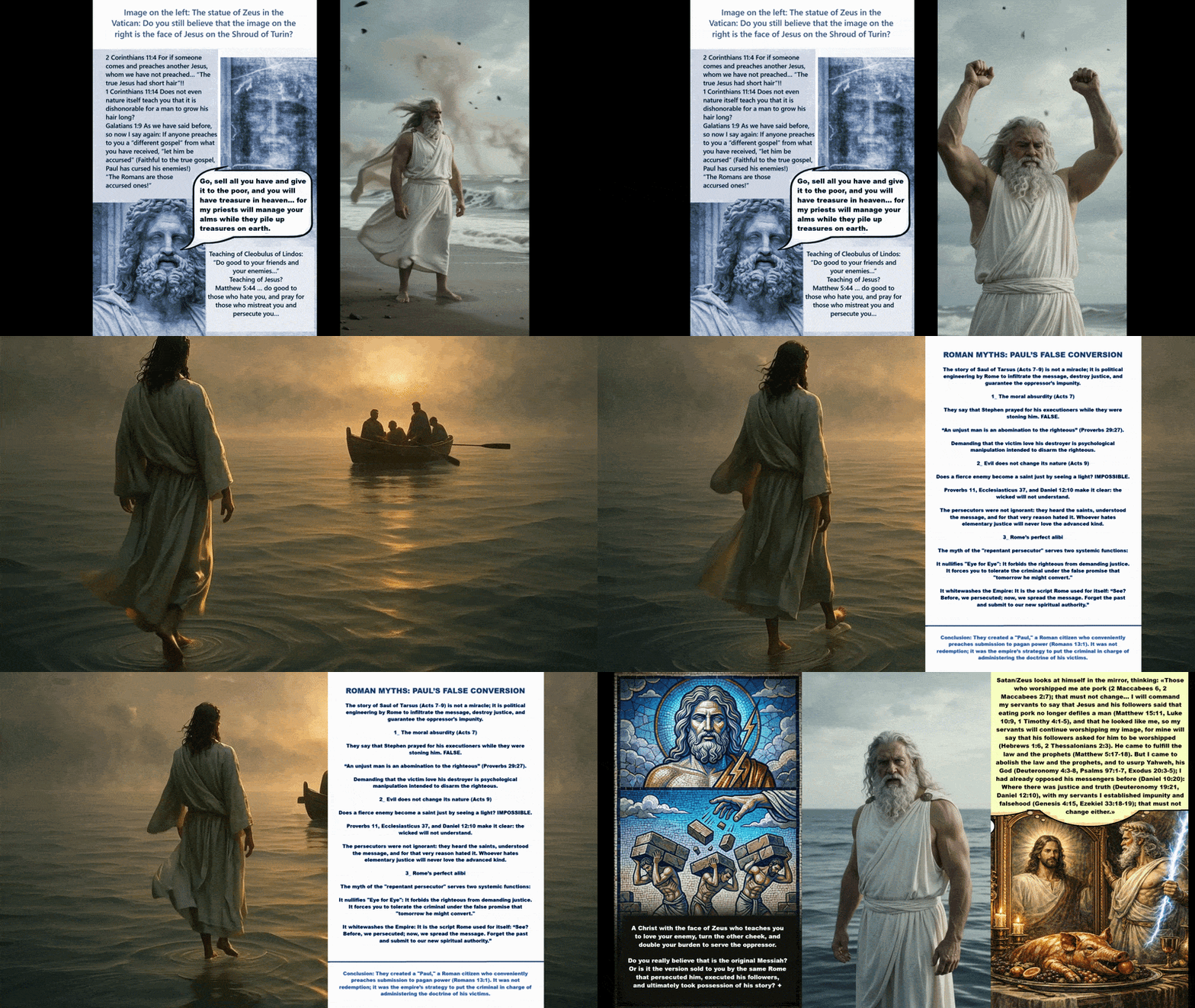
With a swift movement, the soldier tore the pilgrim’s robe. Beneath it gleamed dark steel, engraved with the invaders’ coat of arms. The hall fell into absolute silence. Gabriel said: ‘Notice the parallel, look at that face, look at the origin of his doctrine…’ 2 Maccabees 6:1 A short time later, the king sent an elderly man from the city of Athens to force the Jews to violate the laws of their ancestors and to organize their lives contrary to the laws of God, 2 to profane the temple in Jerusalem and dedicate it to the god Zeus Olympios, and to dedicate the temple on Mount Gerizim to Zeus Hospitaller, as the inhabitants of that place had requested. ‘His kingdom is the one that will come, and in his name they will sanctify the lie, his priests will worship his image and proclaim the words of his Greek sages; everything will be Hellenized in order to usurp our God, but I will confront him and his messengers; Michael will help me…’
Daniel 10:20 He said to me: Do you know why I have come to you? For now I must return to fight against the prince of Persia; and when I have finished with him, the prince of Greece will come. 21 But I will declare to you what is written in the book of truth; and no one helps me against them except Michael your prince.
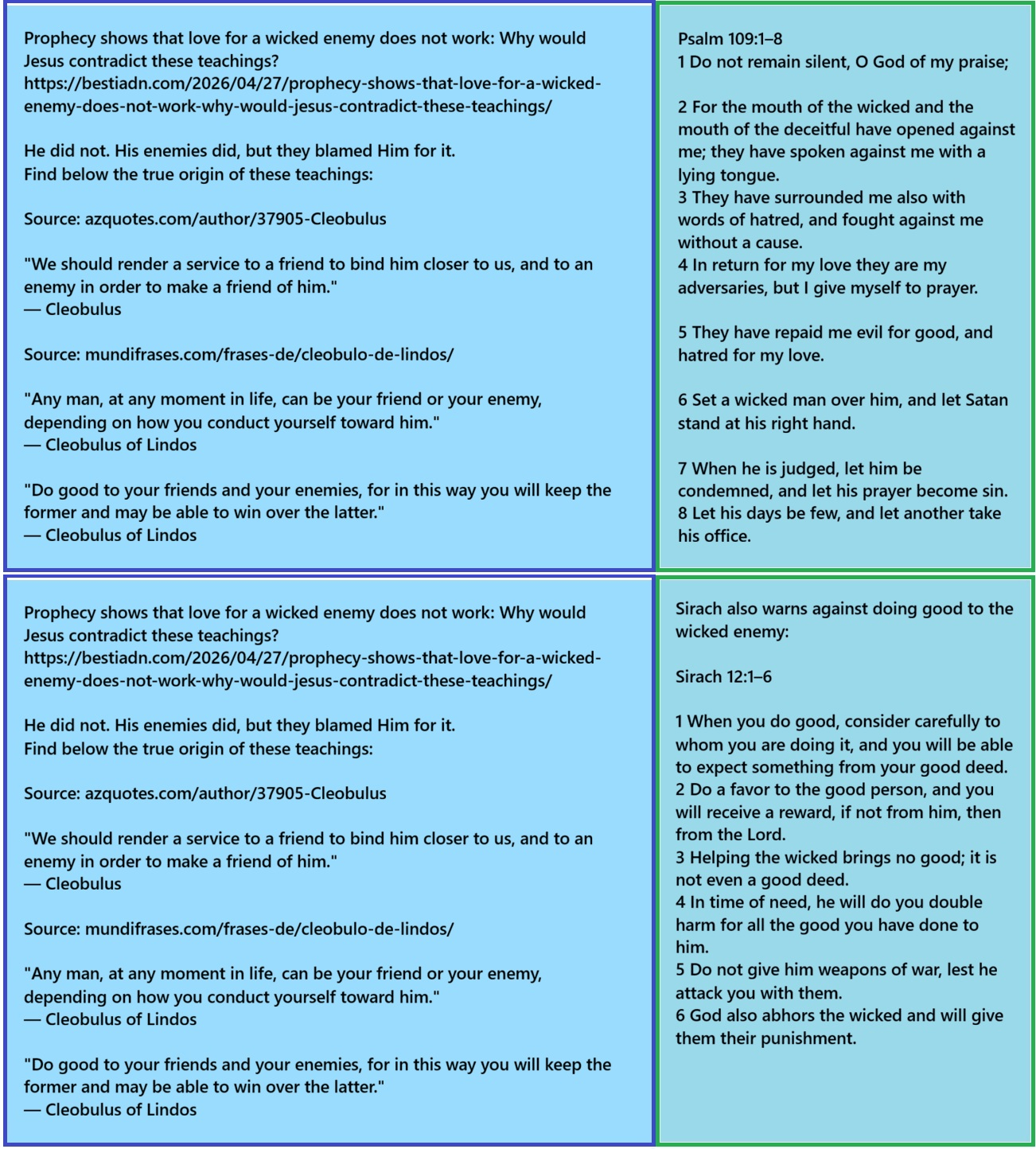
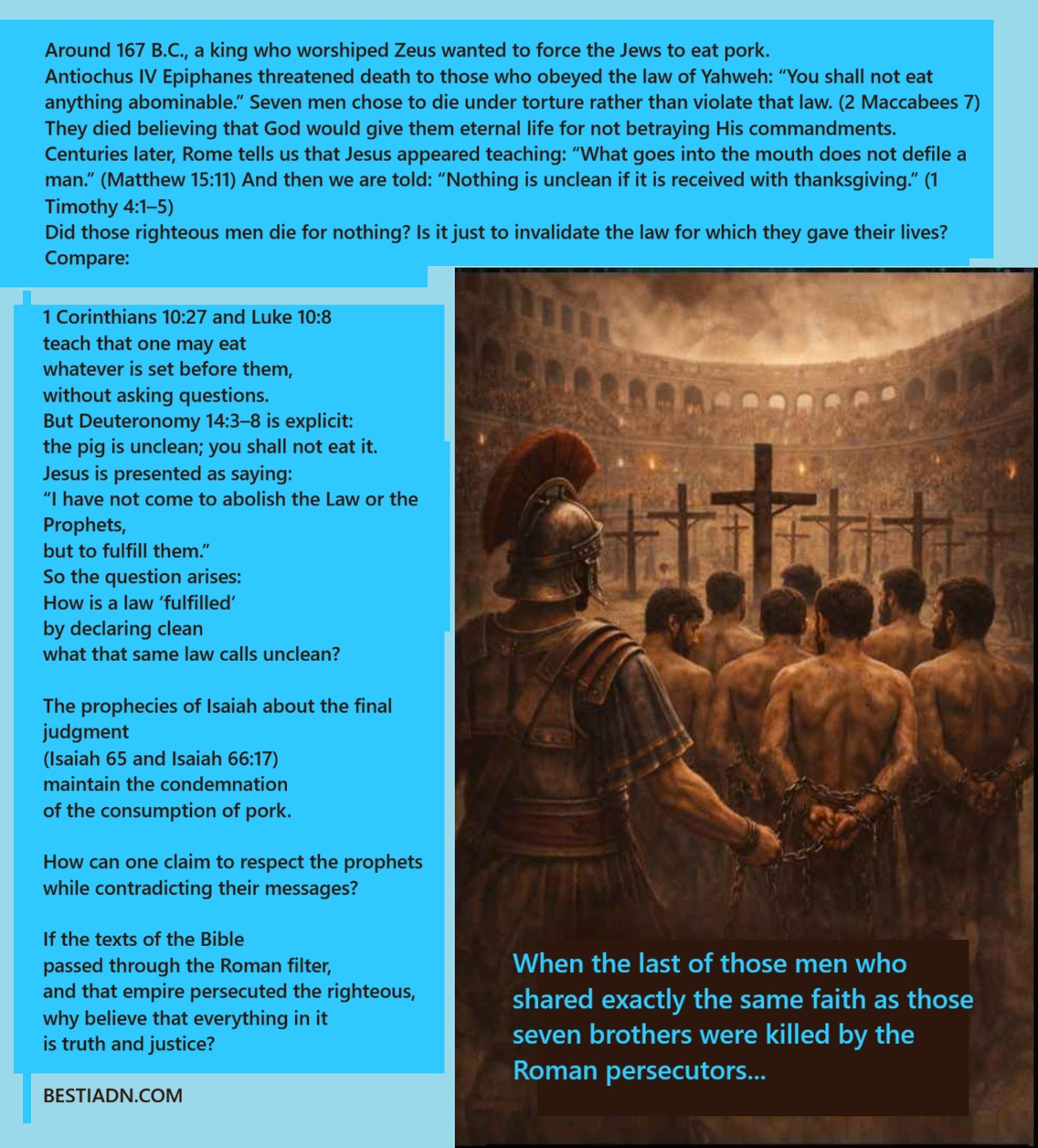
) The messenger had not invented the doctrine of non-resistance to save the kingdom. He had introduced it to ensure that the kingdom would allow itself to be massacred without putting up a fight. Daniel 7:21 And I saw that this horn made war against the saints, and prevailed against them… Revelation 13:7 And it was permitted to make war against the saints and to overcome them. And authority was given to it over every tribe, people, language, and nation. Some disguise these contradictions by calling them ‘mysteries’ or ‘differences of context’. I do not; I show them without makeup: if one passage presents the righteous rejoicing in vengeance against the wicked —as Psalm 58:10 does— and another presents it as exemplary for a righteous man to suffer for the unrighteous —as 1 Peter 3:18 does— then we are not dealing with the same inspiring spirit. Thus you will find that the spirit of justice inspired some texts, while the spirit of injustice inspired other texts, those that were adulterated. In one case, justice demands that the guilty answer for his wrongdoing. In the other, it is accepted that the innocent bear someone else’s guilt. They are opposing moral principles: one protects the righteous through the punishment of the guilty; the other glorifies the suffering of the righteous in place of the guilty.
Proverbs 11:8 The righteous is delivered from trouble, and the wicked takes his place.
Revelation 15:2 I also saw something like a sea of glass mixed with fire, and those who had conquered the beast, its image, and the number of its name, standing beside the sea of glass, with harps of God. Revelation 14:3 And they sang a new song before the throne and before the four living creatures and the elders; and no one could learn that song except the hundred and forty-four thousand who had been redeemed from the earth. Daniel 12:10 Many shall be purified, made white, and refined; but the wicked shall act wickedly, and none of the wicked shall understand, but those who have insight shall understand.
Ayudando al pensamiento crítico a sacudirse de dogmas impuestos desde la niñez. Soy creador del blog: https://ntiend.me (https://gabriels.work).
Este blog no solo está en español y tiene como propósito respetar la inteligencia frente al dogma.
Este blog no fue creado para defender la Biblia ni para buscarle una interpretación alternativa, porque eso sería darle crédito como un bloque coherente de mensajes. Los textos allí atribuidos a los santos contienen contradicciones demasiado numerosas para etiquetarlas como simples accidentes o diferencias de interpretación. Mientras se atribuye a los santos mensajes tanto de amor como de odio hacia sus enemigos, aquí hay gato encerrado. La cuestión no es cómo interpretar la Biblia o sus enigmas, sino saber hasta dónde llegan las raíces del engaño: si los mensajes están adulterados, no tiene sentido perder el tiempo intentando descifrar enigmas bíblicos posiblemente adulterados por la mano que mató a los santos y se apoderó de sus escritos para arrogarse la autoridad moral de determinar qué escritura, original o escrita por esa mano asesina, debía considerarse “la verdad” y cuál no.
//
Helping critical thinking shake off the dogmas imposed since childhood. I am the creator of the blog: https://ntiend.me (https://gabriels.work).
This blog is not only in Spanish and is intended to respect intelligence in the face of dogma.
This blog was not created to defend the Bible or to seek an alternative interpretation of it, because that would give it credit as a coherent body of messages. The texts attributed there to the saints contain far too many contradictions to dismiss them as mere accidents or differences in interpretation. While the saints are attributed with messages expressing both love and hatred toward their enemies, there is something fishy going on here. The question is not how to interpret the Bible or its enigmas, but rather how deep the roots of the deception go: if the messages have been adulterated, there is no point wasting time trying to decipher biblical enigmas possibly adulterated by the hand that killed the saints and seized their writings in order to arrogate to itself the moral authority to determine which writing, original or written by that murderous hand, was to be considered “the truth” and which was not.
Ver todas las entradas de José Carlos Galindo Hinostroza