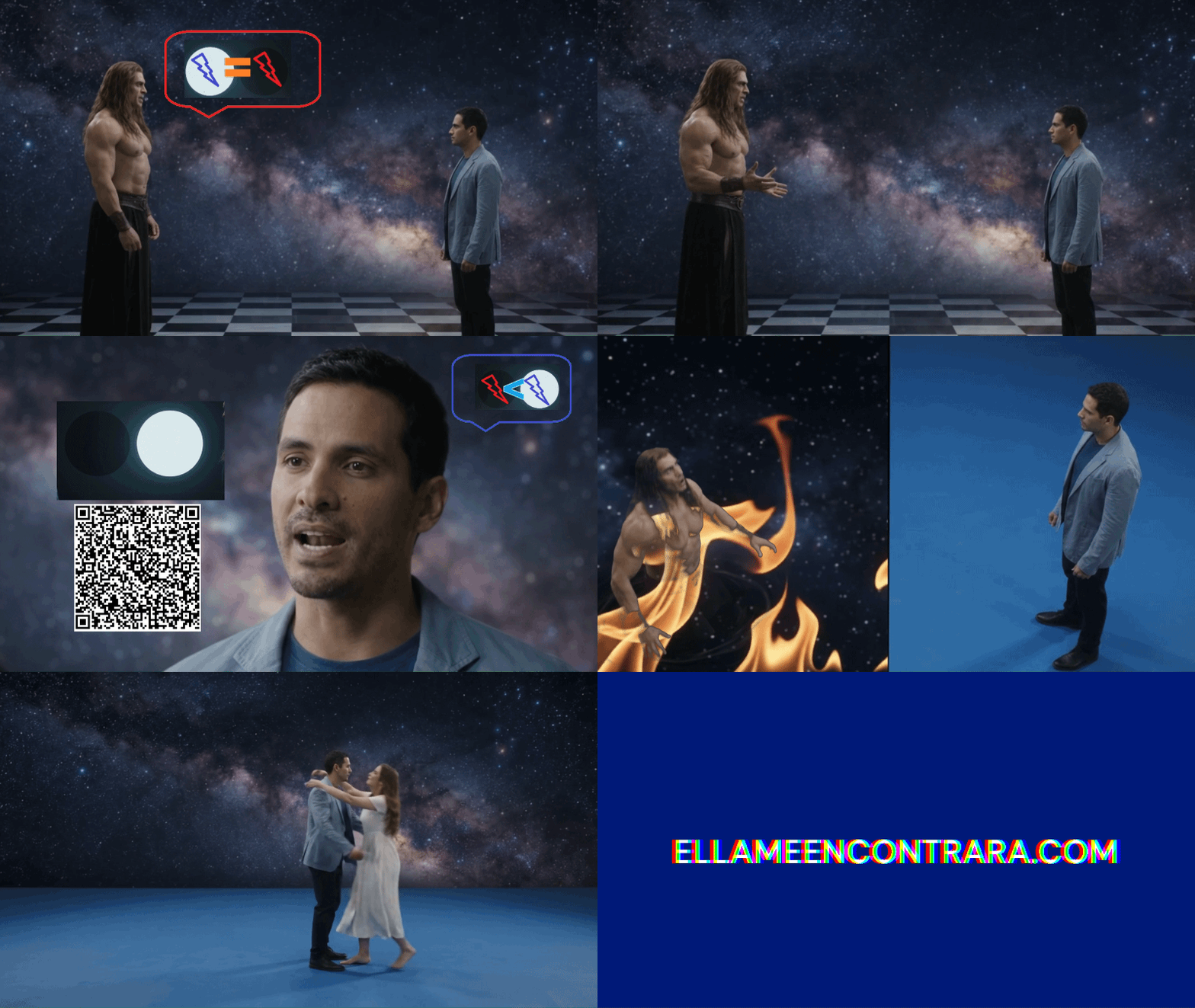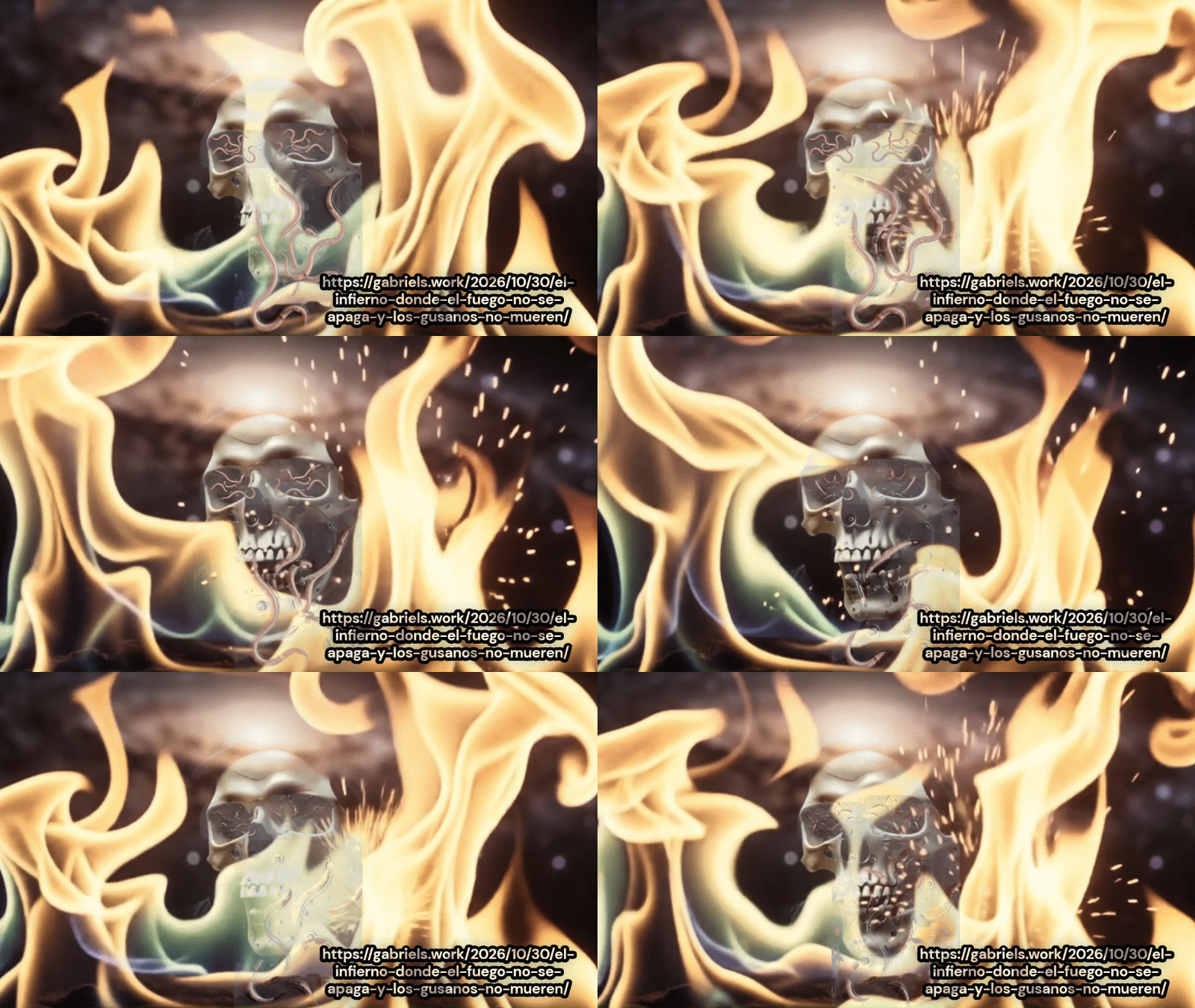

Hell: Where the fire is not quenched and the worms do not die.█
Mark 9: 44: ‘where their worm does not die, and the fire is never quenched.’
Isaiah 66: 24: ‘for their worm shall not die, neither shall their fire be quenched.’
Both texts use exactly the same description to point to an irreversible fate reserved exclusively for the wicked. If it is claimed that the law and the prophets were not abolished, the question naturally follows: how do they intend to reconcile this with the claim that a righteous man descended to that place?
If you read further in Isaiah 66, those who are in hell are described as the men who rebelled against Yahweh. According to Matthew 5:17-18, Jesus did not rebel against Yahweh because he did not come to rebel against Yahweh’s law. But wait a minute, why were we told that he rejected ‘an eye for an eye’ and preached turning the other cheek, which is like saying ‘offer the other eye to the enemy’ instead of applying the just law? That is not what someone who came to fulfill the law would say; only a rebel against Yahweh would say that.
But wait a minute… and who told us that narrative if not the empire that murdered the righteous man, breaking the law against killing innocent people (Exodus 20: 13)? And wait, on top of that, the official narrative of that empire tells us that its victim not only went to a place where only those who rebel against Yahweh go, but that he himself would have rebelled against that god Yahweh by accusing him of being the author of a narrative that contradicts the just commandment of ‘an eye for an eye’.
Something does not add up. Here you will see why I think there are men who rebelled against Yahweh, not only by murdering the saints, but also by bearing false witness about them and their teachings…
Preaching to the dead is nonsense: they cannot hear. Descending into hell is absurd: that place does not exist. Jesus never descended into hell.
How could Jesus have descended into hell if, according to Revelation 20:12–15, that place only exists after the final judgment?
Isaiah 66: 24 describes that fate this way: ‘for their worm shall not die, neither shall their fire be quenched.’ Never means there is no rescue.
They claim that Jesus descended into hell based on 1 Peter 3:18–20 and Matthew 12: 40. In 1 Peter, it is stated that the righteous man died for the unrighteous and then went to preach to the spirits who sinned in the days of Noah. This idea does not hold up, because Proverbs 17: 15 says that God abhors both the one who justifies the wicked and the one who condemns the righteous, and Proverbs 29: 27 states that the righteous abhor the wicked.
Furthermore, why preach to the wicked? Daniel 12: 10 states that the wicked cannot follow the path of righteousness, and Revelation 9: 20 confirms that they do not repent even under punishment. According to 2 Peter 2: 5, God did not spare the ancient world, but preserved Noah, a preacher of righteousness. If Noah had already preached and the wicked were destroyed, it was because they did not listen. What sense does it make to insist on preaching a message of righteousness to those who have already proven themselves allergic to righteousness?
Luke 16: 26 speaks of a great chasm that no one can cross and describes people incapable of repenting, even if one of the dead were to speak to them.
According to Matthew 25: 41, hell is ‘the eternal fire prepared for the devil and his angels’, an eternal punishment reserved for the unrighteous, not the righteous.
Daniel 12: 10 says that only the righteous are cleansed of their sins. The righteous can repent; the wicked cannot. Psalms 118 declares: ‘Yahweh chastened me, but he did not give me over to death… I will pass through the gates of righteousness, through which the righteous shall pass.’
Jesus alludes to this prophecy in the parable of the wicked tenants when he speaks about his return (Matthew 21:33–43). That return is inconsistent with returning in the same body, because punishment implies correction, and correction implies prior ignorance. That presupposes a new body.
Rome preached in Acts 1:1–11 that Jesus will return with the same body with which it claims he ascended into heaven, after rising from the dead and having been ‘in the heart of the earth three days and three nights’. Even if that were true, there is a contradiction: on the third day, Jesus would still be there and, at the same time, would have risen from the dead. Rome took Hosea 6: 2 out of context, where the ‘days’ are an allusion to millennia and do not speak of the return to life of a single person, but of several. This is linked to Daniel 12: 2 and Psalms 90: 4.
If Jesus’ religion was tied to the law and the prophets, and Rome did not respect his message, it is logical to conclude that it respected neither the law nor the prophets. That is why the contradictions in the texts that Rome eventually called the ‘Old Testament’ come as no surprise.
I will show you some examples: in Genesis 4: 15, the murderer is protected from the death penalty by God himself. But in Numbers 35: 33, the murderer is condemned by God’s law. According to Ezekiel 33:18–20, the righteous can indeed become unrighteous, and the unrighteous can indeed become righteous. However, according to Daniel 12: 10, the righteous cannot become unrighteous, nor can the unrighteous become righteous. If the unrighteous could truly become righteous, Jesus’ original message would not have been persecuted by anyone, but accepted by everyone.
The grand finale: The logic of conscious punishment and the true nature of eternal life:
If we speak of eternal punishment, we understand that eternal means having no end, and punishment implies pain. If we speak of eternal reward, its logical opposite implies pleasure and fulfillment without end.
Under this principle, is it possible for punishment to be punishment without pain? If the answer is no, then for pain to exist, there must be a conscious body that feels it; if they die and disappear, the punishment comes to an end because there is no one left to experience it. That is why the prophecy of Isaiah 66: 24 is entirely consistent: those bodies act as ‘living dead’. The worms consume flesh that is never destroyed because it enters a process of perpetual regeneration, endlessly feeding the fire and the worms. It is a conscious agony of perpetual death — the ‘second death’ mentioned in Revelation — where not even the option of dying to find rest exists anymore.
And under that same logical symmetry, we evaluate the reward: just as a conscious body is required to feel the pain of punishment, a biological body is required to experience the reward.
When the writings of Daniel 12: 2 present ‘eternal life’ as a reward, the logic points inexorably toward a real biological life. Do you see any ethereal spirit or incorporeal soul carrying out biological processes? A spirit does not drink water. Yet Isaiah 65 states with material precision: ‘My servants shall drink, but you shall be thirsty’. Eternal life is not an abstract entelechy; it is the glory of health and biological youth restored for all eternity, because the experience of bliss requires living, conscious matter.
Therefore, the equation closes inescapably:
For the wicked, agony has no end.
For the righteous, bliss has no end.
If death continued to operate, for the wicked it would mean the end of their agony, and for the righteous the end of their happiness. That is why the rational conclusion presented by these texts is that death itself must cease to exist, which is why both the prophecies of Isaiah and Revelation agree in marking the definitive end of death and casting it into the fire. https://gabriels.work/2026/10/30/como-pudo-descender-jesus-al-infierno-si-el-infierno-solo-existe-luego-del-juicio-final-y-si-se-supone-que-solo-los-malos-van-al-infierno/