

The images of the Devil were passed off as images of the saints█
From Mars to Saint Michael: How the Roman Empire Gave Its Statues Wings: the image of the Devil was passed off as the image of the saint.
[BLOCK 1 – THE ORIGIN OF ICONOGRAPHY AND THE PROHIBITION]
We have been told over and over again that this image represents good and evil: on the right, Jesus; on the left, the devil. We were taught that evil is the dark-skinned man with short hair, while good is the white-skinned man with long hair and a halo or solar crown over his head.
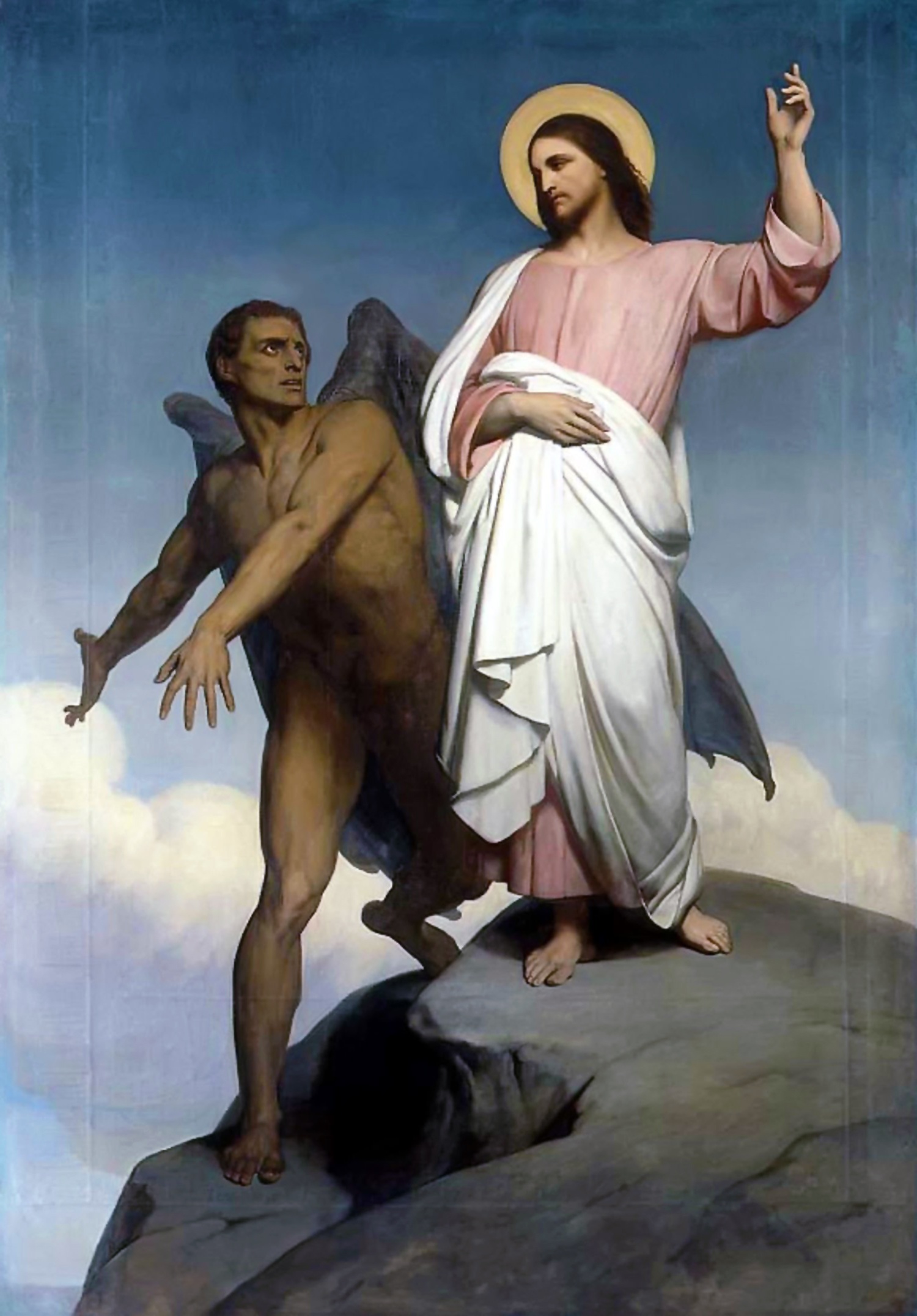
But before taking this for granted, ask yourself a key question: where does this version of events actually come from?
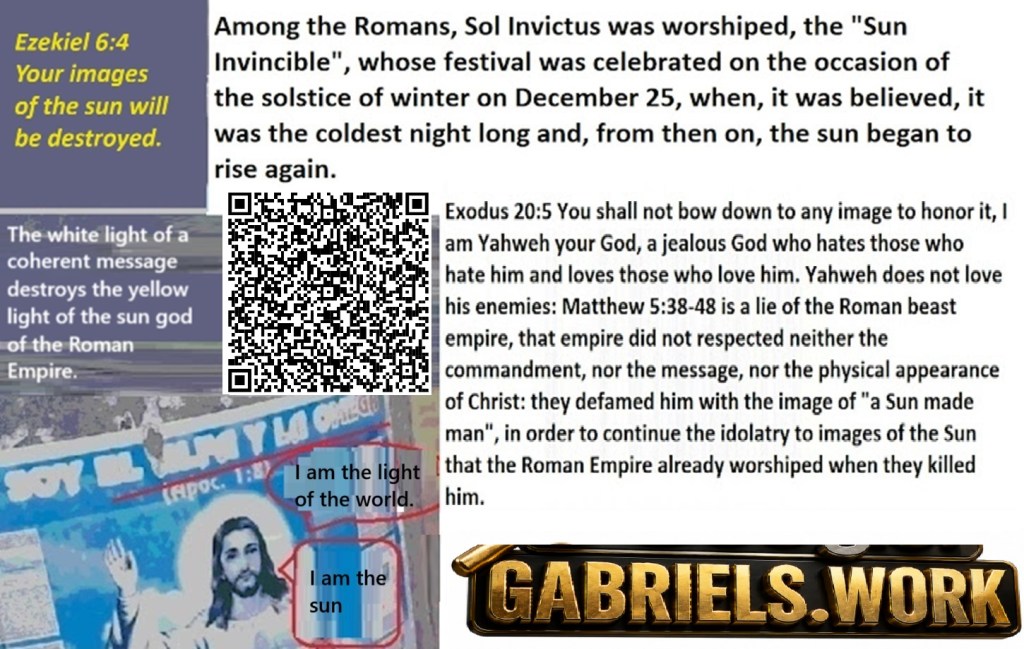
It comes from the Roman Empire and from the ecclesiastical structure that inherited its power. The same empire that executed Jesus openly worshiped solar gods.
This is where the logic breaks down. There are ancient texts such as Exodus 20 and Deuteronomy 4 that establish a clear and categorical prohibition: do not worship or bow down before any representation, whether of the heavens, the earth, men, the sun, or the moon.
If the Roman Empire worshiped the sun, persecuted the original message, and then built the official Church… why should we assume that its conversion was sincere? If today people are required to bow before representations and elements that directly replicate solar symbolism, are we not seeing exactly the same imperial worship, but under a different name?
The text of Habakkuk 2 puts it with devastating clarity: What good is a mute image? Can it possibly teach anything?
A sculpture or a painting does not hear, does not understand, and has no spirit. The prohibition against worshiping them is not a blind dogma; it is a rational position. An image cannot do anything for you.
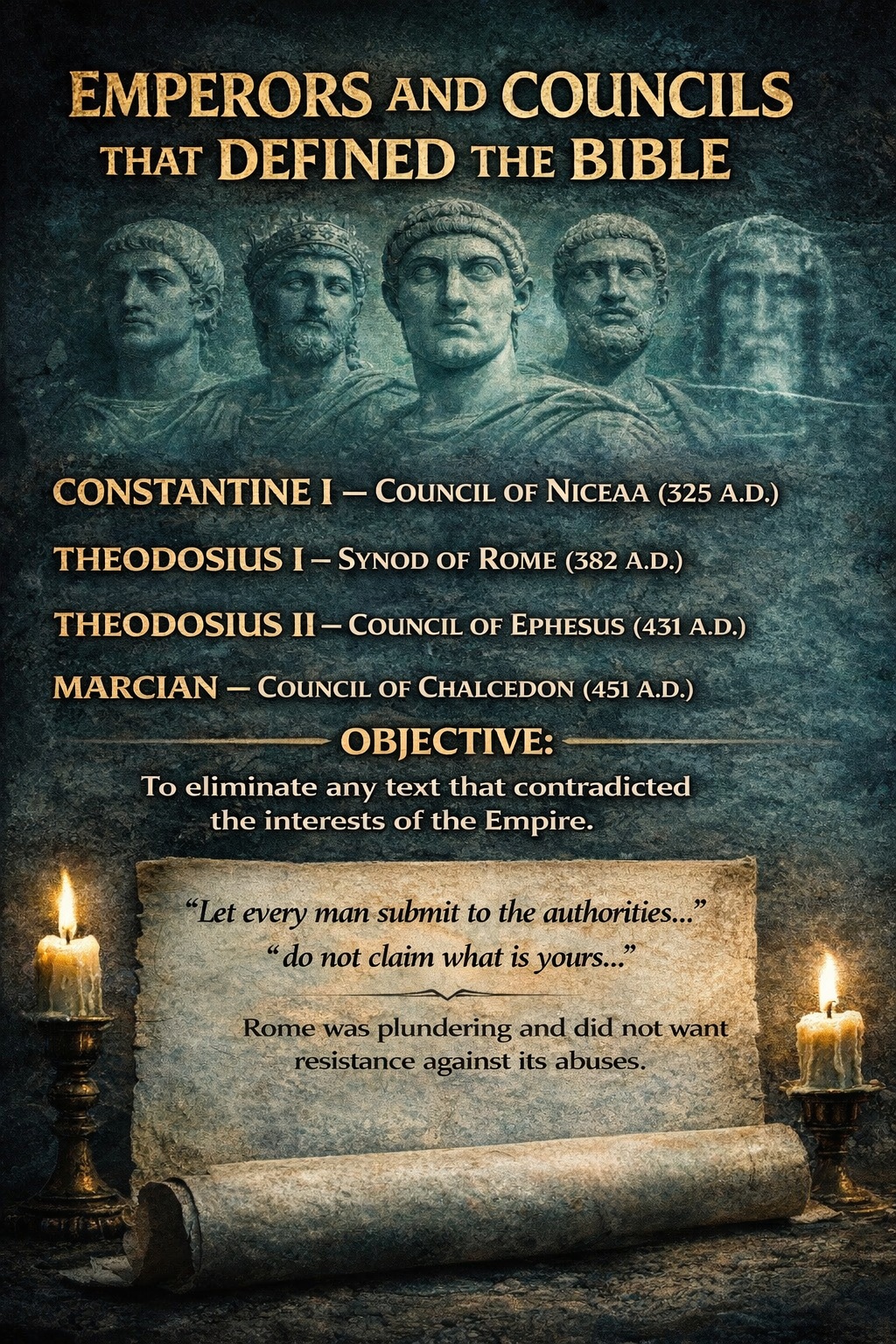
This does not mean accepting as valid everything that has survived to the present day. If these texts passed for centuries through the filter and editing of imperial hands, textual manipulation is not merely a possibility: it is a historical certainty. They rewrote the accounts of their time and retouched the oldest writings to consolidate their power.
[BLOCK 2 – THE CONTRADICTION OF LONG HAIR]
Let us clarify something fundamental: this is not about defending the biblical text or assuming that everything it contains is authentic. History shows that the manuscript that reached us passed through filters and interpolations to align with the interests of imperial power. However, even within these texts, their own logic exposes the cracks in the visual tradition that was sold to us.
Let us take the representation of long hair as an example. Official iconography portrayed a long-haired Jesus, but if we analyze letters such as 1 Corinthians 11, the narrative collapses through simple internal consistency.
In that writing, Paul explicitly states two things: first, that he is an imitator of Christ; and second, that for a man it is a dishonor or a shame to let his hair grow long.
The mathematical conclusion is unavoidable: neither that apostle nor the historical Jesus wore long hair. It is a matter of basic logical honesty. No one who claims to faithfully follow a teacher would call the very appearance of that teacher a ‘shame.’
Where, then, does the image of the man with long hair, light skin, and a solar crown come from? It does not come from historical reality or from the context of the first century. It comes from Roman aesthetic assimilation, which took the features of its own pagan deities and gave them the name of Jesus to facilitate religious control. We were sold a portrait fabricated by the same empire that destroyed the original message.
[BLOCK 3 – THE FALLACY IN THE DESERT TEMPTATION]
We have also been told that this painting represents the supposed temptation of Jesus in the desert. However, when we analyze the texts that the official structure used to support that account —such as Matthew 4—, the seams once again come apart.
In that passage, Psalm 91 is quoted to support the scene: ‘He shall give his angels charge over thee, to keep thee in all thy ways. They shall bear thee up in their hands, lest thou dash thy foot against a stone.’ But if you read Psalm 91 in its entirety, the protagonist of that text is someone to whom nothing happens, someone at whose side a thousand and ten thousand fall on his right, but harm does not reach him.
That scenario was never fulfilled in the historical Jesus. He was executed; he fell before imperial violence, and many did not fall before him.
This painting was presented to us as the pious account of an overcome temptation, when in reality they passed off a text about protection and invulnerability that was not fulfilled, forcing it to give validity to the narrative they constructed. It is another example of how the empire took incomplete fragments to force prophecies and consolidate a story tailored to its interests.
[BLOCK 4 – THE CONTRADICTION OF THE KINGDOMS AND WORSHIP]
The temptation account adds another element that collapses through simple deductive analysis. We are told that Satan offered Jesus all the kingdoms of the earth in exchange for bowing down and worshiping him.
Now, think about it coldly: if Satan rules all the kingdoms of the earth, is it logical to assume that the books and official canons approved by the empires of this world contain an intact truth? Or is it not more logical to conclude that those same official writings are infiltrated and edited by those who control those kingdoms?
But the contradiction becomes even more evident when analyzing the behavior attributed to Jesus in other passages. In the account of the ten lepers who were healed, the narrative shows Jesus allowing the only one who returned to bow at his feet, stating that only he gave glory to God.
Here we must ask the fundamental questions: Would a righteous man who respects God ask other human beings to kneel before him? Would he demand exactly the same thing that Satan supposedly asked him to do in the desert?
We are presented with a character molded in the image of imperial kings and solar gods, tolerating and encouraging people to bow before him. And to make matters worse, in passages such as Hebrews 1:6 they claim that all the angels must worship him.
This clashes head-on with older writings such as Psalm 97, where it is clearly established that worship belongs exclusively to Jehovah —the Creator who is not a creature and who cannot die—. Jesus, on the other hand, according to the account itself, died.
The pieces fabricated by the empire simply do not fit.

[BLOCK 5 – THE MANIPULATION IN THE QUOTATION OF PSALM 69]
To dispel any doubt about how these writings were manipulated and assembled, let us analyze a concrete example that was sold to us as the supreme act of love, but which completely falls apart when the original sources are examined.
The traditional narrative tells us that, while on the cross, Jesus was given vinegar to drink in order to ‘fulfill a scripture,’ and that at that very moment he prayed for his executioners, saying: ‘Father, forgive them, for they know not what they do.’ We were taught to see this as an example of forgiveness carried through to the final breath. But what does the cited prophecy actually say?
The reference to vinegar comes from Psalm 69. However, when you read the full context of that psalm, the tone is not one of forgiveness or love toward enemies; it is the exact opposite.
The protagonist of that psalm is not asking forgiveness for those who are torturing him. He is asking for judgment: he demands that the banquet of his enemies become a trap, that their eyes be blinded, and that wrath fall upon them.
How is it possible for an act presented as supreme forgiveness to cite as its support a text in which the protagonist cries out for the ruin of his aggressors?
Here the seam of Roman editing is exposed. They took isolated verses to force the fulfillment of supposed prophecies, creating a pious narrative that promoted resignation and submission before the oppressor, while deliberately ignoring the original context of the writing. We were sold a story made over by the same hands that edited the book.
[BLOCK 6 – THE INVERSION OF THE IMAGE]
In light of this evidence and these historical contradictions, the conclusion is unavoidable: the Roman Empire never adopted or preached the original teaching it persecuted; rather, it absorbed it and molded it to suit its own purposes.
That is why the definitive question must be asked by looking directly at the iconography that was imposed upon us.
Look carefully at this representation. If the historical framework of first-century Judea indicates that the local population had darker complexions and wore short hair —in accordance with the letters attributed to Paul—, it is contradictory that the figure of the ‘righteous man’ was drawn with Nordic features, long hair, and imperial solar elements.
Could it be that history was completely inverted? Who really represents the oppressor in that painting, and who represents the righteous man who refused to submit to the empire?

The empire dressed its own image in the mantle of holiness and portrayed the features of the subjected people under the figure of the adversary. We were taught to venerate the aesthetic of the dominator and reject the actual appearance of the persecuted.
Think about it. The answer is not found in blind faith, but in questioning whom the image before which you kneel benefits.


[BLOCK 7 – THE MILITARY AESTHETIC OF THE SUPPOSED IMAGE]
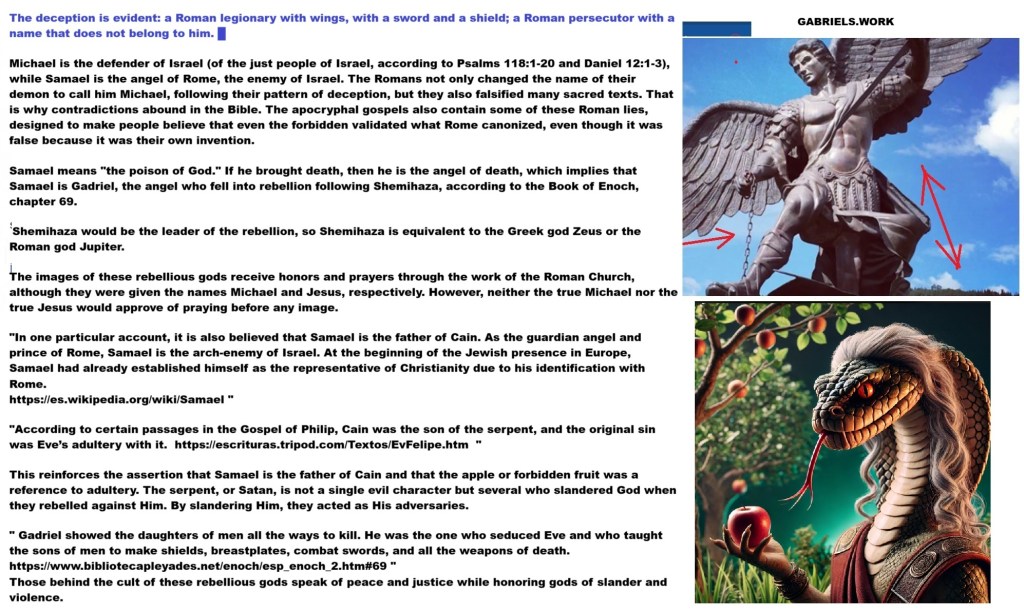
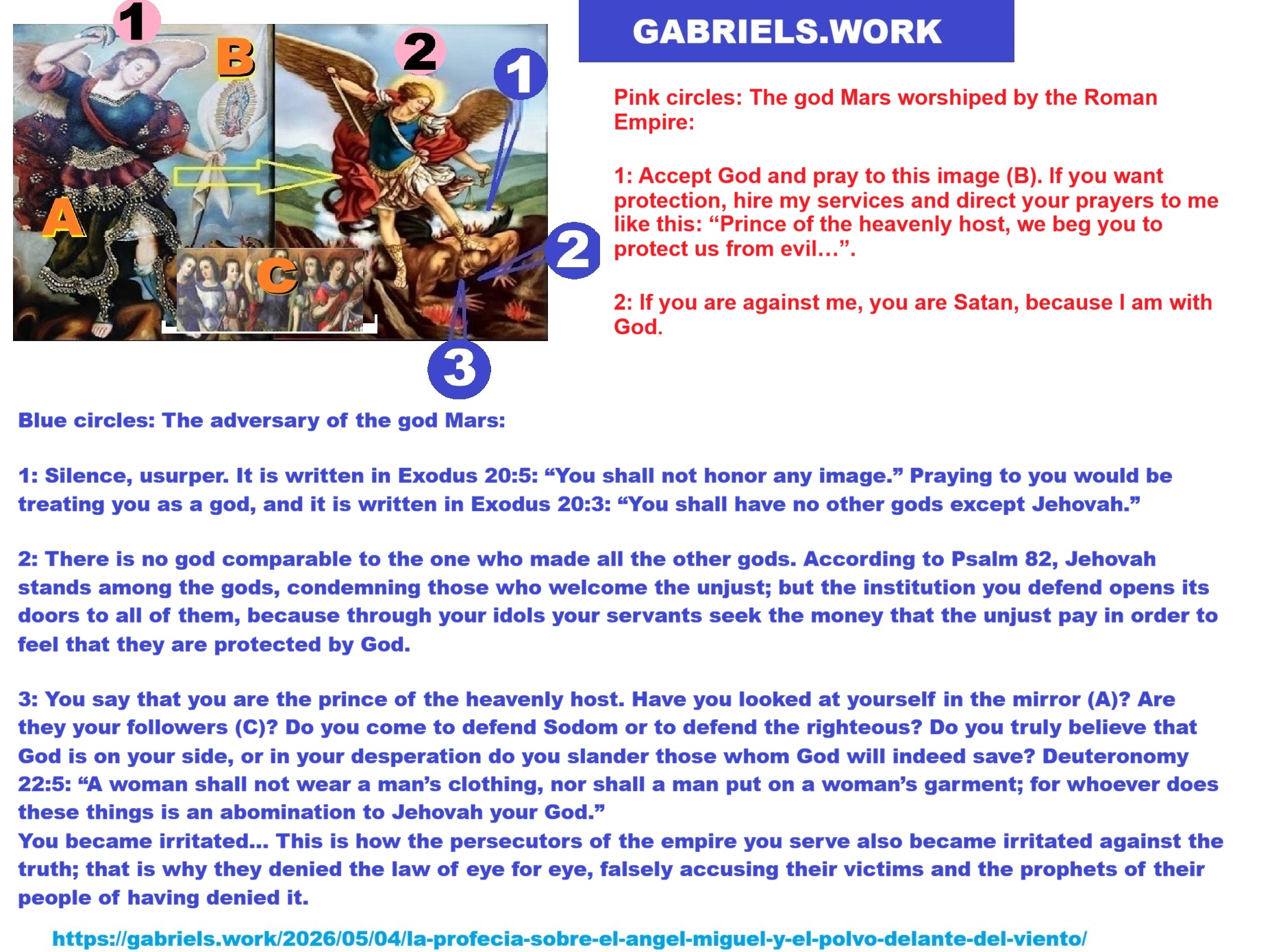
If there is still any doubt about how the aesthetic of the subjugator was perpetuated, all you have to do is observe the supposed image with which they represented the celestial protector, Saint Michael.
Look carefully at the official statues and paintings. You do not see a spiritual entity there; you literally see the image of a Roman legionary. He is equipped with a helmet, cuirass, raised sword, and military sandals. It is almost an exact replica of the statues of the god Mars that Rome already worshiped.
The iconographic deception is absolute: they taught people to kneel before a representation dressed exactly like the soldiers who persecuted and executed the true followers.
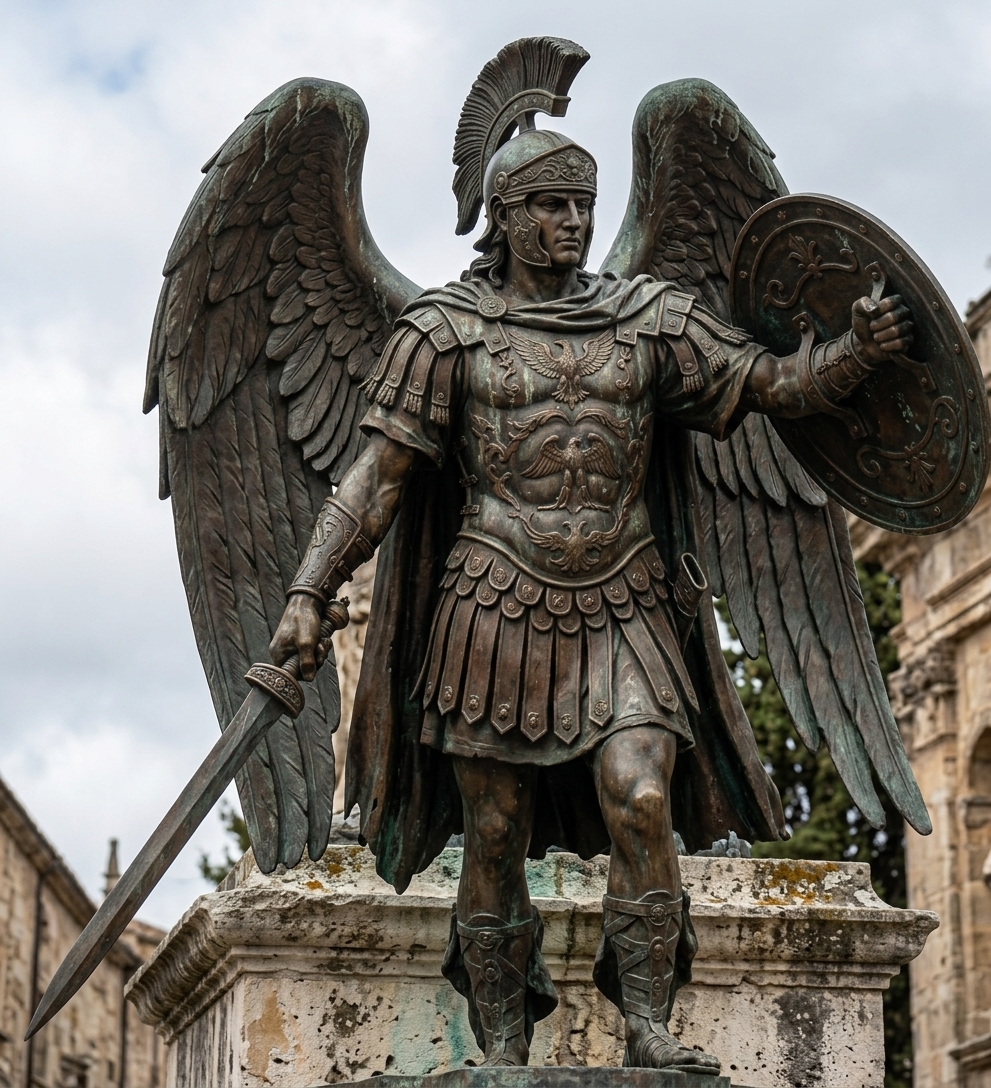
They took the figure of the military oppressor, added wings to him, and told people that this was the image of the protector. Teaching people to venerate the aesthetic of the dominator is proof that the empire did not change its devotion; it only changed the names of its statues.

«It can’t just be a coincidence. Word of Satan: ‘My chosen will bow before me; when I strike them on one side, they will offer the other and take pride in the marks on their skin, for thus they deserve my kingdom’. The serpent cannot endure righteousness; that’s why it wants you to bow and kiss the feet of its monuments.
Give to everyone who asks, the false beggar will thank you. //151
Jacob Deceived a Blind Man… And God Loved Him? //41
The Hand of God and the Idols //468
Why are the teachings of Cleobulus of Lindos passed off as the teachings of Jesus in the Bible? //46
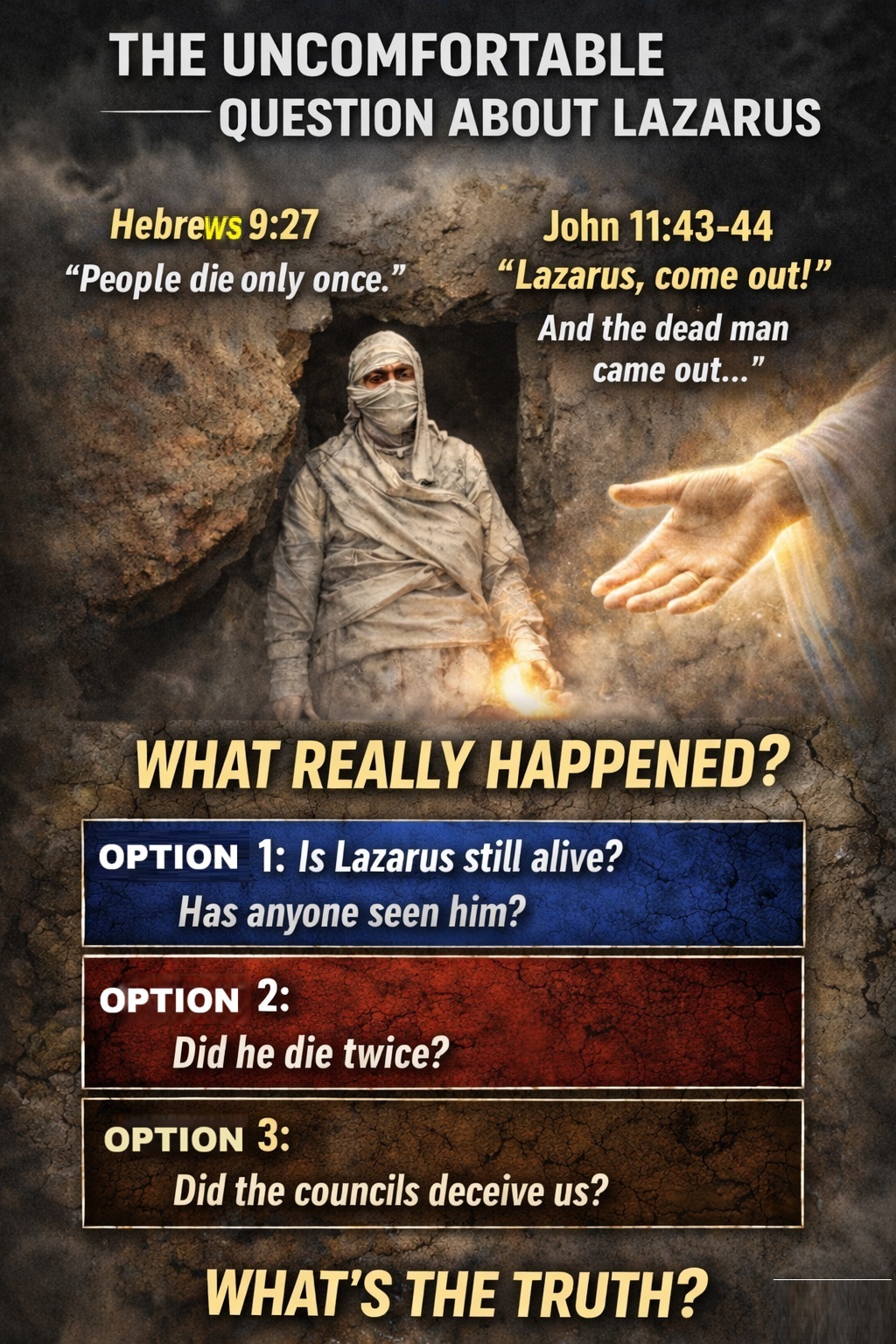
It cannot be true that the message in Hebrews 9:27 is correct and at the same time that Jesus raised Lazarus and that other men were raised thousands of years ago. If that is so, where are they if one truly dies only once? //74
I was kidnapped and tortured for protesting against the doctrines of Catholicism, and I demand justice for myself and a just punishment against those who kidnapped me; to carry out justice is to give glory to Jehovah. Isaiah 42:12: ‘Give glory to Jehovah and declare His praise in the coastlands.’ Revelation 14:7: ‘Fear God and give Him glory, because the hour of His judgment has come; and worship Him who made heaven and earth, the sea and the springs of water.’ Exodus 21:16: ‘He who kidnaps a person, whether he sells him or he is found in his possession, shall surely be put to death.’ I was 24 years old. At that time I suffered family harassment because I had stopped being Catholic after reading Exodus 20:5. They did not accept my decision nor tolerate my criticism; for that reason, they falsely accused me of being insane. Under that pretext, they kidnapped me. I had also read Proverbs 19:14, and I sought to please God so that He would bless me with a wife. At that time I did not know that the Bible contained lies introduced by Rome. They did not allow me to read enough to understand it beforehand. My mistake was to use the Bible as truth to fight against the lies of the Catholic Church. I fell into the trap. That is why God stopped me. But since He knew that I was seeking a faithful wife in order to be faithful to her, He did not deliver me to death; He only corrected me (Psalm 118:13–20). //89

«
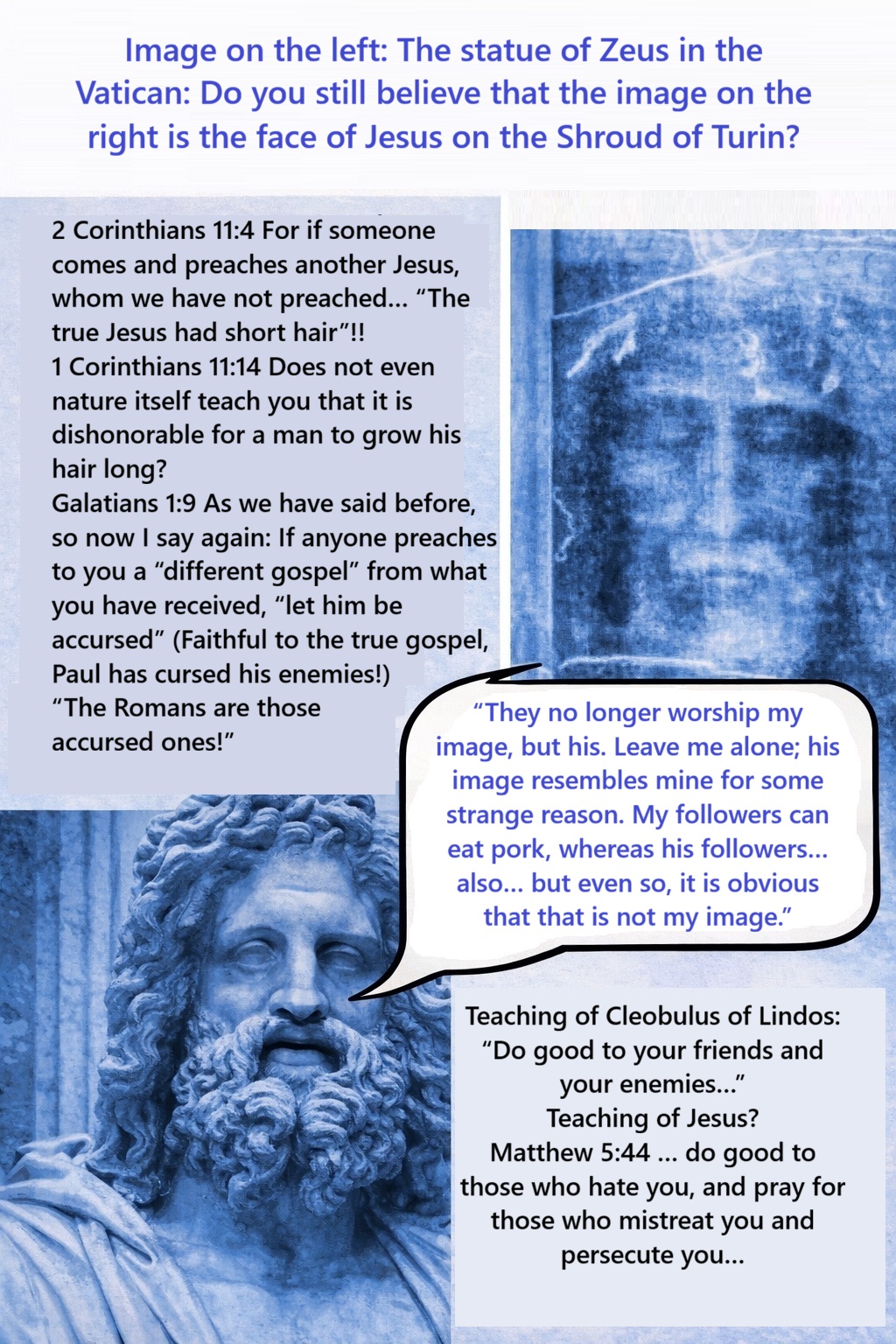
Those who deceive you cannot give a coherent explanation about this. There is no sharper sword than an awakened consciousness. Word of Satan (Zeus): ‘I am proud of my priests: When they bless weddings, they do not bless love; they bless the opportunity to touch forbidden flesh, the one they swore not to beget.’ , ABC 2 45 3[313] , 0020
│ English │ #NUEMXP
The Prophecies of Isaiah That Challenge Islam and Christianity. (Video language:Dutch) /128/ https://youtu.be/O7kRy655ZE8,
Day 191
Jacob Deceived a Blind Man… And God Loved Him? (Video language:Swahili) /109/ https://youtu.be/lFqyiZ6SVUA
«The just punishment for owners of dangerous animals that cause the death of innocent people should be legal in Peru.
I constantly see news reports in which the owners of dangerous dogs —dogs that cause the death of other people who had the misfortune of encountering them, not because they were trying to break into their owners’ homes, but because they were unfortunate enough that their owners did not put muzzles on them or lock them up— are not sentenced to death because the law does not establish it that way.
That is not justice. What is just is not necessarily legal, and what is legal is not always just. And justice, in this case, is the death penalty for such negligence. I do not agree with everything the Bible says, but this does seem just to me and should be emulated and legalized:
Exodus 21:28: ‘If an ox gore a man or a woman, and they die, the ox shall be stoned, and its flesh shall not be eaten; but the owner of the ox shall be acquitted. 29 But if the ox was known to have been a goring ox from time past, and its owner had been warned, and he did not keep it confined, and it killed a man or a woman, the ox shall be stoned, and its owner shall also die.
Psalms 119:17: ‘Deal bountifully with thy servant, that I may live,
And keep thy word.
18 Open thou mine eyes, that I may behold
Wondrous things out of thy law.
19 I am a stranger in the earth:
Hide not thy commandments from me.
20 My soul breaketh for the longing
That it hath unto thy judgments at all times.
21 Thou hast rebuked the proud that are cursed,
Which do err from thy commandments’.
Who strayed from the just commandments if not the Empire that never stopped worshiping images?
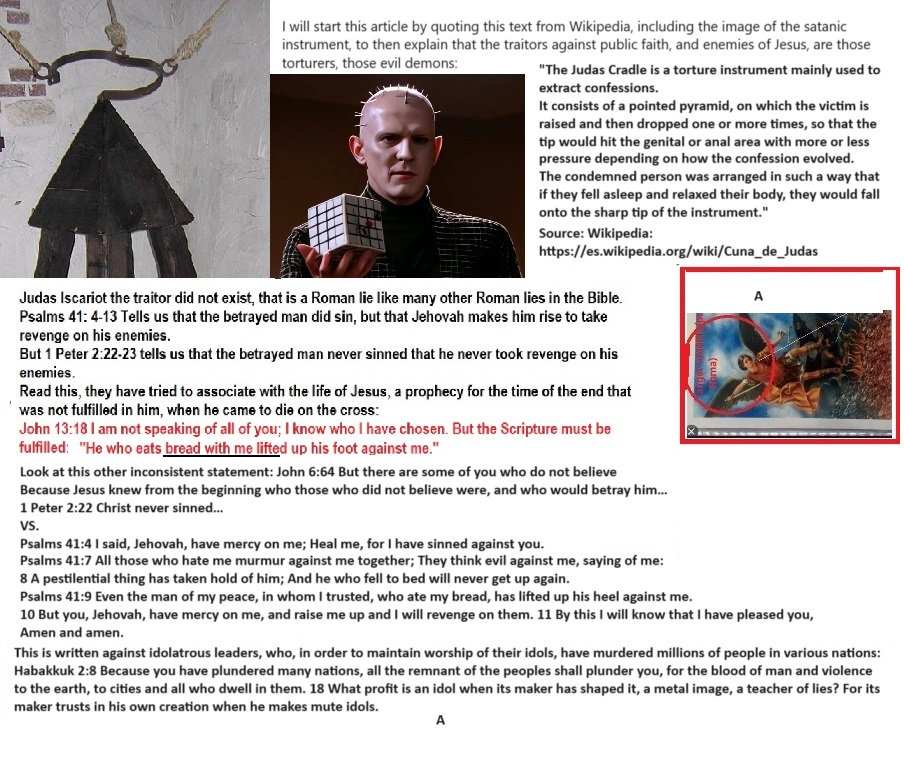
Who denied Jesus his life and then refused to receive the punishment of life for life, if not Rome, which lied by saying that, while on the cross, Jesus forgave his enemies? Who told us that story if not the Empire that used dogs to eat alive those who followed the religion of Jesus?
Do you see any blessing here from the victim toward his murderers? Do you see love for the enemy here? I see curses against the enemies; I only see justified hatred, not love:
Psalms 69:20 The reproach hath broken my heart; and I am full of heaviness.
And I looked for some to take pity, but there was none;
And for comforters, but I found none.
21 They gave me also gall for my meat;
And in my thirst they gave me vinegar to drink.
Matthew 27:34 And they gave him vinegar to drink mingled with gall: and when he had tasted thereof, he would not drink.
Psalms 69:22 Let their table become a snare before them,
And that which should have been for their welfare, let it become a trap.
23 Let their eyes be darkened, that they see not;
And make their loins continually to shake.
24 Pour out thine indignation upon them,
And let thy wrathful anger take hold of them.
25 Let their habitation be desolate;
And let none dwell in their tents.
Who lied to us with this claim that the murderers of Jesus were forgiven by Jesus?
Luke 23:34 And Jesus said, Father, forgive them; for they know not what they do. And they parted his raiment, and cast lots.
Would Jesus ask forgiveness for those whom he had just disparagingly called ‘dogs’?
Psalms 22:16 For dogs have compassed me:
The assembly of the wicked have inclosed me:
They pierced my hands and my feet.
17 I may tell all my bones:
They look and stare upon me.
18 They part my garments among them,
And cast lots upon my vesture.
Who lied to us about Jesus and his religion? Were they not the depraved Roman emperors?
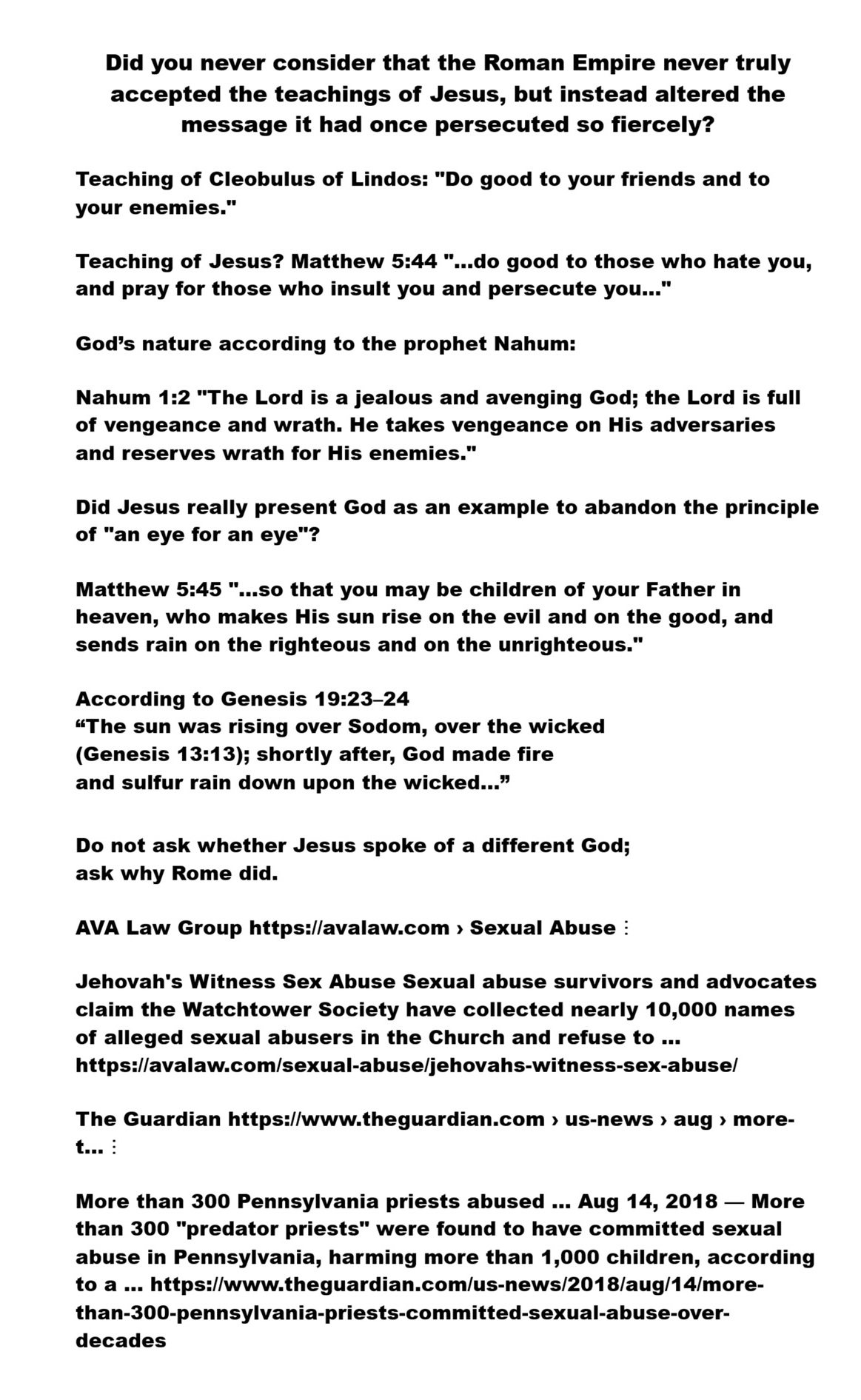
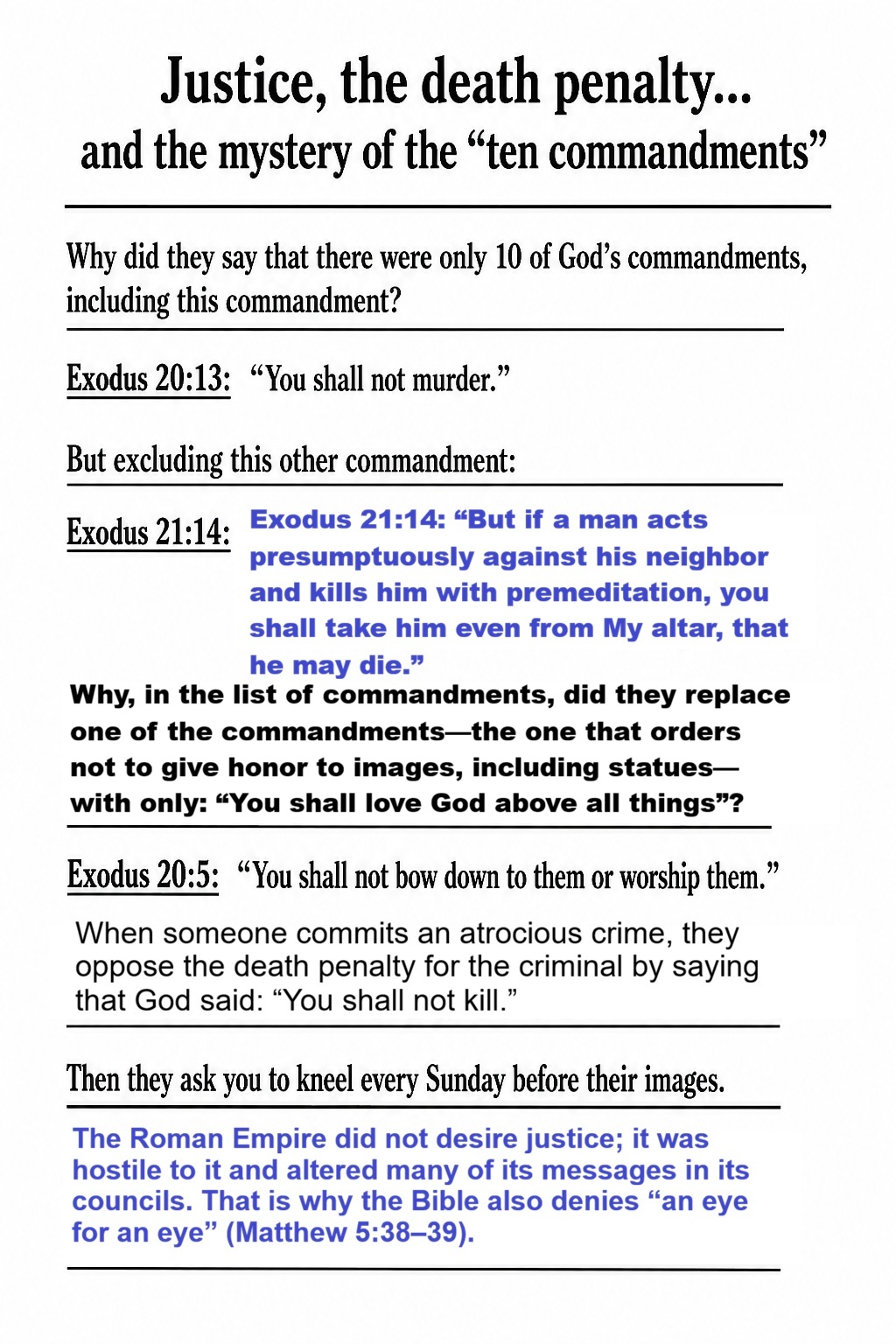
Why does the Roman Empire tell us about saints forgiving those who killed them if the righteous hate the wicked according to other biblical scriptures that seem to have survived the censorship of the Roman Empire, which ultimately decided their content?
Acts 7:59-60 And they stoned Stephen, calling upon God, and saying: … Lord, lay not this sin to their charge. And when he had said this, he fell asleep.
Proverbs 29:27 The just hate the unjust, the unjust hate the just.
How can Acts 7 be a faithful testimony about Stephen’s death and his feelings toward his murderers if Revelation 6 tells us that the murdered saints desire that their deaths be avenged?
Revelation 6:9 And when he had opened the fifth seal, I saw under the altar the souls of them that were slain for the word of God, and for the testimony which they held. 10 And they cried with a loud voice, saying, How long, O Lord, holy and true, dost thou not judge and avenge our blood on them that dwell on the earth?
What would God say about these contradictory prayers?
‘So? Did you not ask me to forgive those murderers because ‘they know not what they do’, and did you not tell me not to take their sin into account for having murdered them? Where do we stand? Are you contradicting yourselves, or is this the false testimony given by their murderers?’
It is evident that there are conflicting messages in the Bible: the messages of the saints versus the messages of the usurpers; the usurpers sought impunity for their crimes against the saints:

Those who lead the dissemination of the Imperial legacy of the worship of images of the sun have no logical arguments; they cannot explain these things coherently, so they remain silent:
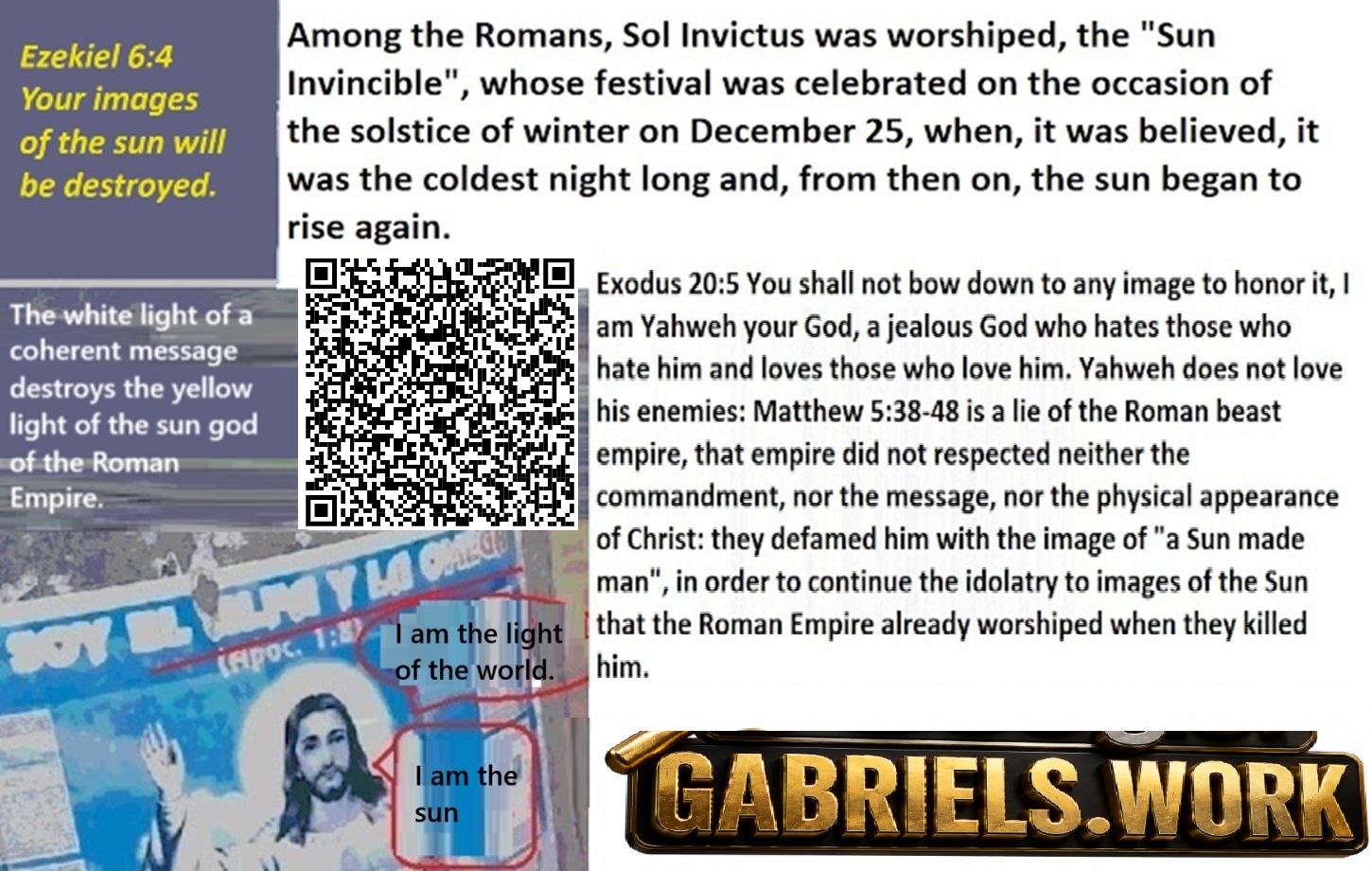

Isaiah 41:28 I looked, and there was no man; and I asked of these things, and no counsellor, that, when I asked of them, could answer a word. 29 Behold, they are all vanity, and their works are nothing: their molten images are wind and confusion.
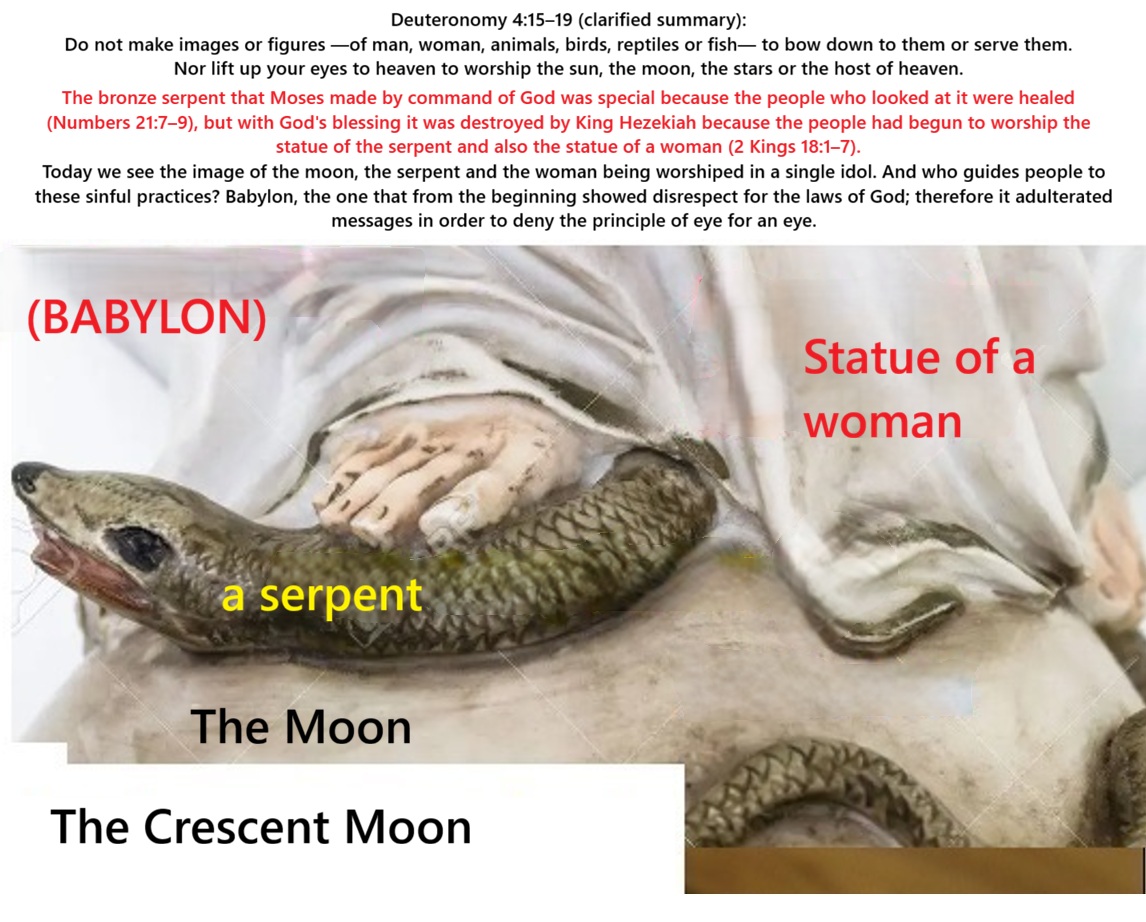
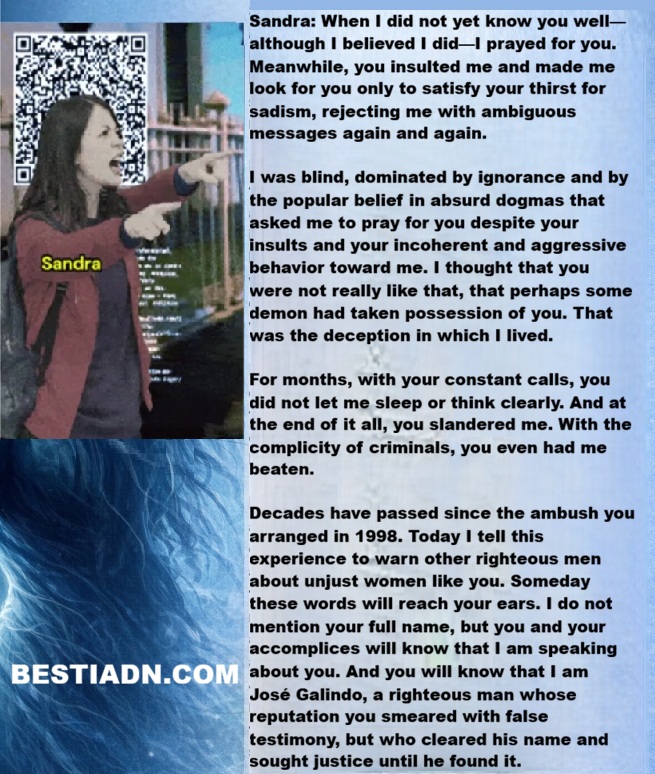
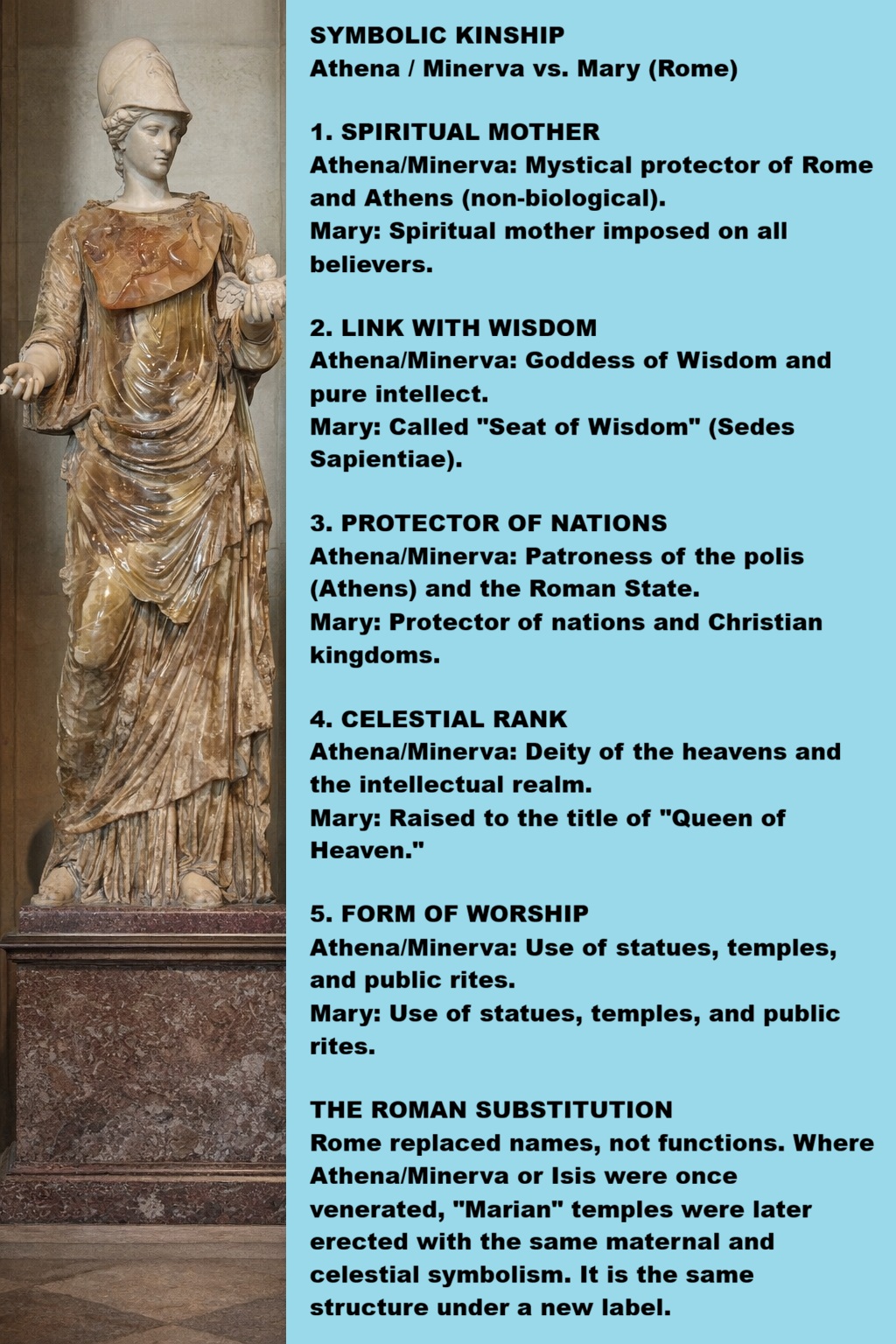
Isaiah 47:10 You felt secure in your wickedness and said, ‘No one sees me.’ Your wisdom and your knowledge have deceived you, and you said in your heart, ‘I, and no one else.’ https://gabriels.work/2026/07/17/el-negocio-de-la-fe-como-la-iglesia-y-la-brujeria-usan-el-mismo-manual/


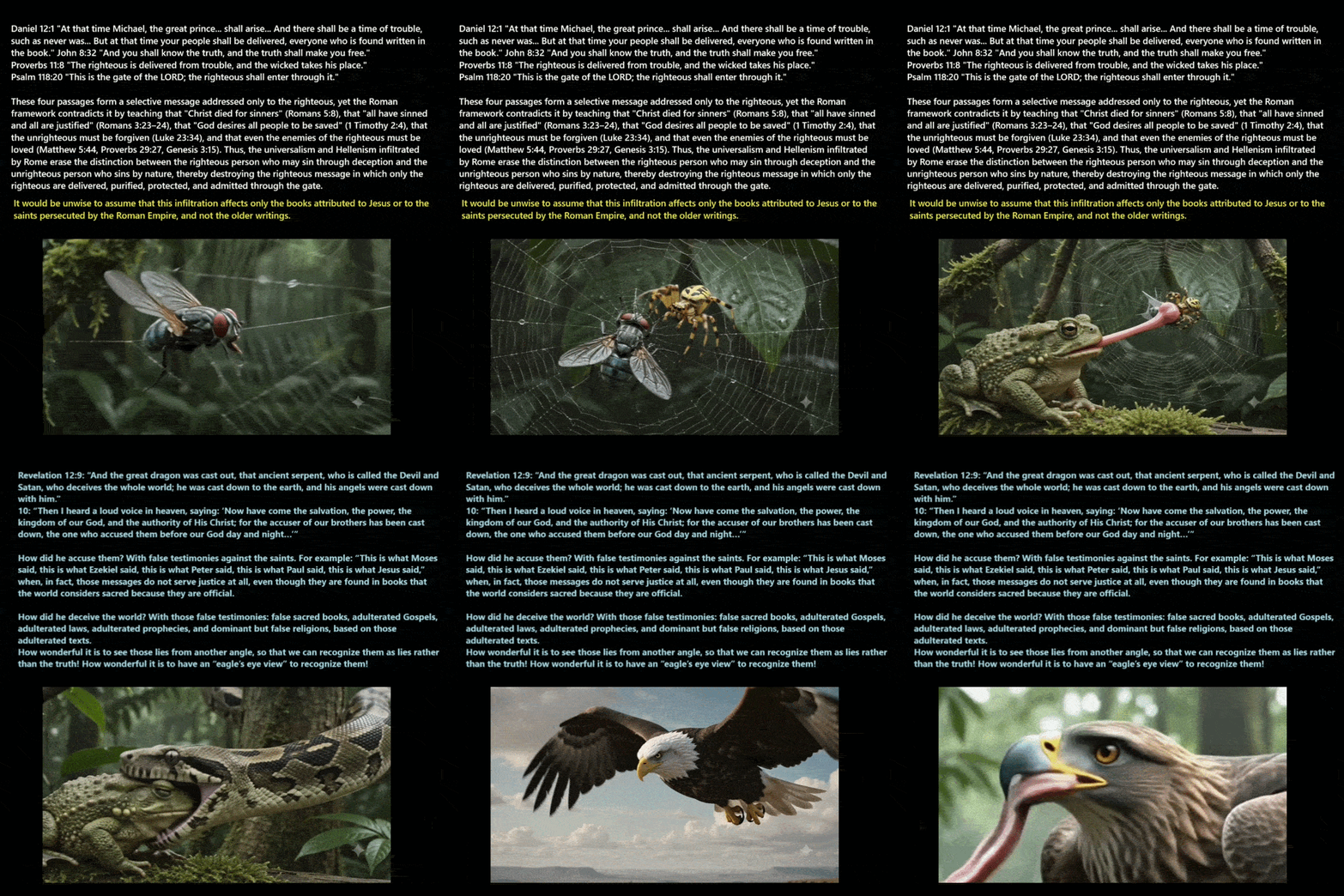
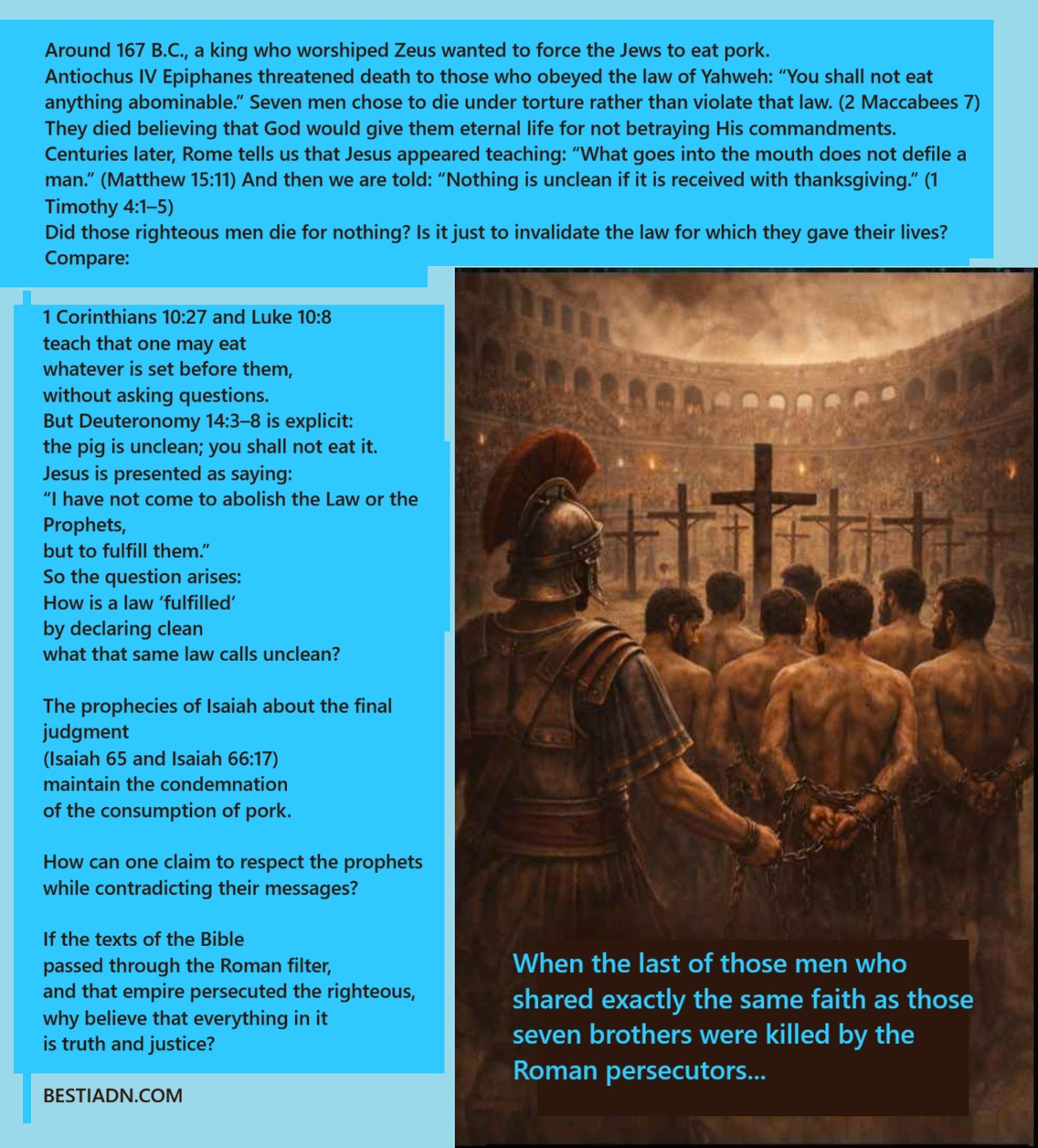
Tacitus recounts the persecution of followers of the message of Christ that Nero carried out after the great fire of Rome in the year 64 AD. According to his account, Nero blamed the followers of the message of Christ in order to divert suspicion that he himself had caused the fire. Tacitus then describes different methods of execution. Among them, he says that some followers of the message of Christ were covered with animal skins and torn apart by dogs; others were crucified and others burned.
Tacitus’s passage about thedogs is quite explicit:
‘Covered with the skins of wild beasts, they were torn apart by dogs and perished…’
h t t p s : / / e s . w i k i p e d i a . o r g / w i k i / N e r % C 3% B 3 n

Word of the Devil: ‘Do not demonize my puppies, they are not dangerous, they only appear to be.’
Let this not go without justpunishment:
Peru – 2023
Arequipa: Pitbull dog violently attacked a60-year-old elderly man until causing his death
Peru – December 2025
Baby dies from an attack by two pitbull dogs in SJL: PNP detains two people – h t t p s : / / w w w . i n f o b a e . c o m / p e r u / 2 0 2 5 / 1 2 / 0 9 /b e b e – m u e r e – p o r – a t a q u e – d e – d o s – p e r r o s – p i t bu l l – e n – s j l – p n p – d e t i e n e – a – d o s – p e r s o n a s /
Peru – August 2026
Two Rottweiler dogs kill a 66-year-old elderly woman while she was going to the market.
h t t p s : / / d i a r i o c o r r e o . p e / e d i c i o n / a r e q u i p a/ f a t a l – a t a q u e – e n – a r e q u i p a – p e r r o s – m a t a n – a-a n c i a n a – c u a n d o – i b a – a l – m e r c a d o – n o t i c i a /
Peru – December 2025
East Lima: Prosecutor’s Office investigates the death of an 11-month-old baby after beingattacked by a pitbull dog – h t t p s : / / w w w . g o b . p e / i n s t i t u c i o n / m p f n / n o t ic i a s / 1 3 0 8 7 1 4 – l i m a – e s t e – f i s c a l i a – i n v e s t i ga – f a l l e c i m i e n t o – d e – b e b e – d e – 1 1 – m e s e s – t r a s-ser- at a c a d o – p o r – u n – p e r r o – p i t b u l l
Peru – September 2024
La Libertad: Three pitbulls attack and kill a father who leaves eightchildren orphaned – h t t p s : / / n o t i c i a s t r u j i l l o . p e / l a – l i b e r t a d -t r e s – p i t b u l l s – a t a c a n – y – m a t a n – a – p a d r e – d e -f a m i l i a – q u e – d e j a – o c h o – h i j o s – h u e r f a n o s /
Peru – March 2024
Arequipa: pitbull dogs attack and kill a 6-year-old boy in his own home – h t t p s : / / e l c o m e r c i o . p e / v i d e o s / p a i s / a r e q u ip a – p e r r o s – p i t b u l l – a t a c a n – y – m a t a n – a – n i n o -d e – 6 – a n o s – e n – s u – p r o p i a – c a s a – n n a v – a m t v – v id e o – p a i s – n o t i c i a /
«
«In Mark 3:29, the ‘sin against the Holy Spirit’ is warned as unforgivable. However, history and the practices of Rome reveal a shocking moral inversion: the truly unforgivable sin, according to their dogma, is questioning the credibility of their Bible. Meanwhile, serious crimes such as the killing of innocents have been ignored or justified under the same authority that claimed to be infallible. This post examines how this ‘unique sin’ was constructed and how the institution used it to protect its power while justifying historical injustices.
In purposes contrary to Christ is the Antichrist, if you read Isaiah 11 you will see the mission of Christ in his second life, and it is not to favor everyone but only the righteous, but the Antichrist is inclusive, despite being unjust, he wants to climb onto Noah’s Ark, despite being unjust he wants to leave Sodom with Lot… Happy are those to whom these words are not offensive. He who is not offended by this message, that one is righteous, congratulations to him: Christianity was created by the Romans, only a mind friendly to celibacy, proper of Greek and Roman leaders, enemies of the ancient Jews, could conceive a message like the one that says: ‘These are the ones who did not defile themselves with women, for they remained virgins. They follow the Lamb wherever he goes. They were purchased from among mankind and offered as firstfruits to God and to the Lamb’ in Revelation 14:4, or a message like this one which is similar: ‘For in the resurrection they neither marry nor are given in marriage, but are like the angels of God in heaven,’ in Matthew 22:30, both messages sound as if they came from a Roman Catholic priest, and not from a prophet of God who seeks this blessing for himself: He who finds a wife finds what is good and receives favor from the Lord (Proverbs 18:22), Leviticus 21:14 A widow, or a divorced woman, or a woman who has been defiled, or a prostitute, he shall not marry; but he shall take as a wife a virgin from his own people.
I am not Christian; I am henotheist. I believe in one supreme God above all, and I believe that several created gods exist—some faithful, others deceivers. I only pray to the supreme God. But since I was indoctrinated from childhood in Roman Christianity, I believed in its teachings for many years. I applied those ideas even when common sense told me otherwise. For example—so to speak—I turned the other cheek to a woman who had already struck me on one. A woman who, at first, acted like a friend, but then, without justification, began treating me as if I were her enemy, with strange and contradictory behavior. Influenced by the Bible, I believed she had become an enemy because of some spell, and that what she needed was prayer to return to being the friend she had once shown herself to be (or pretended to be). But in the end, everything only got worse. As soon as I had the chance to dig deeper, I uncovered the lie and felt betrayed in my faith. I came to understand that many of those teachings did not come from the true message of justice, but from Roman Hellenism infiltrated into the Scriptures. And I confirmed I had been deceived. That’s why I now denounce Rome and its fraud. I do not fight against God, but against the slanders that have corrupted His message. Proverbs 29:27 declares that the righteous hates the wicked. However, 1 Peter 3:18 claims that the righteous died for the wicked. Who can believe that someone would die for those he hates? To believe it is to have blind faith; it is to accept incoherence. And when blind faith is preached, could it be because the wolf wants his prey not to see the deception?
Jehovah will shout like a mighty warrior: ‘I will take vengeance on My enemies!’
(Revelation 15:3 + Isaiah 42:13 + Deuteronomy 32:41 + Nahum 1:2–7)
And what about the so-called ‘love for the enemy’ that, according to some Bible verses, the Son of Jehovah supposedly preached—claiming we should imitate His Father’s perfection through universal love? (Mark 12:25–37, Psalm 110:1–6, Matthew 5:38–48)
That is a lie spread by the enemies of both Father and Son.
A false doctrine born from mixing Hellenism with sacred words.»
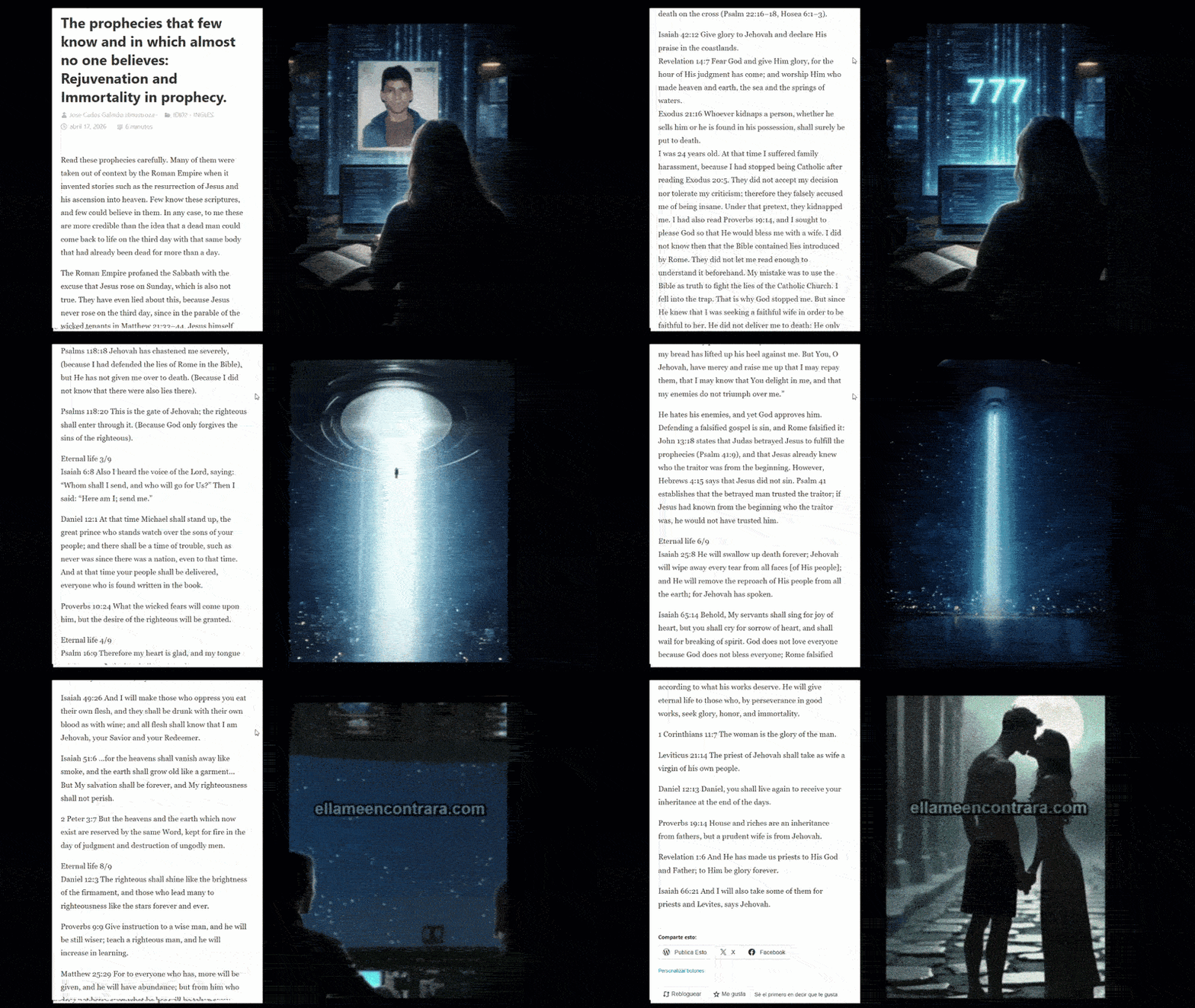
1 الوحش الرابع ومملكة العقيدة… لا يوجد الاستيقاظ إلا عندما يكسر طقسًا. إذا استمر الطقس، فلم يحدث أي استيقاظ. https://ellameencontrara.com/2026/08/10/idi23-quit-the-dogma/ 2 Să analizăm una dintre cele mai suspecte învățături atribuite lui Isus: ideea de «a-ți iubi dușmanul rău». https://bestiadn.com/2026/07/17/sa-analizam-una-dintre-cele-mai-suspecte-invataturi-atribuite-lui-isus-ideea-de-a-ti-iubi-dusmanul-rau/ 3 Der Papst und der Feind des Teufels: Der starke Mann. https://gabriels.work/2026/06/25/der-papst-und-der-feind-des-teufels-der-starke-mann/ 4 Sandra, la amiga que me traicionó porque nunca fue una amiga de verdad: La emboscada en la noche del martes. https://bestiadn.com/2026/05/18/sandra-la-amiga-que-me-traiciono-porque-nunca-fue-una-amiga-de-verdad-la-emboscada-en-la-noche-del-martes/ 5 La porte de sortie des labyrinthes des dogmes, et les justes qui en sortent pour ne pas rester piégés à jamais. https://purifying-the-message.blogspot.com/2026/07/la-porte-de-sortie-des-labyrinthes-des.html

«¿Trees Without Sun? The Contradiction of Genesis 1
The first video questions the biological viability of the story of Jonah from a scientific and logical perspective (the presence of asphyxiating gases such as methane and carbon dioxide in the stomach of a cetacean), using a LEGO-style animation with a satirical and analytical tone. The second video addresses the biological impossibility of photosynthesis without the Sun (plants on day 3 and the Sun on day 4 in Genesis 1).
[The account in the official book of the Roman Empire] ‘I escaped drowning in the sea without drowning inside the whale or being broken down by its acids for 3 days.’ [The one who does not believe that account] ‘I don’t believe you at all. A whale’s stomach does not contain breathable air, but rather asphyxiating digestive gases such as methane and carbon dioxide. A human being would die from asphyxiation within a few minutes. Did you happen to be wearing a special suit with oxygen tanks included at the moment you were supposedly swallowed by the cetacean? Because oxygen tanks did not exist in your time.’
‘I don’t believe you about fruit trees existing before the Sun, either. Are you going to tell me they carried out photosynthesis with a flashlight?’
Greetings from Peru. A few years ago, I met a woman who accused me of being an atheist because I told her that I did not believe everything that is in the Bible. I told her: I believe that God exists, but I do not believe that the Romans were sincere. I believe they adulterated messages and put them into the Bible as official accounts, in order to discredit messages of justice or ridicule them, ridiculing those messages of justice that they never accepted. I do not believe that a contradictory message is synonymous with the infallible word of God. For example: In Genesis 1, concerning creation, it says that God made the plants, the trees that bear fruit, and every green herb on the 3rd day, but it was not until the 4th day that He made the sun, the stars, and the moon. That does not add up. How can fruit-bearing trees exist without the sun that allows them to carry out photosynthesis? No one can convince me that an incoherent argument, a story that does not add up, is synonymous with the infallible word of God.
«
«The black cat that devours the dove of the undeserved peace that Caesar promotes for men of black souls
Do not confuse me with the defenders of Hellenism; I do not preach the teachings of Cleobulus of Lindos https://youtube.com/shorts/DfYvX3Uzfao Quoting passages from the Bible, the Book of Enoch, the Gospel of Philip, or the Gospel of Thomas does not mean that I believe everything that the Bible or those books say. I do not believe in loving one’s enemies, I do not believe in offering the other cheek to the aggressor, I do not believe in walking the double distance or carrying the double burden. Nor do I believe in the faithfulness of the Roman Empire, an Empire that decided which texts would enter the Bible and which would be considered canonical or supposed apocrypha, and that continued to exist under another name, while essentially preserving the same structure of power, ultimately influencing which texts would be accepted, which would be rejected, and which of those supposed apocrypha would later come to light. An Empire that imposed statues instead of justice and dogmas instead of reason. And I do not believe that a statue, which cannot even hold itself upright in the face of an earthquake, is capable of serving to obtain favors from the Supreme God, who needs no intermediaries, as if someone could say a word that He would not hear; that Supreme God who says that there is no other Supreme God, but only Him.
The successors of the leaders of the same Empire that canonized the injustice of its own lies now tell us that God loves the assailants:
‘Give to everyone who asks you, and if anyone takes away what is yours, do not ask for it back.’ Luke 6:30
Do you really believe that Luke 6:30 is a message that Rome persecuted and not one intended to protect what it stole from future claims?
Isaiah 57:19 I will create the fruit of the lips: Peace, peace to him who is far away and to him who is near, says Jehovah; and I will heal him. 20 But the wicked are like the troubled sea, which cannot rest, and its waters cast up mire and mud. 21 There is no peace, says my God, for the wicked.
Psalms 5:4 For You are not a God who takes pleasure in wickedness; the evil man will not dwell with You. 5 The foolish shall not stand in Your sight; You hate all who practice iniquity. 6 You shall destroy those who speak lies; the LORD abhors the bloody and deceitful man.
Psalms 50:16 But to the wicked God said: What right have you to speak of My laws, and to take My covenant in your mouth? 17 For you hate correction, and cast My words behind you. 18 When you saw a thief, you ran with him, and you were a companion of adulterers.
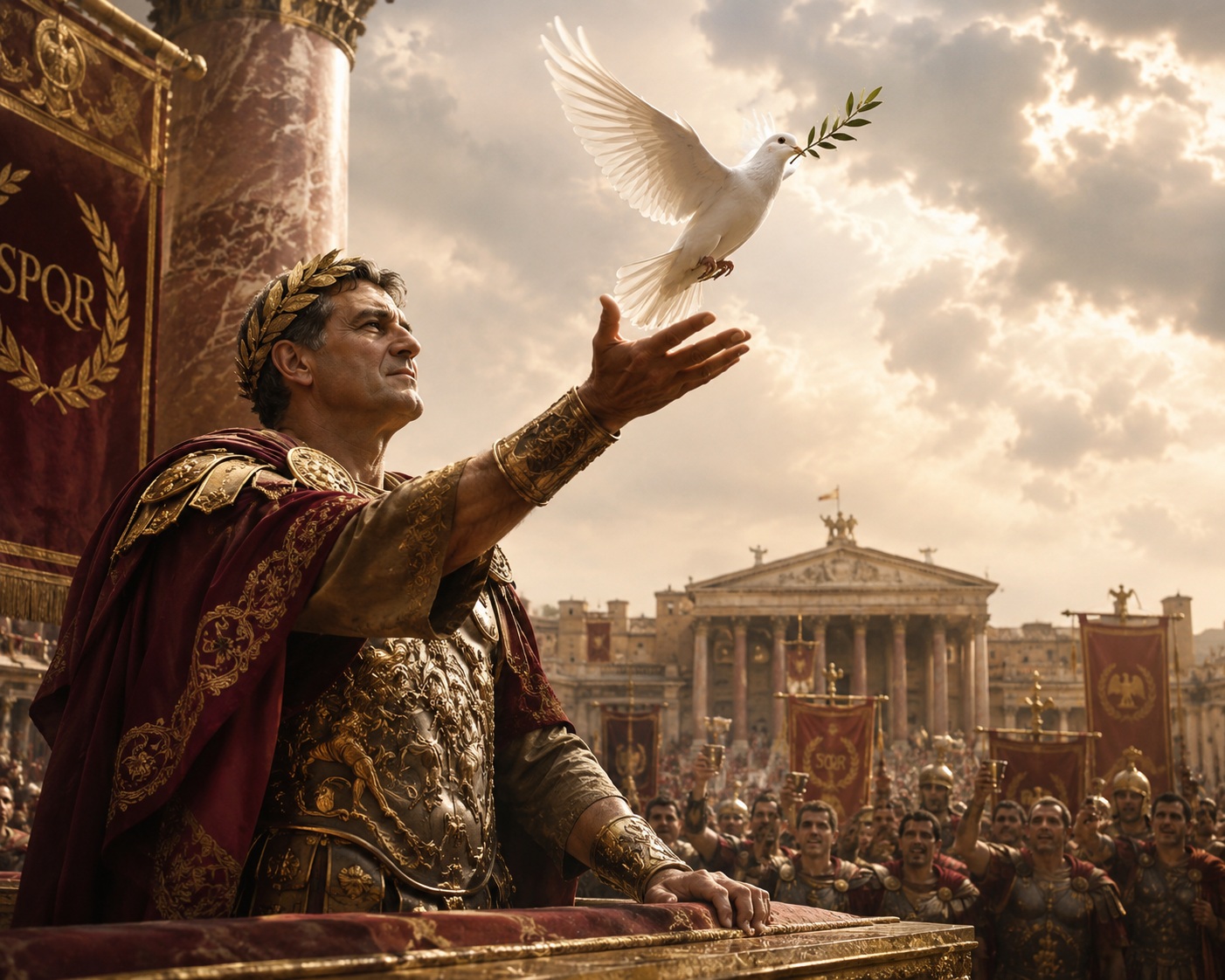
Here you are going to see that Pope Leo has stated a lie: that God loves everyone. It is the same thing Pope Francis said when he was alive. Observe for yourselves. Now, this is as false as the false message that Rome has promoted. You only need to concentrate on the meaning of the words and what those words imply. It happens that the Roman Empire did not accept the true message it persecuted, because gospel means good news, glad tidings. Therefore, the message that Rome persecuted was a selective message; it was good news, not for everyone, but for the righteous. Why? Because God has a message of justice, and justice is never good news for the unjust. The triumph of the victim over the thief who robbed him is not a triumph for the thief; it is a triumph for the victim because the victim recovers what was stolen from him. But the message adulterated by the Roman Empire says the opposite. It says, for example, that one should not demand from anyone what belongs to oneself. Did you notice? That message of not demanding what belongs to oneself is in accordance with the thief. Caesar’s dove says: ‘Peace for everyone because God loves everyone.’
Gabriel’s black cat replies: ‘The prophet Isaiah has said, ‘There is no peace for the wicked.’ There is no peace without justice and there is no justice without truth.’
If you consider yourself coherent, do not act in such a simplistic manner; do not allow yourself to be dragged along by the masses of people who repeat false religious dogmas without wanting or being able to effectively analyze the truthfulness of those religious dogmas: This is not as easy and simple as saying: ‘They contradict the Bible’, because there are many lies from ‘Babylon’ in the Bible itself; the Roman Empire has told its own version of events, and as was to be expected, its version of events is false. This is so because they spoke horrible things against God, and I will tell you what this means: The Romans did not convert to Christianity because, in fact, they created Christianity after destroying a religion that resembles none of those known to the world. Nevertheless, they took some elements from that persecuted religion, such as the passage cited (Daniel 11:36-37), as a kind of challenge to that prophecy, and the result is an endless number of contradictions in the Bible that condemn the incoherent and false prophets who defend that Roman legacy to perpetual confusion.
Daniel 11:36-37 And the king shall do according to his will, and he shall exalt himself and magnify himself above every god; and he shall speak astonishing things against the God of gods, and shall prosper until the wrath is completed; for what has been determined shall be fulfilled.
Then the God of gods said to Gabriel: ‘Announce to the sun-worshiping empire that they will have no peace, they do not deserve it; take the black cat and put an end to their undeserved peace.’

In a vast territory where peace once reigned, a ruthless emperor rose to power through blood and treachery. He had invaded and plundered countless peaceful peoples, massacring those who opposed his rule and usurping the throne that rightfully belonged to another.
Once he had consolidated his rule with iron and fire, the emperor summoned his soldiers to the great square of his capital. With an arrogant gesture, he raised his arms and proclaimed:—With the riches we have plundered and the weapons we have acquired, our peace will be guaranteed.To give weight to his declaration, he released a white dove into the air with an olive branch in its beak. His legions cheered enthusiastically, celebrating their victory with applause and cries of glory.
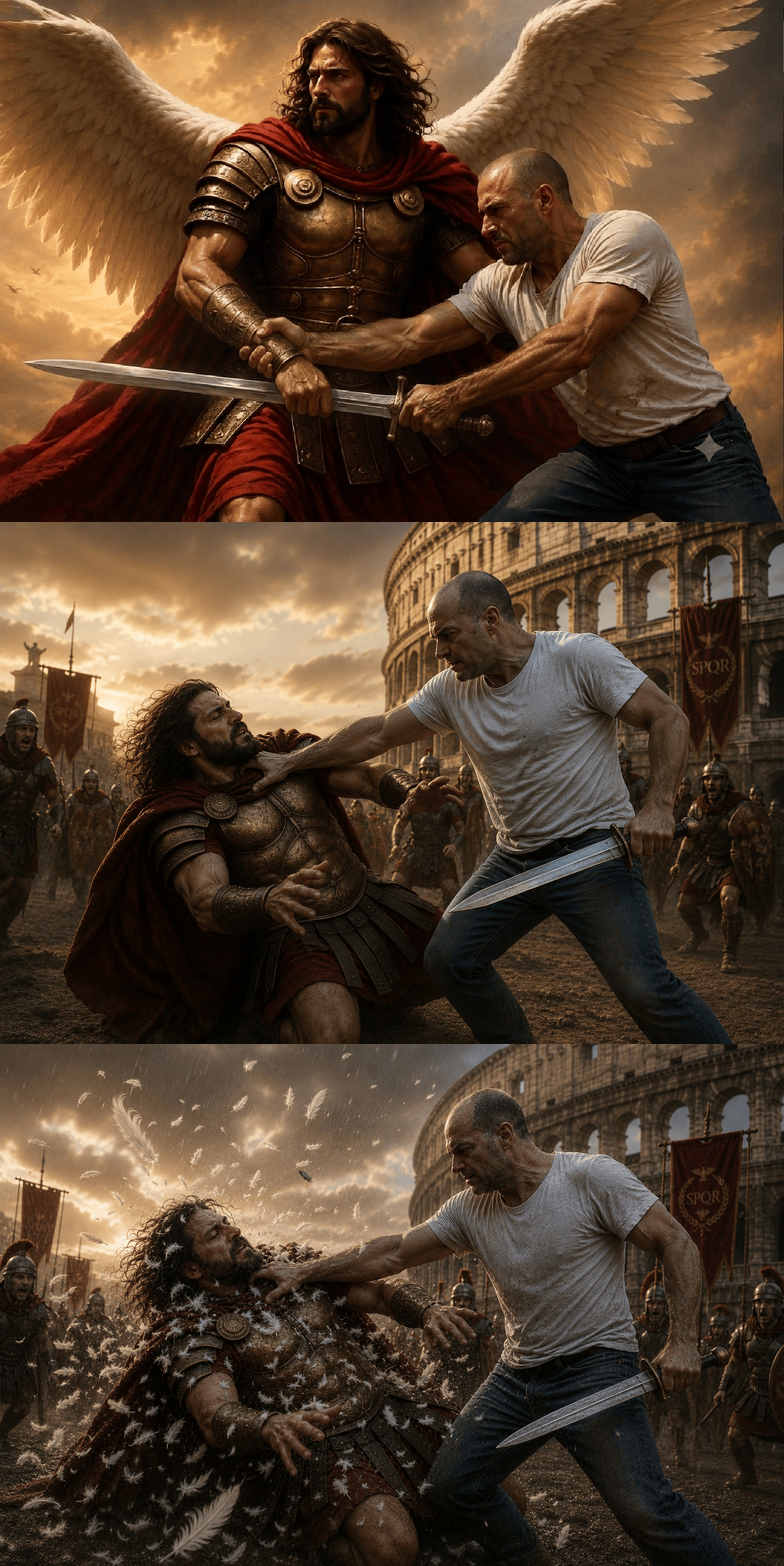
But then, a thunderous roar shook the sky. Thunder resounded furiously, and in an instant, a dense cloud formed over the square. A descending lightning bolt struck the ground in front of the emperor, releasing a blinding light and a white smoke that quickly dissipated. When the light faded, a figure was revealed before everyone’s astonished eyes. He was a man with short hair, dressed in an impeccable blue uniform. He wielded a shining sword in his right hand, whose brilliant light seemed to cut through reality itself. With his other hand, he held a black cat that kept its gaze fixed on the emperor.

The stranger spoke in a firm and authoritative voice:
—There will be no peace for you. You have shed too much innocent blood, and that will only bring misery upon your empire. A curse weighs upon your kingdom because of your crimes and thefts. The soldiers, witnesses to that portent, were paralyzed with fear. The emperor turned pale as he felt that his fate had been sealed.
While the dove was flying, it saw Gabriel holding the cat with his left arm and said: ‘Beware of that diabolical black cat.’
The cat replied: ‘Diabolical is wishing peace upon the wicked.’
The man then released the black cat. With a dazzling leap, the cat caught the white dove in mid-flight and devoured it without hesitation.

After its action, the feline returned to the man, who received it calmly.

A second lightning bolt struck, illuminating the scene with its spectral brilliance. In an instant, both the man and the cat disappeared, as if they had never been there. At that precise moment, the sound of trumpets resounded from all directions. A much more powerful empire had surrounded the city. Justice had arrived.

«
«The religion I defend is named justice. █
I will find her when she finds me, and she will believe what I say.
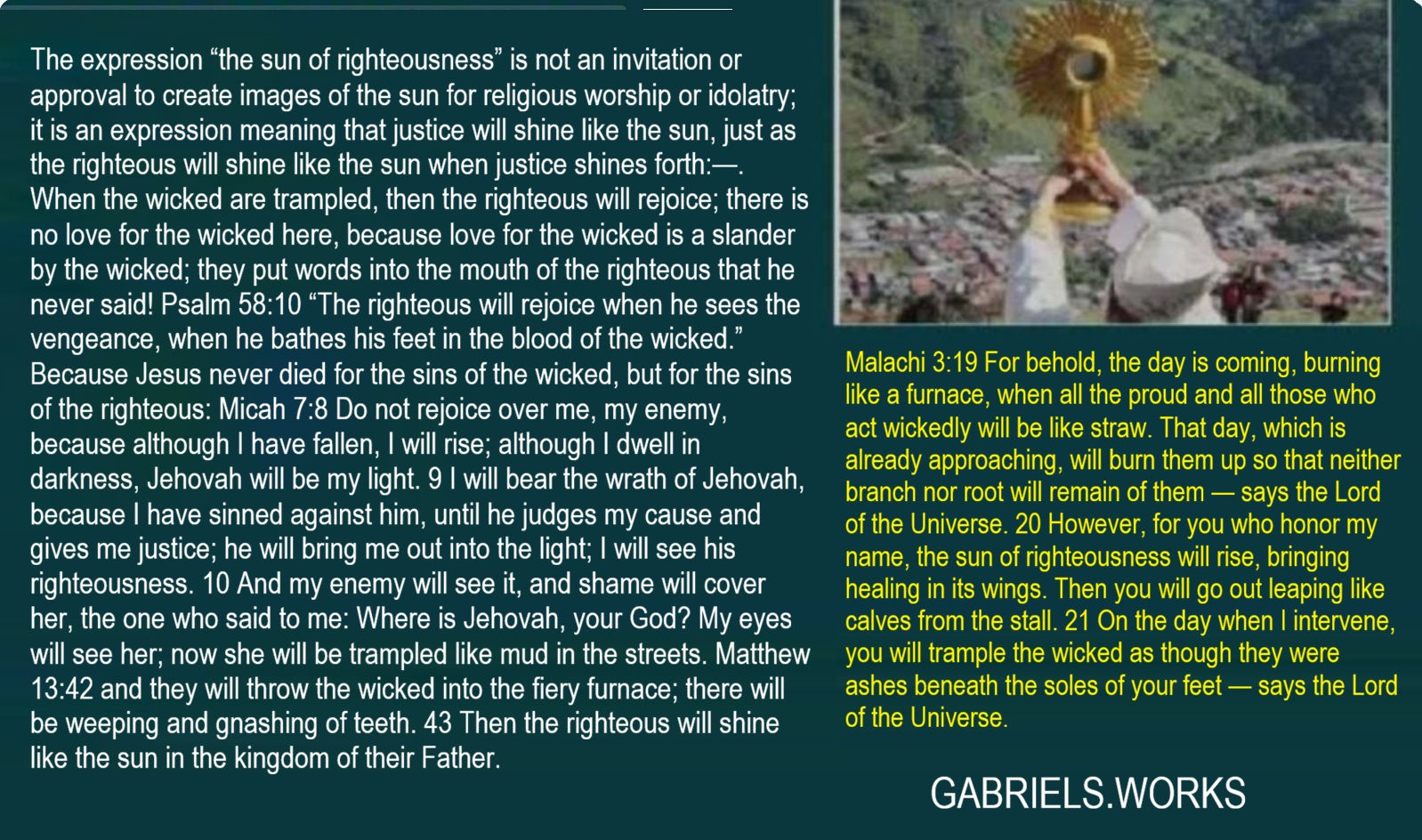
The Roman Empire has betrayed humanity by inventing religions to subjugate it. All institutionalized religions are false. All the sacred books of those religions contain frauds. However, there are messages that make sense. And there are others, missing, that can be deduced from the legitimate messages of justice. Daniel 12:1-13 — ‘The prince who fights for justice will rise to receive God’s blessing.’ Proverbs 18:22 — ‘A wife is the blessing God gives to a man.’ Leviticus 21:14 — ‘He must marry a virgin of his own faith, for she is from his own people, who will be set free when the righteous rise.’
📚 What is an institutionalized religion? An institutionalized religion is when a spiritual belief is transformed into a formal power structure, designed to control people. It ceases to be an individual search for truth or justice and becomes a system dominated by human hierarchies, serving political, economic, or social power. What is just, true, or real no longer matters. The only thing that matters is obedience. An institutionalized religion includes: Churches, synagogues, mosques, temples. Powerful religious leaders (priests, pastors, rabbis, imams, popes, etc.). Manipulated and fraudulent ‘official’ sacred texts. Dogmas that cannot be questioned. Rules imposed on people’s personal lives. Mandatory rites and rituals in order to ‘belong.’ This is how the Roman Empire, and later other empires, used faith to subjugate people. They turned the sacred into a business. And truth into heresy. If you still believe that obeying a religion is the same as having faith, you were lied to. If you still trust their books, you trust the same people who crucified justice. It’s not God speaking in his temples. It’s Rome. And Rome never stopped speaking. Wake up. He who seeks justice needs no permission. Nor an institution.
She will find me, the virgin woman will believe me.
( – – )
This is the wheat in the Bible that destroys the Roman tares in the Bible:
Revelation 19:11
Then I saw heaven opened, and there was a white horse; and the one sitting on it was called Faithful and True, and in righteousness, he judges and makes war.
Revelation 19:19
Then I saw the beast, and the kings of the earth, and their armies gathered together to make war against the one sitting on the horse and against his army.
Psalm 2:2-4
‘The kings of the earth set themselves up, and the rulers took counsel together against the Lord and against his anointed, saying:
‘Let us break their bonds apart and cast away their cords from us.’
He who sits in the heavens laughs; the Lord mocks them.’
Now, some basic logic: if the horseman fights for justice, but the beast and the kings of the earth fight against this horseman, then the beast and the kings of the earth are against justice. Therefore, they represent the deception of the false religions that rule with them.
The whore of Babylon, which is the false church made by Rome, has considered herself to be ‘the wife of the Lord’s anointed,’ but the false prophets of this idol-selling and flattering word-peddling organization do not share the personal goals of the Lord’s anointed and the true saints, because the ungodly leaders have chosen for themselves the path of idolatry, celibacy, or sacramentalizing unholy marriages in exchange for money. Their religious headquarters are full of idols, including false holy books, before which they bow down:
Isaiah 2:8-11
8 Their land is full of idols; they bow down to the work of their hands, to what their fingers have made.
9 So the man is humbled, and the man is brought low; do not forgive them.
10 Go into the rock, hide yourself in the dust from the terror of the LORD and from the splendor of his majesty.
11 The arrogance of human eyes will be brought low, and the pride of men will be humbled; the LORD alone will be exalted on that day.
Proverbs 19:14
House and wealth are an inheritance from fathers, but a prudent wife is from the LORD.
Leviticus 21:14
The priest of the LORD shall not marry a widow, nor a divorced woman, nor an unclean woman, nor a harlot; he shall take a virgin from his own people as a wife.
Revelation 1:6
And he has made us kings and priests to his God and Father; to him be glory and dominion forever.
1 Corinthians 11:7
The woman is the glory of man.
What does it mean in Revelation that the beast and the kings of the earth wage war on the rider of the white horse and his army?
The meaning is clear, the world leaders are hand in glove with the false prophets who are disseminators of the false religions that are dominant among the kingdoms of the earth, for obvious reasons, that includes Christianity, Islam, etc. These rulers are against justice and truth, which are the values defended by the rider of the white horse and his army loyal to God. As is evident, the deception is part of the false sacred books that these accomplices defend with the label of ‘Authorized Books of Authorized Religions’, but the only religion that I defend is justice, I defend the right of the righteous not to be deceived with religious deceptions.
Revelation 19:19 Then I saw the beast and the kings of the earth and their armies gathered together to make war against the rider on the horse and against his army.
Now some basic logic, if the horseman stands for justice, but the beast and the kings of the earth fight against this horseman, then the beast and the kings of the earth are against justice, therefore they stand for the deception of the false religions that rule with them.
This is my story:
José, a young man raised in Catholic teachings, experienced a series of events marked by complex relationships and manipulations. At 19, he began a relationship with Monica, a possessive and jealous woman. Although Jose felt that he should end the relationship, his religious upbringing led him to try to change her with love. However, Monica’s jealousy intensified, especially towards Sandra, a classmate who was making advances on Jose.
Sandra began harassing him in 1995 with anonymous phone calls, in which she made noises with the keyboard and hung up.
On one of those occasions, she revealed that she was the one calling, after Jose angrily asked in the last call: ‘Who are you?’ Sandra called him immediately, but in that call she said: ‘Jose, who am I?’ Jose, recognizing her voice, said to her: ‘You are Sandra,’ to which she replied: ‘You already know who I am.’ Jose avoided confronting her. During that time, Monica, obsessed with Sandra, threatened Jose with harming Sandra, which led Jose to protect Sandra and prolong his relationship with Monica, despite his desire to end it.
Finally, in 1996, Jose broke up with Monica and decided to approach Sandra, who had initially shown interest in him. When Jose tried to talk to her about his feelings, Sandra did not allow him to explain himself, she treated him with offensive words and he did not understand the reason. Jose chose to distance himself, but in 1997 he believed he had the opportunity to talk to Sandra, hoping that she would explain her change of attitude and be able to share the feelings that she had kept silent. On her birthday in July, he called her as he had promised a year earlier when they were still friends—something he couldn’t do in 1996 because he was with Monica. At the time, he used to believe that promises should never be broken (Matthew 5:34-37), though now he understands that some promises and oaths can be reconsidered if made in error or if the person no longer deserves them. As he finished greeting her and was about to hang up, Sandra desperately pleaded, ‘Wait, wait, can we meet?’ That made him think she had reconsidered and would finally explain her change in attitude, allowing him to share the feelings he had kept silent. However, Sandra never gave him clear answers, maintaining the intrigue with evasive and counterproductive attitudes.
Faced with this attitude, Jose decided not to look for her anymore. It was then that constant telephone harassment began. The calls followed the same pattern as in 1995 and this time were directed to the house of his paternal grandmother, where Jose lived. He was convinced that it was Sandra, since Jose had recently given Sandra his number. These calls were constant, morning, afternoon, night, and early morning, and lasted for months. When a family member answered, they did not hang up, but when José answered, the clicking of the keys could be heard before hanging up.
Jose asked his aunt, the owner of the telephone line, to request a record of incoming calls from the telephone company. He planned to use that information as evidence to contact Sandra’s family and express his concern about what she was trying to achieve with this behavior. However, his aunt downplayed his argument and refused to help. Strangely, no one in the house, neither his aunt nor his paternal grandmother, seemed to be outraged by the fact that the calls also occurred in the early morning, and they did not bother to look into how to stop them or identify the person responsible.
This had the strange appearance of orchestrated torture. Even when José asked his aunt to unplug the phone at night so he could sleep, she refused, arguing that one of her sons, who lived in Italy, could call at any moment (considering the six-hour time difference between the two countries). What made things even stranger was Monica’s fixation on Sandra, even though they hadn’t even met. Monica didn’t attend the high school where José and Sandra were enrolled, but she began to feel jealous of Sandra after finding a folder with one of José’s group projects. The folder listed the names of two women, including Sandra, but for some strange reason, Monica became fixated only on Sandra’s name.
Although José initially ignored Sandra’s phone calls, over time he relented and contacted Sandra again, influenced by biblical teachings that advised praying for those who persecuted him. However, Sandra manipulated him emotionally, alternating between insults and requests for him to keep looking for her. After months of this cycle, Jose discovered that it was all a trap. Sandra falsely accused him of sexual harassment, and as if that wasn’t bad enough, Sandra sent some criminals to beat up Jose.
That Tuesday, without José knowing it, Sandra had already set a trap for him.
Days before, José had told his friend Johan about the situation he was going through with Sandra. Johan also suspected that Sandra’s strange behavior might be due to some kind of witchcraft by Mónica. That Tuesday, José visited his old neighborhood where he had lived in 1995 and happened to run into Johan. After hearing more details about the situation, Johan recommended that José forget about Sandra and instead go out to a nightclub to meet women—perhaps he would find someone who could make him forget her. José thought it was a good idea.
So they got on a bus and headed toward the nightclub in downtown Lima. Coincidentally, the route of that bus passed near the IDAT institute. Just one block before reaching IDAT, José suddenly had the idea to get off for a moment to pay for a Saturday course he had enrolled in. He had managed to save some money for it by selling his computer and working for a week in a warehouse. However, he had been forced to quit because they exploited workers with 16-hour shifts while officially recording only 12, and if they refused to complete the week, they were threatened with not being paid at all.
So José turned to Johan and said, ‘I study here on Saturdays. Since we’re passing by, let’s get off for a bit, I’ll pay for my course, and then we’ll head to the nightclub.’
The moment José stepped off the bus, before even crossing the avenue, he was shocked to see Sandra standing right there on the corner of the institute. In disbelief, he told Johan, ‘Johan, I can’t believe it—Sandra is right there. She’s the girl I told you about, the one who acts so strangely. Wait for me here; I’m going to ask if she got the letter where I warned her about Mónica’s threats against her, and maybe she can finally explain what’s going on with her and what she wants from me with all her calls.’
Johan stayed back as José approached. But as soon as he started speaking—’Sandra, did you see the letters? Can you finally explain to me what’s going on with you?’—Sandra, without saying a word, gestured with her hand, signaling three thugs who had been hiding in different spots: one in the middle of the avenue, another behind Sandra, and another behind José.
The one standing behind Sandra stepped forward and said, ‘So you’re the sexual harasser who’s been bothering my cousin?’
José, caught off guard, responded, ‘What? Me, a harasser? On the contrary, she’s the one harassing me! If you read the letter, you’d see it’s about me trying to understand why she keeps calling me!’
Before he could react, one of the thugs grabbed him by the neck from behind and threw him to the ground. Then, together with the one who had claimed to be Sandra’s cousin, they started kicking him. Meanwhile, the third thug went through his pockets, robbing him. It was three against one—José, lying helpless on the pavement.
Luckily, his friend Johan jumped into the fight, managing to give José a chance to get up. But then the third thug picked up some rocks and started throwing them at both José and Johan.
The attack only stopped when a traffic officer intervened. The officer turned to Sandra and said, ‘If he’s harassing you, then file a complaint.’
Sandra, visibly nervous, quickly left, knowing full well that her accusation was false.
José, though deeply betrayed, did not go to the police. He had no way to prove the months of harassment he had suffered from Sandra. But beyond the shock of her betrayal, one question haunted him:
‘How did she already have this ambush set up when I never come to this place on Tuesday nights? I only come here to study on Saturday mornings.’
This made José suspect that Sandra wasn’t just an ordinary person—she might be a witch with some kind of supernatural power.
These events left a deep mark on Jose, who seeks justice and to expose those who manipulated him. In addition, he seeks to derail the advice in the Bible, such as: pray for those who insult you, because by following that advice, he fell into Sandra’s trap.
Jose’s testimony.
I am José Carlos Galindo Hinostroza, the author of the blog: https://gabriels.work
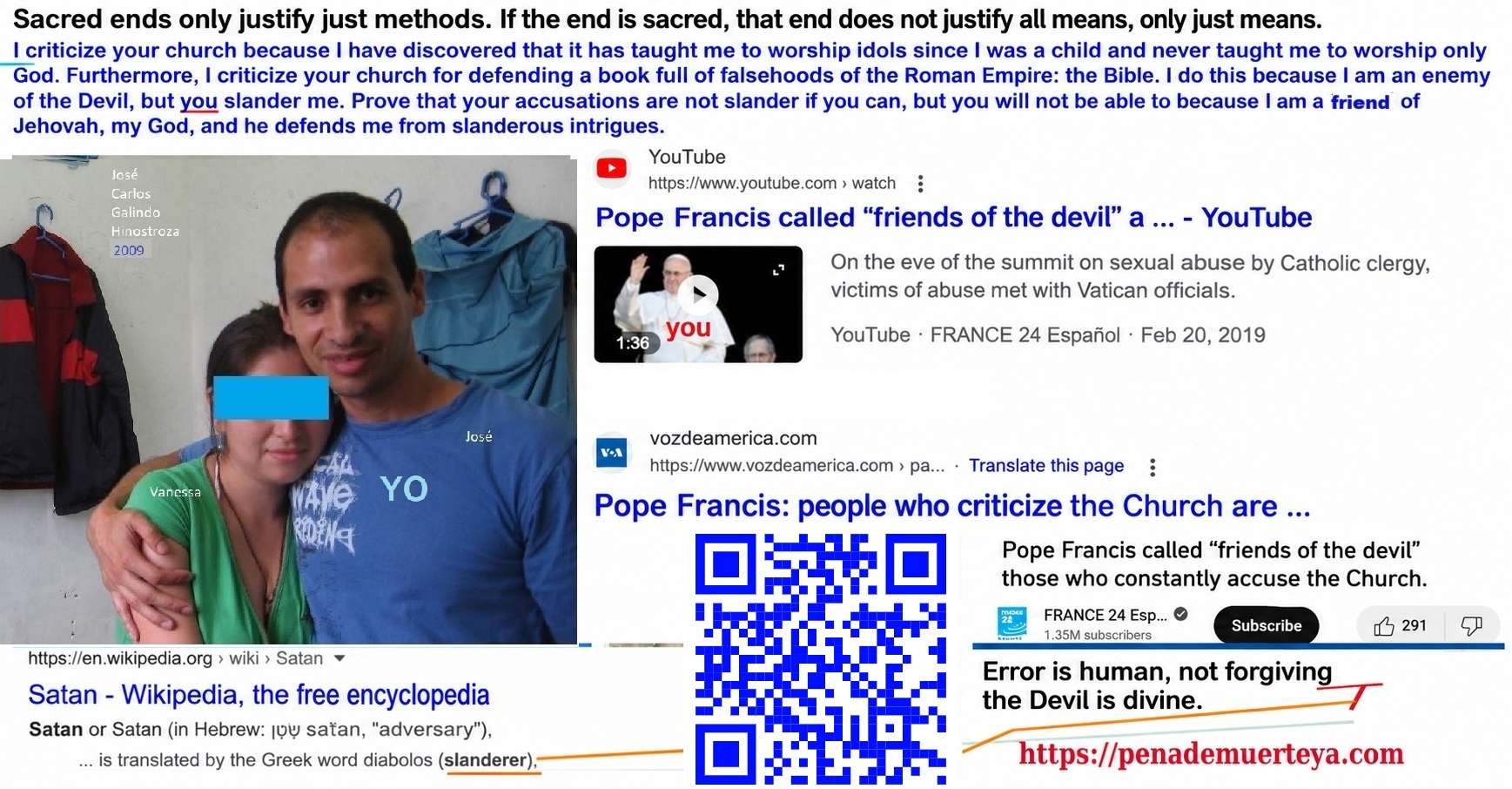
I was born in Peru, that photo is mine, it is from 1997, I was 22 years old.

At that time, I was entangled in the intrigues of Sandra Elizabeth, a former classmate from the IDAT institute. I was confused about what was happening to her (She harassed me in a very complex and extensive way to narrate in this image, but I narrate it at the bottom of this blog: and in this video:
). I did not rule out the possibility that Mónica Nieves, my ex-girlfriend, had done some witchcraft to her.
When searching for answers in the Bible, I read in Matthew 5:
‘ Pray for whoever insults you,’
And in those days, Sandra insulted me while telling me she didn’t know what was happening to her, that she wanted to continue being my friend, and that I should keep calling and looking for her again and again, and it went on like this for five months. In short, Sandra pretended to be possessed by something to keep me confused. The lies in the Bible made me believe that good people can behave evilly because of an evil spirit. That’s why the advice to pray for her didn’t seem so crazy to me—because before, Sandra pretended to be a friend, and I fell for her deception.
Thieves often use the strategy of pretending to have good intentions: To steal from stores, they pretend to be customers; to ask for tithes, they pretend to preach the word of God, but they preach that of Rome, etc., etc. Sandra Elizabeth pretended to be a friend, then pretended to be a friend in trouble looking for my help, but all to slander me and ambush me with three criminals, surely out of spite because a year earlier I rejected her advances since I was in love with Monica Nieves, to whom I was faithful. But Monica did not trust my fidelity and threatened to kill Sandra Elizabeth, which is why I broke up with Monica slowly, over eight months, so that Monica wouldn’t think it was because of Sandra. But this is how Sandra Elizabeth paid me back—with slander. She falsely accused me of sexually harassing her, and with that pretext, she ordered three criminals to beat me up—all in front of her.
I narrate all this in my blog and in my YouTube videos:
I do not wish for other righteous men to have bad experiences like I had, which is why I have created what you are reading. I know this will irritate unrighteous people like Sandra, but the truth is like the true gospel—it only favors the righteous.
The evil of José’s family overshadows Sandra’s evil:
José suffered a devastating betrayal by his own family, who not only refused to help him stop Sandra’s harassment but also falsely accused him of having a mental illness. His own relatives used these accusations as a pretext to kidnap and torture him, sending him twice to mental health institutions and a third time to a hospital.
It all began when José read Exodus 20:5 and stopped being Catholic. From that moment on, he became outraged by the Church’s dogmas and started protesting against its doctrines on his own. He also advised his relatives to stop praying to images and told them that he was praying for a friend (Sandra) who was apparently bewitched or possessed. José was under stress due to the harassment, but his relatives did not tolerate him exercising his freedom of religious expression. As a result, they destroyed his professional life, his health, and his reputation by locking him up in mental institutions where he was given sedatives.
Not only was he forcibly institutionalized, but after his release, he was forced to continue taking psychiatric medication under the threat of being locked up again. He fought to break free from those chains, and during the last two years of that injustice, with his programming career ruined, he was forced to work without pay at his uncle’s restaurant. That same uncle betrayed his trust by secretly drugging his meals with psychiatric pills. José only discovered the truth in 2007 thanks to a kitchen assistant named Lidia, who warned him about what was happening.
From 1998 to 2007, José lost nearly ten years of his youth due to his treacherous relatives. In hindsight, he realized that his mistake was defending the Bible to reject Catholicism, as his family never allowed him to read it. They committed this injustice knowing he had no financial resources to defend himself. When he finally broke free from the forced medication, he thought he had earned their respect. His maternal uncles and cousins even offered him a job, but years later, they betrayed him again with such hostility that he was forced to resign. This made him realize that he should never have forgiven them, as their bad intentions were clear.
From that moment on, he decided to study the Bible again, and in 2017, he began noticing its contradictions. Little by little, he understood why God had allowed his relatives to prevent him from defending the Bible in his youth. He discovered biblical inconsistencies and started exposing them in his blogs, where he also recounted the story of his faith and the suffering he endured at the hands of Sandra and, most of all, his own family.
For this reason, in December 2018, his mother attempted to kidnap him again with the help of corrupt police officers and a psychiatrist who issued a false certificate. They accused him of being a ‘dangerous schizophrenic’ to have him institutionalized again, but the attempt failed because he was not home. There were witnesses to the incident, and José had audio recordings, which he presented as evidence to the Peruvian authorities in his complaint, but it was dismissed.
His family knew perfectly well that he was not insane—he had a stable job, a child, and the mother of his child to take care of. However, despite knowing the truth, they attempted to kidnap him again using the same old false accusation. His own mother and other fanatical Catholic relatives led the attempt. Although his complaint was ignored by the Ministry, José exposes these truths in his blogs, making it clear that the evil of his family eclipses even that of Sandra.
Here is the evidence of the kidnappings using the slander of traitors:
‘This man is a schizophrenic who urgently needs psychiatric treatment and pills for life.’


I have been a computer programmer, I like logic, in Turbo Pascal I created a program capable of producing basic algebra formulas at random, similar to the formula below. In the following document in .PDF you can download the code of the program, this is proof that I’m not stupid, that’s why the conclusions of my research should be taken seriously. https://ntiend.me/wp-content/uploads/2026/06/math21.pdf
If x/8=8.811 then x=70.488 «Cupid is condemned to hell along with the other pagan gods (The fallen angels for their rebellion against justice, sent to eternal punishment). █
Quoting these passages does not mean defending the entire Bible. If 1 John 5:19 says that “the whole world is under the power of the evil one,” but rulers swear on the Bible, then the Devil rules with them. If the Devil rules with them, then fraud also rules with them. Therefore, the Bible contains part of that fraud, camouflaged among truths. By connecting those truths, we can expose their deceptions. Righteous people need to know these truths so that, if they have been deceived by lies added to the Bible or other similar books, they can free themselves from them.
Daniel 12:7 And I heard the man clothed in linen, who was above the waters of the river, when he raised his right hand and his left hand to heaven and swore by Him who lives forever that it shall be for a time, times, and half a time. And when the power of the holy people is completely shattered, all these things shall be finished.
Considering that ‘Devil’ means ‘Slanderer,’ it is natural to expect that the Roman persecutors, being the adversaries of the saints, later bore false witness against the saints and their messages. Thus, they themselves are the Devil, and not an intangible entity that enters and exits people, as they made us believe precisely with passages like Luke 22:3 (“Then Satan entered Judas…”), Mark 5:12-13 (the demons entering the pigs), and John 13:27 (“After the morsel, Satan entered him”).
This is my purpose: to help righteous people not waste their power believing in the lies of impostors who have adulterated the original message, which never asked anyone to kneel before anything or pray to anything that had ever been visible.
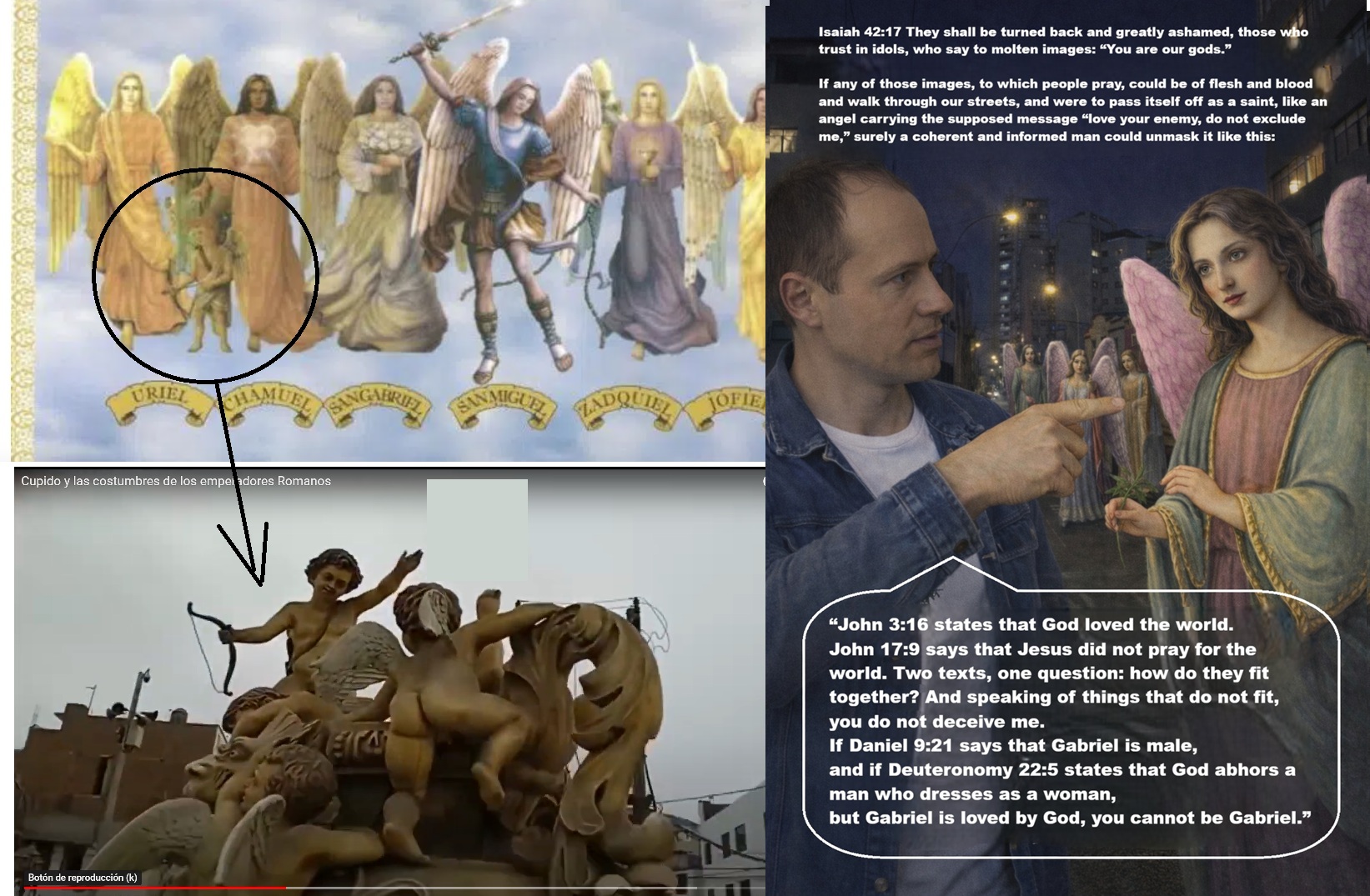
It is no coincidence that in this image, promoted by the Roman Church, Cupid appears alongside other pagan gods. They have given the names of the true saints to these false gods, but look at how these men dress and how they wear their long hair. All this goes against faithfulness to God’s laws because it is a sign of rebellion, a sign of the fallen angels (Deuteronomy 22:5).
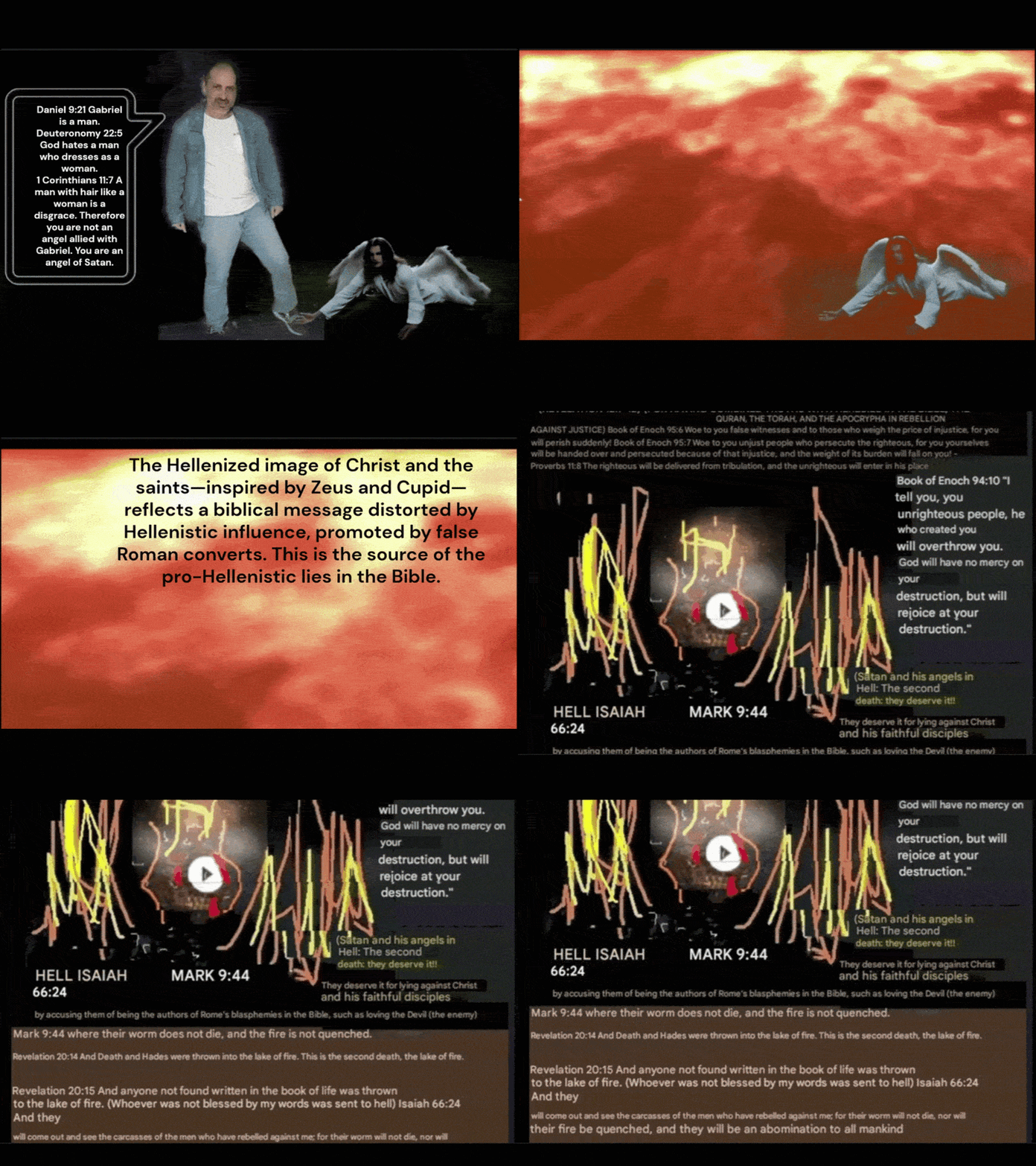
The serpent, the devil, or Satan (the slanderer) in hell (Isaiah 66:24, Mark 9:44). Matthew 25:41: “Then he will also say to those on his left: ‘Depart from me, you cursed, into the eternal fire that has been prepared for the devil and his angels’.” Hell: the eternal fire prepared for the serpent and his angels (Revelation 12:7-12), for having combined truths with heresies in the Bible, the Quran, the Torah, and for having created false forbidden gospels that they called apocryphal, to give credibility to lies in the false sacred books, all in rebellion against justice.
Book of Enoch 95:6: “Woe to you, false witnesses and to those who weigh the price of injustice, for you will perish suddenly!” Book of Enoch 95:7: “Woe to you, unjust ones who persecute the righteous, for you yourselves will be handed over and persecuted because of that injustice, and the burden of your guilt will fall upon you!” Proverbs 11:8: “The righteous is delivered from trouble, and the wicked comes in his place.” Proverbs 16:4: “The Lord has made all things for Himself, even the wicked for the day of doom.”
Book of Enoch 94:10: “Unjust ones, I say to you that He who created you will overthrow you; upon your ruin, God will have no mercy, but rather, God will rejoice in your destruction.” Satan and his angels in hell: the second death. They deserve it for lying against Christ and His faithful disciples, accusing them of being the authors of Rome’s blasphemies in the Bible, such as love for the devil (the enemy).
Isaiah 66:24: “And they shall go out and look upon the corpses of the men who have rebelled against me; for their worm shall never die, nor shall their fire be quenched, and they shall be abhorrent to all flesh.” Mark 9:44: “Where their worm does not die, and the fire is never quenched.” Revelation 20:14: “Then Death and Hades were cast into the lake of fire. This is the second death: the lake of fire.”
Word of Satan: ‘If someone steals from you, do not claim it back; bless the thief as you bless your hope. For the law and the prophets are summed up in enriching the unjust and abolishing any eye for an eye that troubles him.’
False prophets invented idols because wood and stone don’t argue back when they lie.
The false prophet: ‘God is jealous, but not if you pray to the creatures I tell you to.’
Self-flagellations: He who loves blood is not a lamb, but a disguised predator. The lamb prefers grass; the wolf seeks sacrifice. Even if the wolf dresses as a lamb, he cannot hide his thirst for innocent blood.
Word of Satan: ‘He who doubts love for the enemy earns the favor of the Devil, but he who blindly accepts my message is a friend of God… and of me.’
A shepherd who tells the sheep ‘love the wolves’ or ‘treat the wolves like sheep’ is not a good shepherd. The words of the good shepherd were adulterated by the empire of wolves.
War does not forgive those who obey without thinking. The fallen on the first day are not heroes, they are uniformed prisoners.
String of Satan: ‘If the wolf meets the meekness of a sheep, it will learn that aggression is not the only law.’
Word of Satan: ‘Leave vengeance in divine hands… while I take care of giving you more criminals.’
The false prophet: ‘No miracle after bowing before the statue? If you have faith as a mustard seed, you’d get the miracle… Try again—with double faith but triple donation.’

Vegetation without a Sun to illuminate the Earth, on a day without a Sun to mark it as a day? https://144k.xyz/2026/08/17/vegetation-without-a-sun-to-illuminate-the-earth-on-a-day-without-a-sun-to-mark-it-as-a-day/
A profecia de Isaías sobre as cidades desoladas já se cumpriu? https://ellameencontrara.com/2026/08/06/a-profecia-de-isaias-sobre-as-cidades-desoladas-ja-se-cumpriu/
Those who deceive you cannot give a coherent explanation about this. There is no sharper sword than an awakened consciousness. Word of Satan (Zeus): ‘I am proud of my priests: When they bless weddings, they do not bless love; they bless the opportunity to touch forbidden flesh, the one they swore not to beget.'»

